


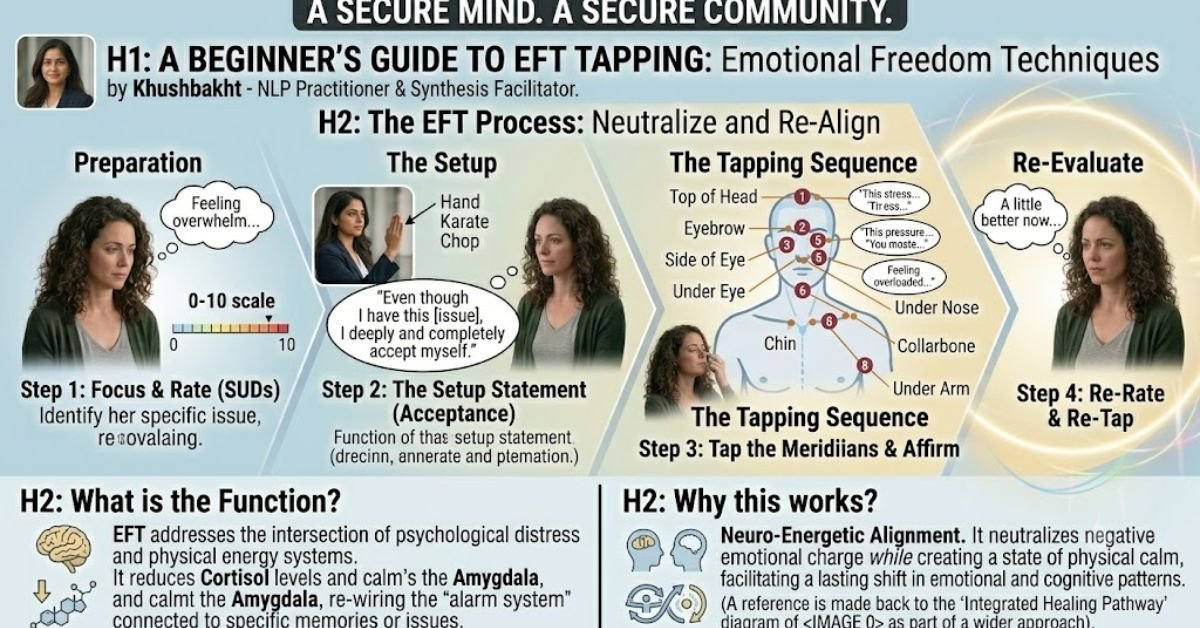
What Is EFT Tapping?
EFT Tapping, short for Emotional Freedom Techniques (EFT), is a self-help method that combines focused attention on emotions with gentle tapping on specific points of the body.
Thank you for reading this post; don't forget to subscribe!
The technique is often used to help people become more aware of their emotional experiences while practicing relaxation and self-acceptance.What Is EFT Tapping?
During an EFT session, a person focuses on a specific thought, memory, feeling, or challenge while tapping with their fingertips on a sequence of points on the face and upper body.
Many people use EFT tapping as part of their personal wellness routine for stress management, emotional awareness, and self-reflection.
How Does EFT Tapping Work?
EFT tapping involves two key elements:
1. Focusing on the Issue What Is EFT Tapping
The person identifies a specific emotional challenge, such as:
- Anxiety
- Fear
- Sadness
- Anger
- Overwhelm
- Stress after a difficult event
Instead of avoiding the feeling, EFT encourages gentle awareness of it.
2. Tapping on Acupressure Points
While focusing on the emotion, the person taps on specific points using their fingertips.
Common tapping points include:
- Karate Chop Point (side of the hand)
- Eyebrow
- Side of Eye
- Under Eye
- Under Nose
- Chin
- Collarbone
- Under Arm
- Top of Head
The tapping sequence is usually repeated several times while using simple statements related to the emotion being explored
EFT Tapping and Emotional Awareness

One reason EFT has become popular is that it encourages people to acknowledge emotions rather than suppress them.
Many individuals spend years trying to ignore difficult feelings.What Is EFT Tapping
They may tell themselves:
- “I should be over this.”
- “I shouldn’t feel this way.”
- “I need to stay strong.”
EFT creates space to recognize emotions without judging them.What Is EFT Tapping?
This can help people develop greater emotional awareness and self-understanding.
EFT creates space to recognize emotions without judging them.
Experiences vary from person to person, and EFT should not be viewed as a guaranteed solution for any specific condition.
EFT Tapping and Trauma Healing

For some individuals, difficult experiences can leave lasting emotional patterns.
When discussing trauma healing, many practitioners emphasize the importance of moving at a comfortable pace and seeking professional support when needed.
EFT is sometimes incorporated into broader healing practices that may also include:What Is EFT Tapping?
- CBT
- Journaling
- Mindfulness
- Relaxation techniques
- Emotional education
Sarah believed she was finally healing.
Nearly a year had passed since her divorce. She had rebuilt her daily routine, returned to work, and even started smiling again. Friends told her she seemed stronger. Family members assumed she had moved on.
Then one afternoon while shopping for groceries, her heart suddenly began racing.
Her chest tightened.
Her hands trembled.
She felt dizzy.
For a moment, she thought she was having a heart attack.
Later, she learned it was a panic attack.
Confused and discouraged, Sarah asked herself a question that many people ask during recovery:
“If I am healing, why do I still feel this way?”
The answer is both simple and profound:
Healing rarely happens overnight.
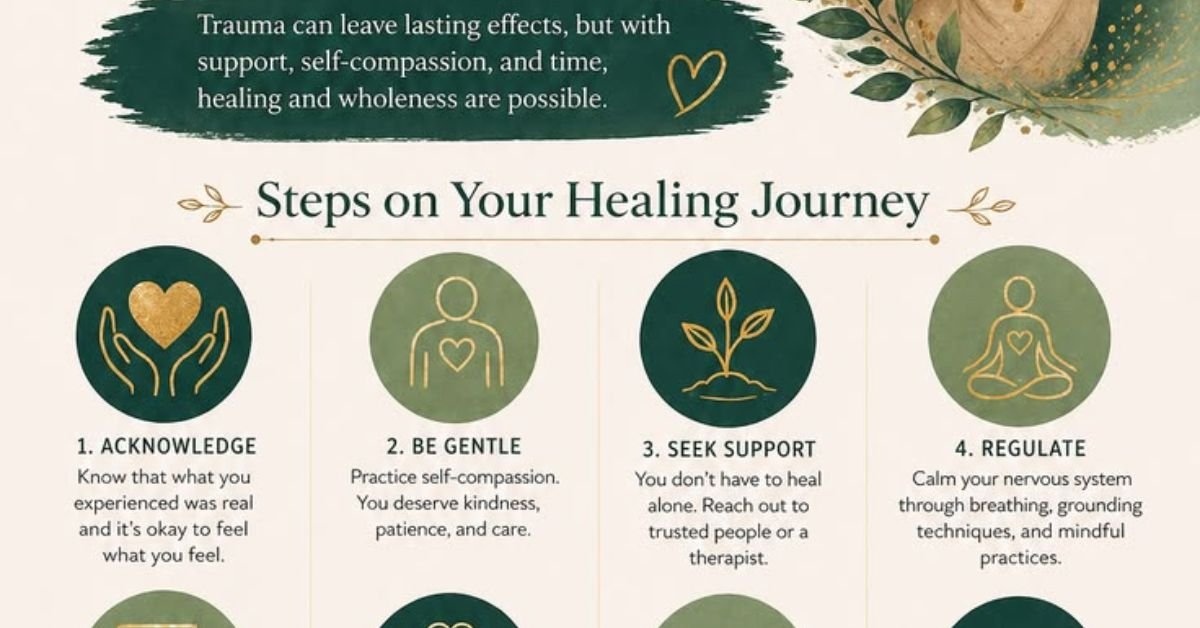
Trauma recovery is rarely a straight line. Some days you feel strong and hopeful. Other days old fears, memories, and emotions seem to return without warning.
Many people assume healing should be quick. They believe that if they understand what happened, they should immediately feel better. Yet emotional recovery does not work that way.
The human brain requires time to create new patterns.
The nervous system requires time to learn safety again.
The body requires time to release stored stress responses.
This is where CBT for trauma healing becomes especially valuable.What Is EFT Tapping? A Beginner’s Guide to Emotional Freedom Techniques by khushbakht
Combined with insights from neuroplasticity and emotional regulation techniques such as EFT tapping, CBT helps people understand why healing takes time and how meaningful change gradually becomes possible.What Is EFT Tappingl
At HealOraCBT, we believe healing is not about becoming a different person. It is about learning new ways to understand thoughts, emotions, behaviors, and experiences while creating healthier pathways for the future.
Why Healing Rarely Happens Overnight
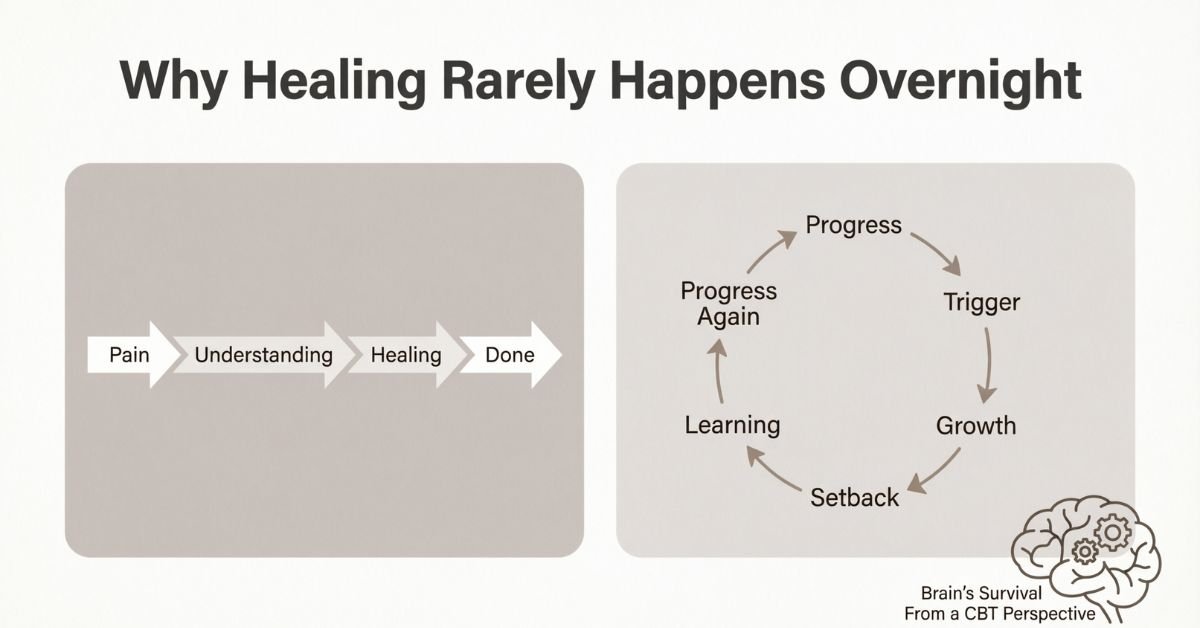
One of the biggest misconceptions about emotional recovery is the belief that healing follows a predictable timeline.
Many people expect recovery to look something like this:
Pain Understanding Healing Done
In reality, healing often looks more like:
Progress Trigger Growth Setback Learning Progress Again
This can feel frustrating.
However, from a CBT perspective, setbacks do not necessarily mean failure.
Often they indicate that the brain is processing experiences at a deeper level.
The Brain’s Survival System
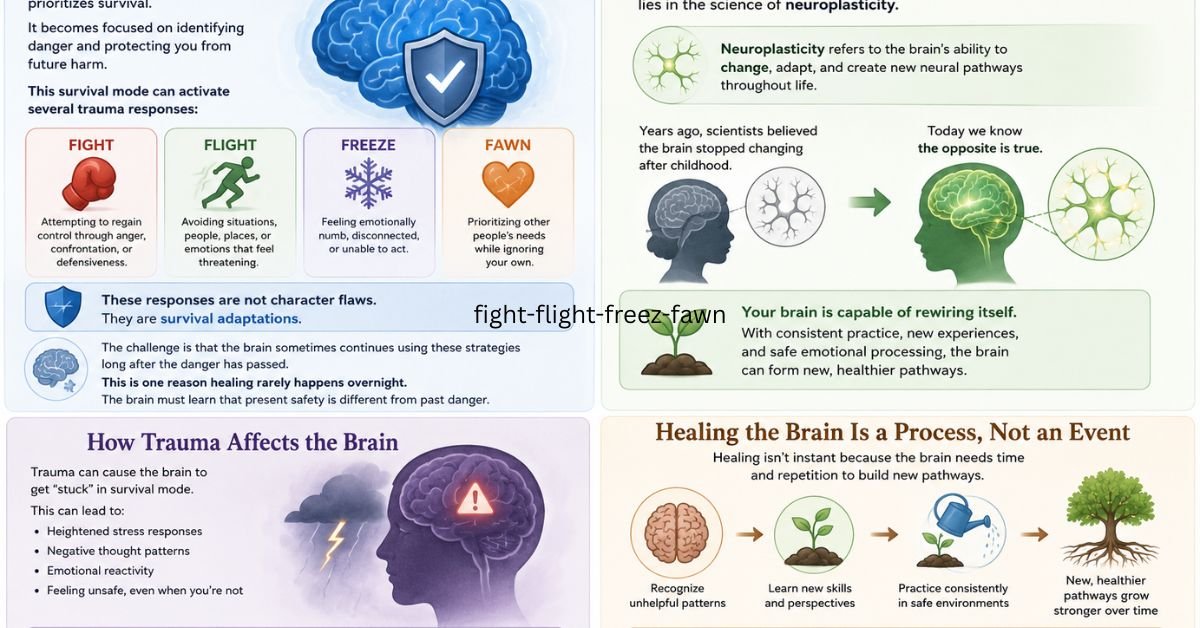
When trauma occurs, the brain prioritizes survival.
It becomes focused on identifying danger and protecting you from future harm.
This survival mode can activate several trauma responses:
Fight
Attempting to regain control through anger, confrontation, or defensiveness.
Flight
Avoiding situations, people, places, or emotions that feel threatening.
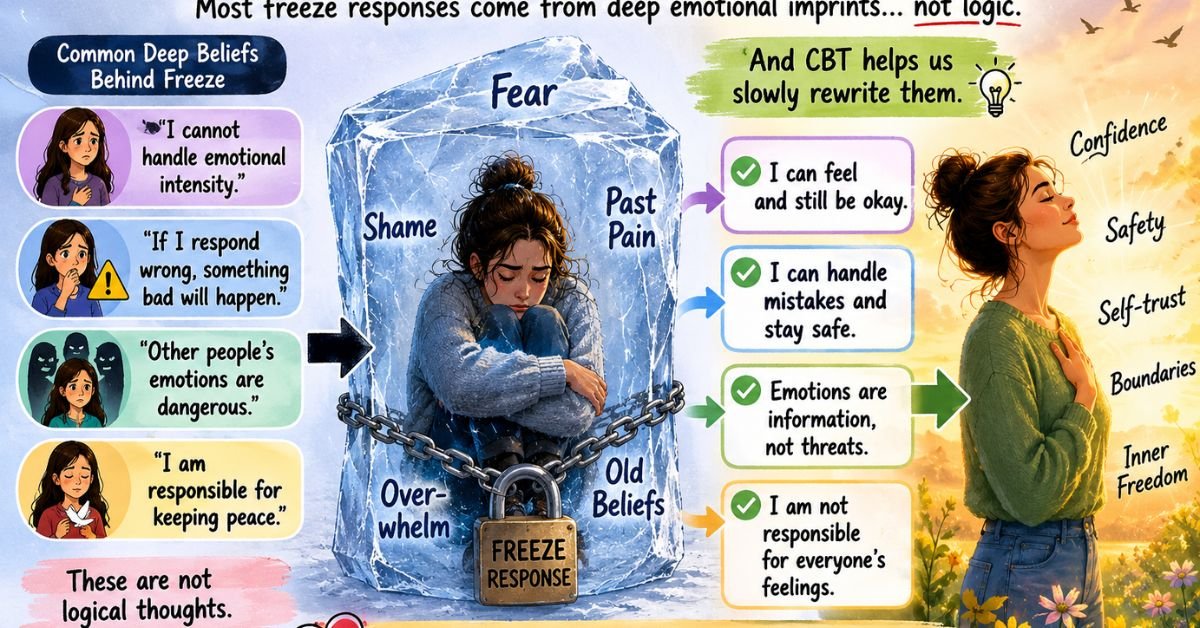
Freeze
Feeling emotionally numb, disconnected, or unable to act.
Fawn
Prioritizing other people’s needs while ignoring your own.
These responses are not character flaws.
They are survival adaptations.
The challenge is that the brain sometimes continues using these strategies long after the danger has passed.
This is one reason healing rarely happens overnight.
The brain must learn that present safety is different from past danger.
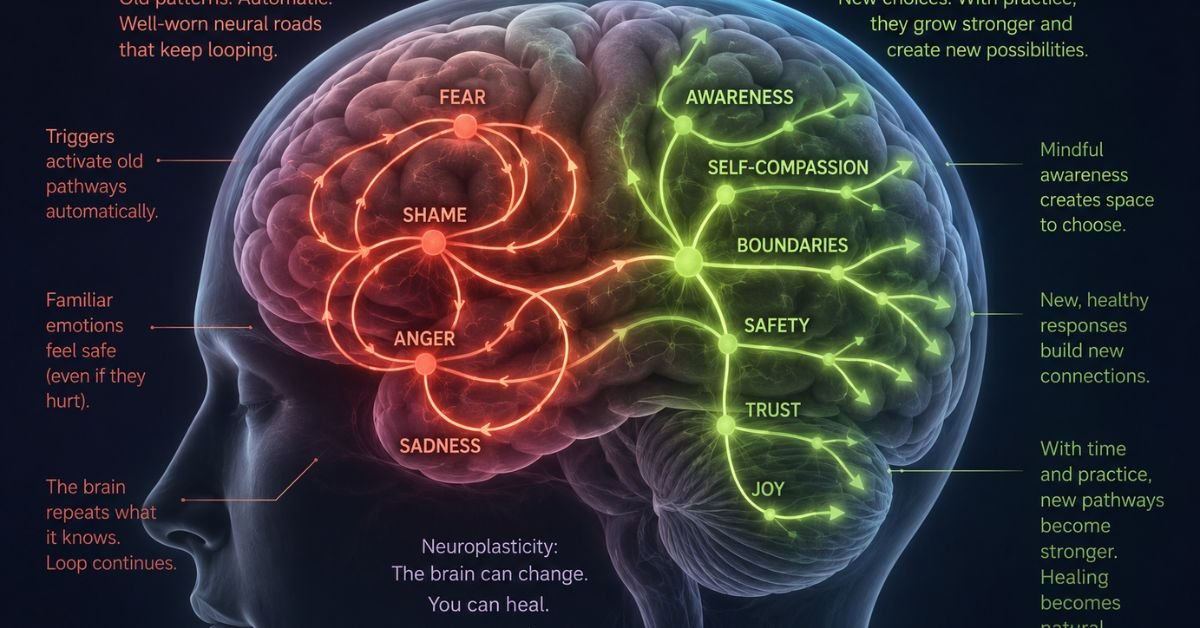
Understanding Trauma Through Neuroplasticity
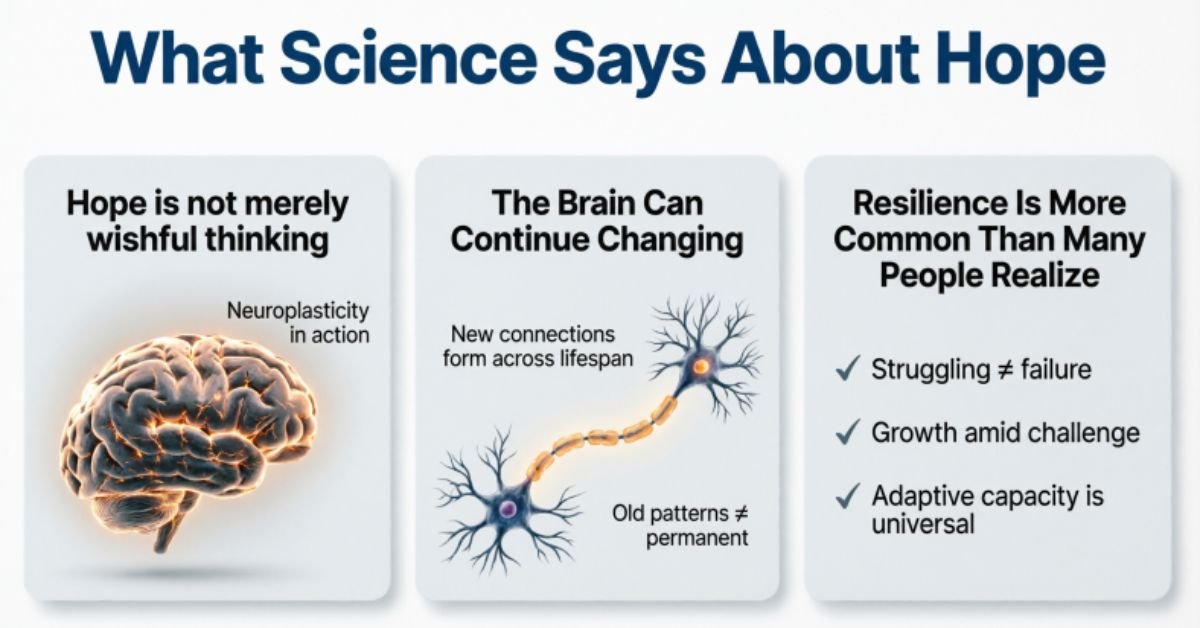
A key reason CBT for trauma healing is effective lies in the science of neuroplasticity.
Neuroplasticity refers to the brain’s ability to change, adapt, and create new neural pathways throughout life.
Years ago, scientists believed the brain stopped changing after childhood.
Today we know the opposite is true.
The brain remains capable of learning and rewiring throughout adulthood.
Imagine a Forest Trail

Think of your brain like a forest.
Every repeated thought, emotion, and behavior creates a pathway.
The more often that pathway is used, the easier it becomes to travel.
Trauma often creates deeply worn paths such as:
“I am not safe.”
“People cannot be trusted.”
“Something bad is about to happen.”
Over time these thoughts become automatic.
The brain is not trying to hurt you.
The goal is not to erase the past but to develop healthier ways of relating to thoughts, emotions, and memories.
Part I: Foundations and Origins Pain Understanding Healing Done

1. The Energy Core: To understand EFT, one must first grasp its foundational premise, derived from Traditional Chinese Medicine (TCM): the body is animated by a vital energy flow, often referred to as ‘Qi’ or ‘Chi’, which circulates through channels called meridians. Disruption, blockage, or imbalance in this flow, whether caused by trauma, stress, or learned negative patterns, can manifest as emotional volatility, mental health challenges, or physical pain.
2. The Evolutionary Timeline:
- Ancient Roots: TCM, acupuncture, and acupressure have utilized meridian stimulation for thousands of years to balance the body’s energy and promote healing.
- Thought Field Therapy (TFT): The modern lineage of EFT begins with Dr. Roger Callahan in the 1980s. A clinical psychologist, Callahan developed TFT, which used complex, diagnosis-specific “algorithms” (tapping sequences) tailored to different disorders.
- The Birth of EFT: Gary Craig, a Stanford-trained engineer and a student of Callahan, recognized the power of the core tapping technique but found the algorithms unwieldy. In the 1990s, Craig simplified the process. He hypothesized that stimulating a single, comprehensive “Basic Recipe” sequence—covering points across all major meridians—could effectively treat almost any emotional block. This breakthrough became Emotional Freedom Technique (EFT). Craig’s dedication to sharing this technique freely via his “EFT Handbook” fueled its global adoption.
Part II: The EFT Methodology—The Basic Recipe
1. Preparation: Identify and Rate:
- The Target Issue: The first crucial step is to select a specific issue, memory, physical sensation, or distressing emotion to work on. Specificity is key; tapping on “this general anxiety” is often less effective than tapping on “the feeling of panic I have about the presentation tomorrow.”
- SUDs (Subjective Units of Distress): Participants rate the current intensity of their distress on a scale of 0 to 10. This provides a baseline to measure progress.
2. The Setup: Addressing Resistance:The Setup Statement is designed to neutralize any subconscious resistance or “Psychological Reversal” that might hinder healing. While tapping continuously on the Karate Chop point (side of the palm), the practitioner repeats, usually three times:
“Even though I have [name the specific problem], I deeply and completely accept myself.”
This statement is a potent blend of cognitive awareness (exposure to the problem) and self-affirmation (acceptance).
3. The Tapping Sequence: Cleansing the Meridians:The practitioner then taps about five to seven times on a specific sequence of eight acupressure points while repeating a “Reminder Phrase” (a simplified version of the problem name) at each point. This maintains the mental focus while physically calming the nervous system.
| Point Code | Point Location | Reminder Phrase Example |
| TH (Top of Head) | Crown, center of the skull | “This work stress…” |
| EB (Eyebrow) | Beginning of the eyebrow, just above and to the side of the nose | “This overwhelm…” |
| SE (Side of Eye) | On the bone at the outer corner of the eye | “Feeling overloaded…” |
| UE (Under Eye) | On the bone directly beneath the pupil | “This deadline…” |
| UN (Under Nose) | Between the bottom of the nose and the top lip | “Can’t get it done…” |
| CH (Chin) | Center of the chin, in the indentation beneath the lower lip | “This pressure…” |
| CB (Collarbone) | The junction of the sternum, collarbone, and first rib | “Stress in my body…” |
| UA (Under Arm) | About four inches below the armpit, on the side of the ribcage | “This anxious feeling…” |
Fictional Story: Sarah’s Journey Through Trauma Healing, CBT & EFT Tapping

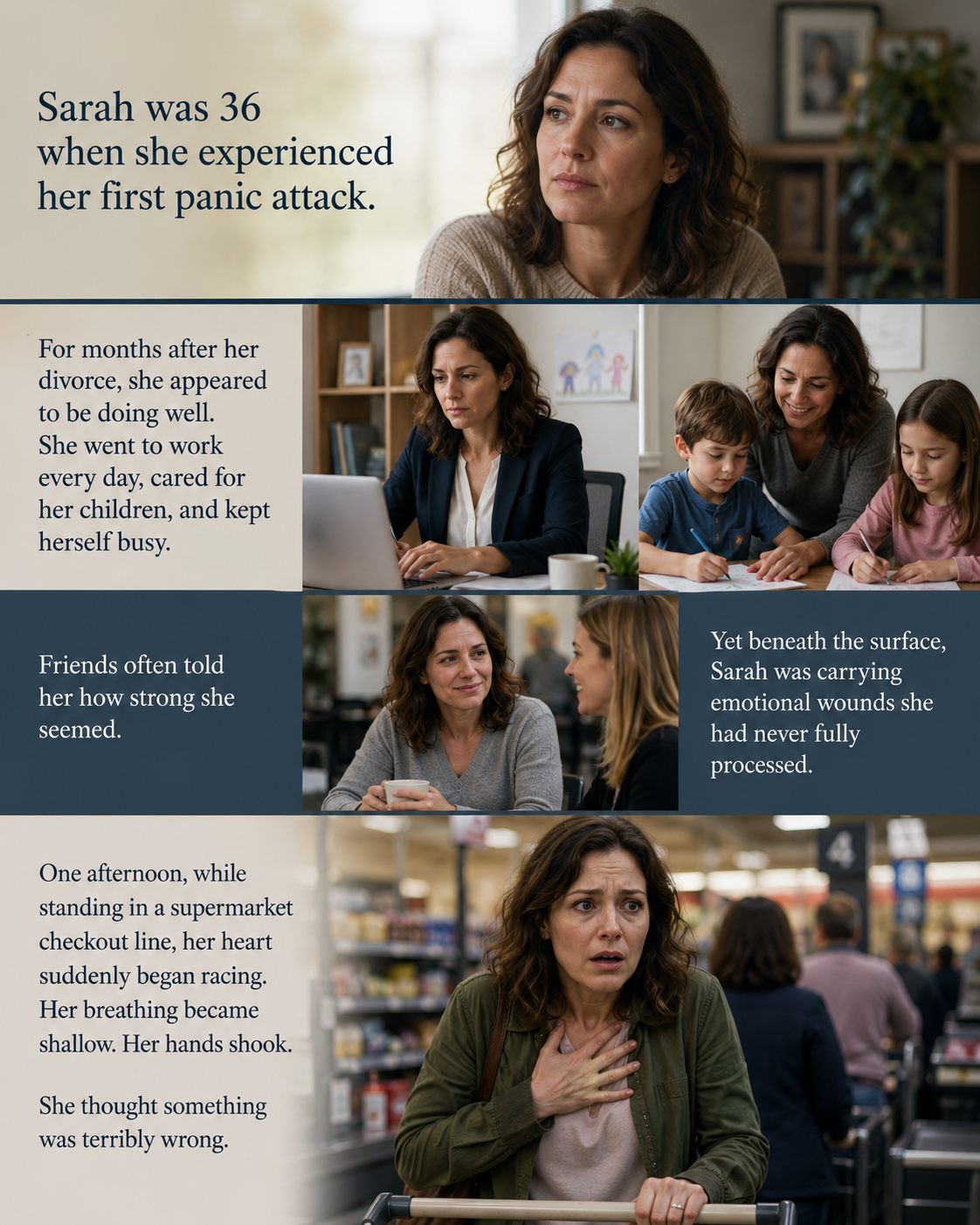
Sarah was 36 when she experienced her first panic attack.
For months after her divorce, she appeared to be doing well. She went to work every day, cared for her children, and kept herself busy. Friends often told her how strong she seemed.
Yet beneath the surface, Sarah was carrying emotional wounds she had never fully processed.
One afternoon, while standing in a supermarket checkout line, her heart suddenly began racing. Her breathing became shallow. Her hands shook.
She thought something was terribly wrong.
After speaking with a mental health professional, Sarah learned she was experiencing panic attacks related to unresolved stress and emotional trauma.
At first, she became frustrated.
“I thought I was healing,” she said.
Through CBT, Sarah began identifying automatic thoughts that appeared whenever she felt anxious:
- “I’m not safe.”
- “Something bad is about to happen.”
- “I can’t cope.”

Frequently Asked Questions (FAQs)
1. Why does healing rarely happen overnight?
Healing involves changes in thoughts, emotions, behaviors, and nervous system responses. Just as physical injuries require time to recover, emotional healing often develops gradually through consistent effort and self-awareness
2. How does CBT help trauma healing?
CBT helps individuals identify and challenge unhelpful thought patterns that may contribute to emotional distress. By developing more balanced thinking habits, people can create healthier emotional and behavioral responses
3. What is neuroplasticity?
Neuroplasticity is the brain’s ability to adapt and form new neural connections throughout life. This ability allows people to learn new skills, develop healthier habits, and gradually change long-standing thought patterns.
4. Can panic attacks occur after the traumatic event is over?
Yes. Some people experience panic attacks or heightened anxiety after they have reached a safer environment. This may occur because the brain and nervous system are beginning to process experiences that were previously set aside during survival mode.
5. What is EFT tapping used for?
EFT tapping is a self-help technique that combines focused attention with tapping on specific points of the body. Many people use it as part of stress management, emotional awareness, and personal wellness practices.
6. How long does trauma healing take?
There is no universal timeline. Healing depends on many factors, including personal experiences, support systems, coping strategies, and individual circumstances. Progress often occurs gradually rather than all at once
7. Can healing happen without forgetting the past?
Yes. Healing does not require erasing memories. Instead, it often involves developing a healthier relationship with past experiences so they have less control over present-day emotions and decisions.
8. How can CBT and EFT work together?
CBT focuses on identifying and restructuring thought patterns, while EFT incorporates emotional awareness and tapping techniques. Some people find that combining these approaches supports a more comprehensive healing process.
9. Why do emotional triggers still appear during recovery?
Triggers do not necessarily indicate failure. They may reveal areas that still need attention, understanding, or practice. Many healing journeys involve periods of progress, challenge, learning, and continued growth.
10. What role does HealOraCBT play in emotional wellness education?
HealOraCBT provides educational content focused on CBT, neuroplasticity, emotional awareness, stress management, and personal growth. The goal is to help individuals better understand their thoughts, emotions, and healing journeys
Conclusion
Healing is one of the most misunderstood journeys people experience.
Many individuals expect recovery to happen quickly. They hope that understanding their pain once will make it disappear forever. Yet real healing is usually much more complex.
Through the lens of CBT, we learn that thoughts influence emotions and behaviors. Through neuroplasticity, we discover that the brain is capable of change throughout life. Through EFT tapping, many people find a structured way to acknowledge emotions while practicing self-compassion.
Together, these approaches reveal an important truth:
Healing rarely happens overnight.
Growth often occurs through small, consistent actions repeated day after day.
A single CBT reframe.
A few minutes of EFT tapping.
A journal entry.
A moment of self-awareness.
Each of these actions may seem small on its own, but over time they help create new pathways for emotional resilience and personal growth.
At HealOraCBT, we believe healing is not about becoming someone new.
It is about reconnecting with the strength, wisdom, and resilience that already exist within you.Pain Understanding Healing Done
No matter where you are on your journey today, remember:
Progress does not require perfection.
Every step forward matters.
And every compassionate choice you make today has the potential to shape a healthier tomorrow.
Final Thoughts
EFT Tapping is a simple technique that combines focused attention with gentle tapping on specific body points. Many people use it to increase emotional awareness, reduce stress, and support their personal healing journey.
At HealOraCBT, EFT is viewed as one tool that can complement CBT, self-reflection, and emotional learning. Healing rarely happens overnight, but small daily practices can help people develop greater understanding, resilience, and emotional balance over time.
| Healing Practice | What It Involves | How It Supports Emotional Healing |
|---|---|---|
| EFT (Emotional Freedom Techniques) | Tapping on specific acupressure points while focusing on emotions, memories, or distressing thoughts. | May help reduce emotional intensity, calm the nervous system, and support stress management. |
| CBT (Cognitive Behavioral Therapy) | Identifying and challenging unhelpful thought patterns and replacing them with more balanced perspectives. | Helps people understand the connection between thoughts, feelings, and behaviors, supporting healthier coping strategies. |
| Journaling | Writing about thoughts, emotions, experiences, and personal reflections. | Encourages self-awareness, emotional processing, and recognition of recurring patterns and triggers. |
| Mindfulness | Paying attention to the present moment with openness and without judgment. | Can reduce rumination, improve emotional regulation, and increase awareness of thoughts and feelings. |
| Relaxation Techniques | Practices such as deep breathing, progressive muscle relaxation, guided imagery, or gentle stretching. | Helps lower physical tension, reduce stress responses, and promote a sense of calm and safety. |
| Emotional Education | Learning about emotions, trauma responses, stress, and mental well-being. | Builds understanding of emotional experiences, reduces self-blame, and empowers healthier emotional responses. |
Note: EFT is often used alongside evidence-based approaches such as CBT, mindfulness practices, journaling, relaxation exercises, and emotional education as part of a broader self-care or therapeutic healing plan. Individual results can vary, and professional guidance may be beneficial for significant trauma or mental health concerns.










Leave a Reply