

Waking up tired is one of the most common modern problems.
Thank you for reading this post; don't forget to subscribe!
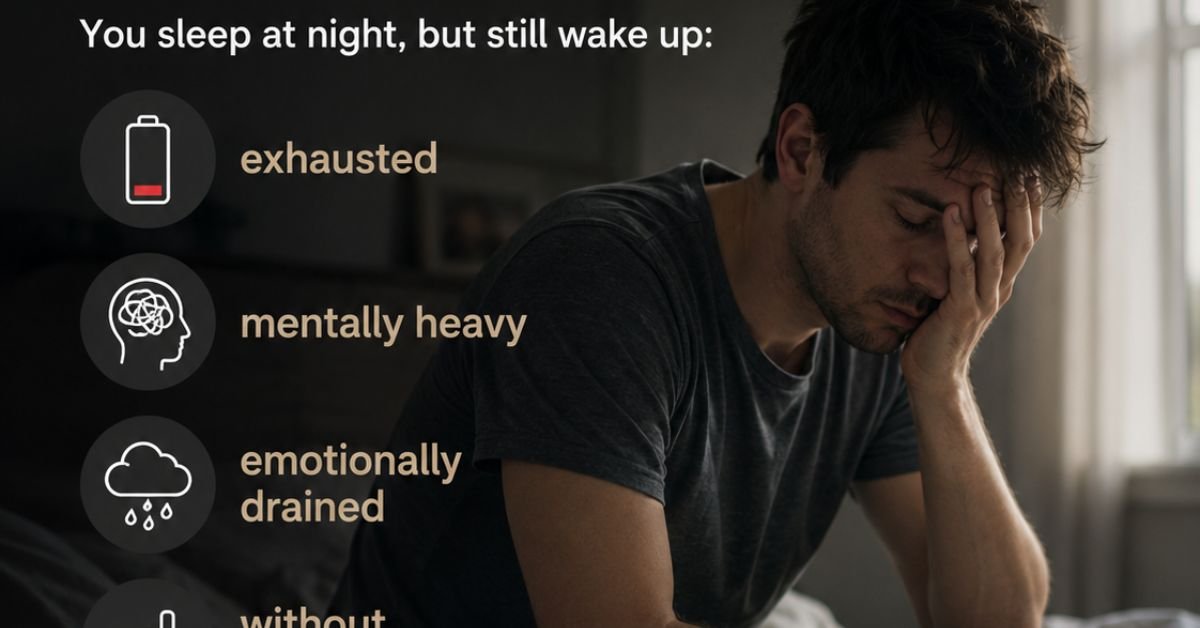
You sleep at night, but still wake up:8 Point Why You Wake Up Tired CBT & Brain Science Behind It | Healora for Healing
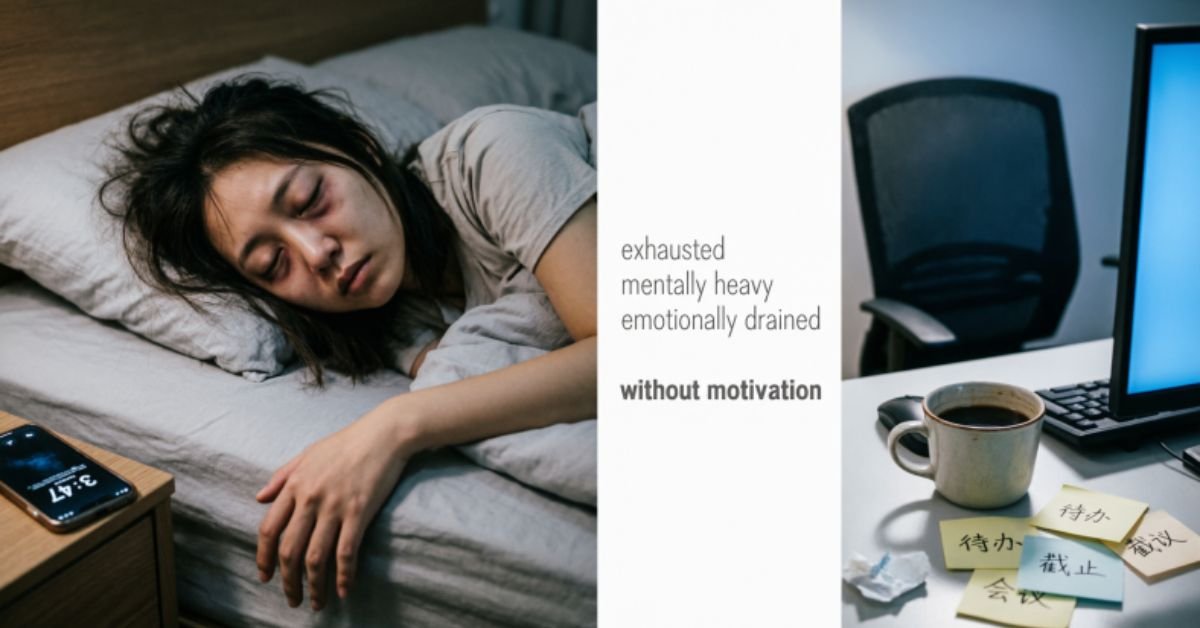
- exhausted
- mentally heavy
- emotionally drained
- without motivation
And you ask yourself:
“Why am I tired even after sleeping?”
The answer is not always about sleep hours.
It is about how your brain processes stress, emotions, and survival patterns while you sleep.
From the perspective of Cognitive Behavioral Therapy, your thoughts and emotions directly influence your body’s energy system.
This article explains:8 Point Why You Wake Up Tired
- why your brain stays tired
- how neurons store stress
- how survival mode affects sleep
- how CBT explains emotional fatigue
- and how healing actually begins
- : What Does It Mean to Wake Up Tired?
- : Why You Wake Up Tired (Simple Explanation)
- : Brain Science Behind Morning Fatigue
- What Are Neurons? (Very Simple)
- 8 Point Why You Wake Up TiredHealing
- Table: Neurons in Simple Life Example
- : Survival Mode The Hidden Reason You Wake Up Tired
- What survival mode does to your body
- CBT Explanation of Morning Fatigue
- Example CBT Loop
- H2: Emotional Fatigue vs Physical Fatigue
- Table: Difference Between Two Types of Fatigue
- H2: Why Stress Affects Sleep Deeply
- H2: Why Your Brain Doesn’t Fully Switch Off
- Common Signs You Are Waking Up in Survival Mode
- Can This Pattern Be Changed? (Healing Truth)
- : Simple CBT-Based Morning Reset
- H2: Healing Happens Slowly (But Surely)
- : Why CBT Helps With Waking Up Tired
- : What Healing Actually Feels Like
- When to Take It Seriously
- FAQs
- Conclusion: Your Tiredness Is Not Random ‘It Is a Pattern
: What Does It Mean to Wake Up Tired?
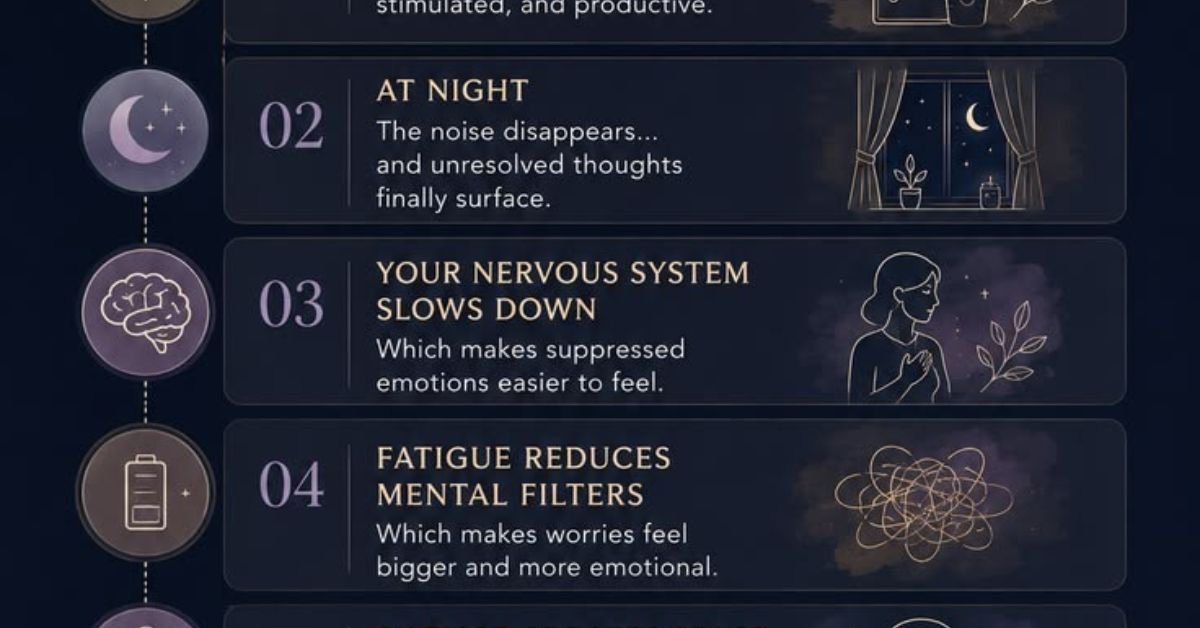
Waking up tired means your body slept, but your brain did not fully rest.
Sleep has two parts:
1. Physical sleep
- body relaxation
- muscle repair
- physical recovery
2. Mental sleep
- emotional reset
- stress processing
- memory calming
If mental sleep is incomplete, you wake up tired.
: Why You Wake Up Tired (Simple Explanation)
You wake up tired when
- your brain stays emotionally active
- stress is not fully processed
- thoughts continue during sleep
- survival mode is partially active
This is not a weakness.
It is a brain pattern problem, not a personality problem.
: Brain Science Behind Morning Fatigue
Your brain is made of billions of neurons.
Neurons:
- send signals
- store emotions
- repeat habits
- create stress patterns
When stress is repeated daily:
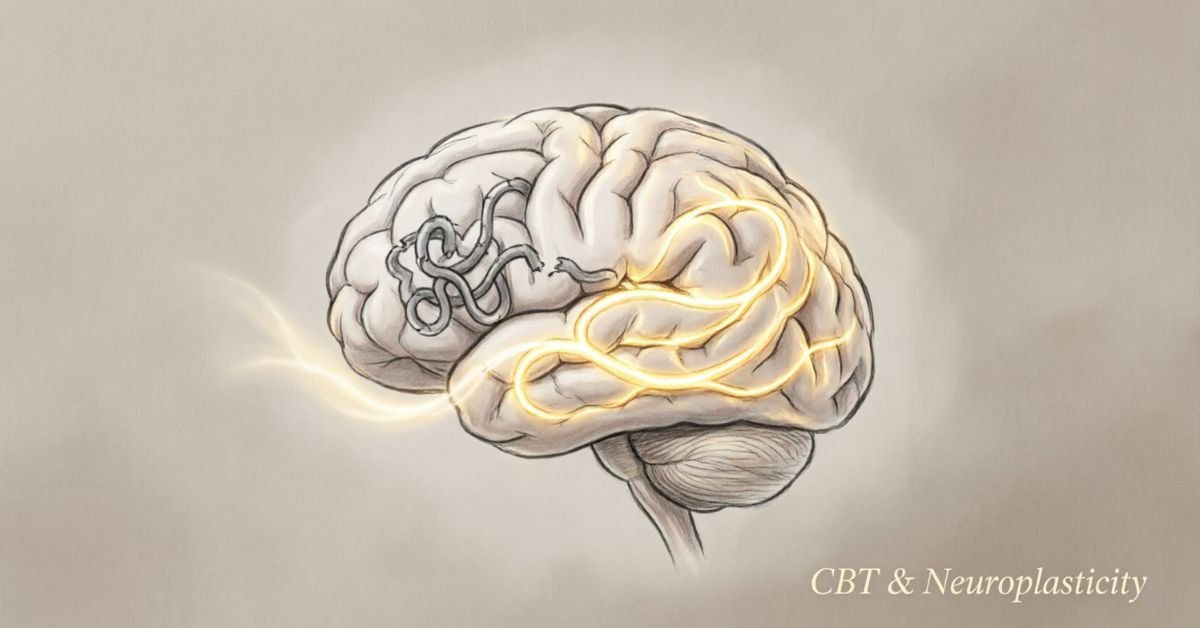
neurons build strong “stress highways”
So even during sleep:
- emotional signals continue
- memory loops replay
- brain stays semi-active
This leads to morning fatigue.
What Are Neurons? (Very Simple)
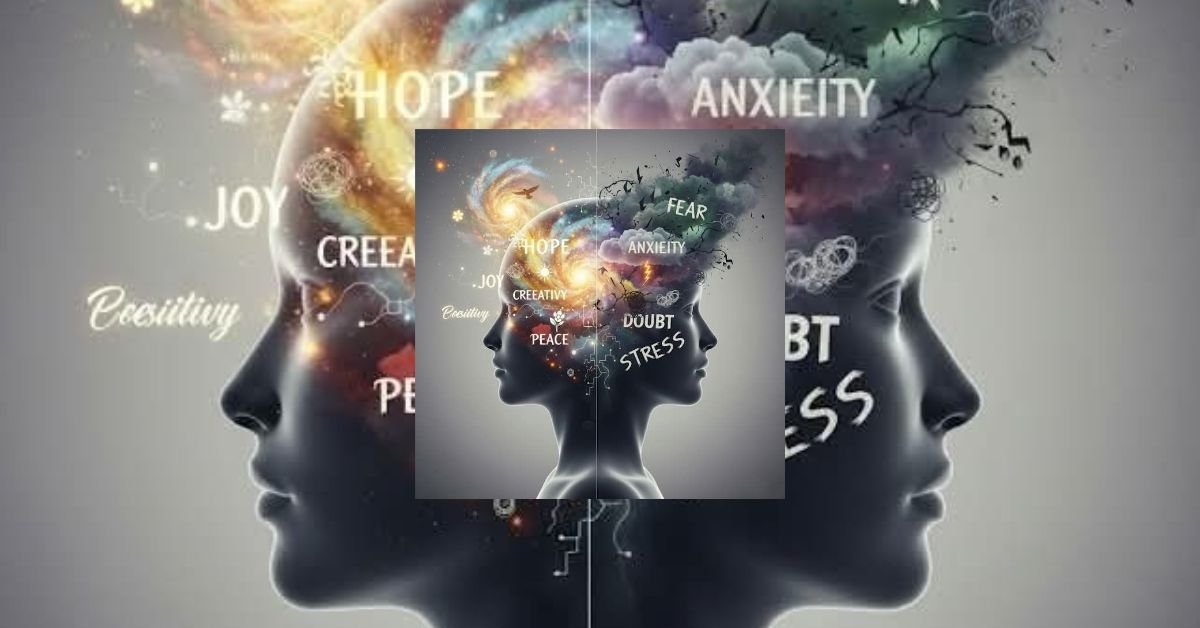
“Brain neurons forming stress pathways causing emotional fatigue during sleep”
8 Point Why You Wake Up TiredHealing
Neurons are brain cells that control everything you feel and think.
Think of them like:
“tiny messengers inside your brain”
They decide:
- how you react
- how you feel
- what you remember
- how stressed you become
Table: Neurons in Simple Life Example
| Situation | Neuron Response | Result |
| Stressful memory | Activates fear pathway | Anxiety |
| Overthinking | Repeats thought loop | Mental fatigue |
| Calm moment | Activates safety pathway | Relaxation |
| Breakup memory | Emotional replay | Exhaustion |
: Survival Mode The Hidden Reason You Wake Up Tired
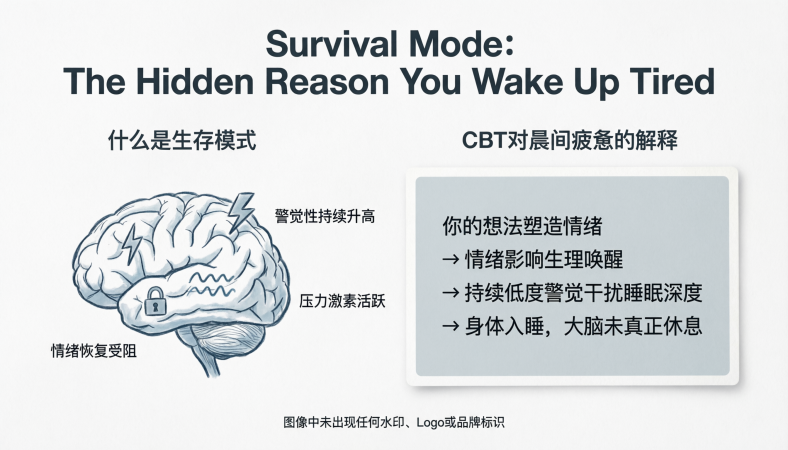
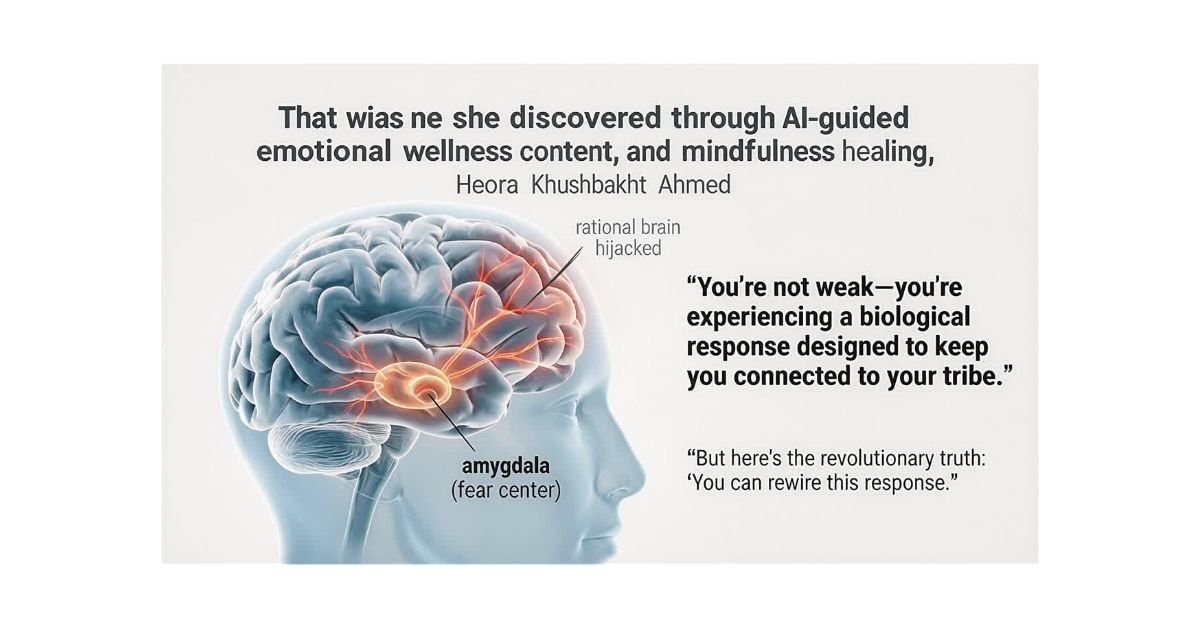
Survival mode is a brain state where your nervous system thinks:
“I must stay alert to protect myself.”
Even when no danger is present.
What survival mode does to your body
- keeps stress hormones active
- reduces deep sleep quality
- increases mental alertness
- prevents full emotional recovery
So your body sleeps, but your brain stays partially awake.
CBT Explanation of Morning Fatigue
CBT explains that your thoughts create emotional and physical reactions.
Thought → Emotion → Body → Energy
When thoughts are negative or stressful:
- emotions become heavy
- body becomes tense
- sleep becomes shallow
- morning feels tired
Example CBT Loop
- “Something is wrong”
- anxiety increases
- sleep becomes light
- brain stays active
- you wake up tired
H2: Emotional Fatigue vs Physical Fatigue
Table: Difference Between Two Types of Fatigue
| Type | Cause | Feeling |
| Physical fatigue | Body work | Muscle tiredness |
| Emotional fatigue | Brain stress | Mental heaviness |
| Sleep fatigue | Poor sleep quality | Morning tiredness |
Most people waking up tired are dealing with emotional fatigue.
H2: Why Stress Affects Sleep Deeply
Stress increases a hormone called cortisol.
When cortisol is high:
- sleep becomes lighter
- dreams become active
- brain stays alert
- deep rest reduces
So even 8 hours of sleep feels like nothing.
H2: Why Your Brain Doesn’t Fully Switch Off
Your brain is designed for protection.
So it:
- replays emotional memories
- checks for danger
- processes unresolved thoughts
If emotional stress exists:
your brain stays in “processing mode” even during sleep
Common Signs You Are Waking Up in Survival Mode
- waking up tired without reason
- instant anxiety in morning
- heavy emotional feeling
- overthinking immediately
- low motivation
- brain fog
Can This Pattern Be Changed? (Healing Truth)
Yes.
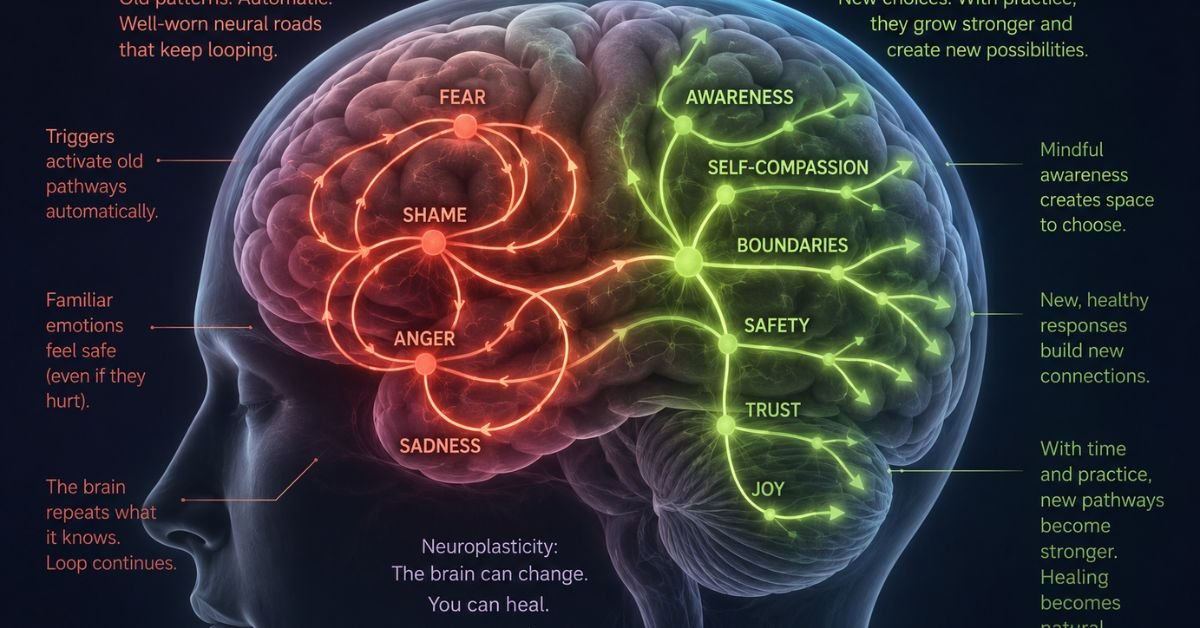
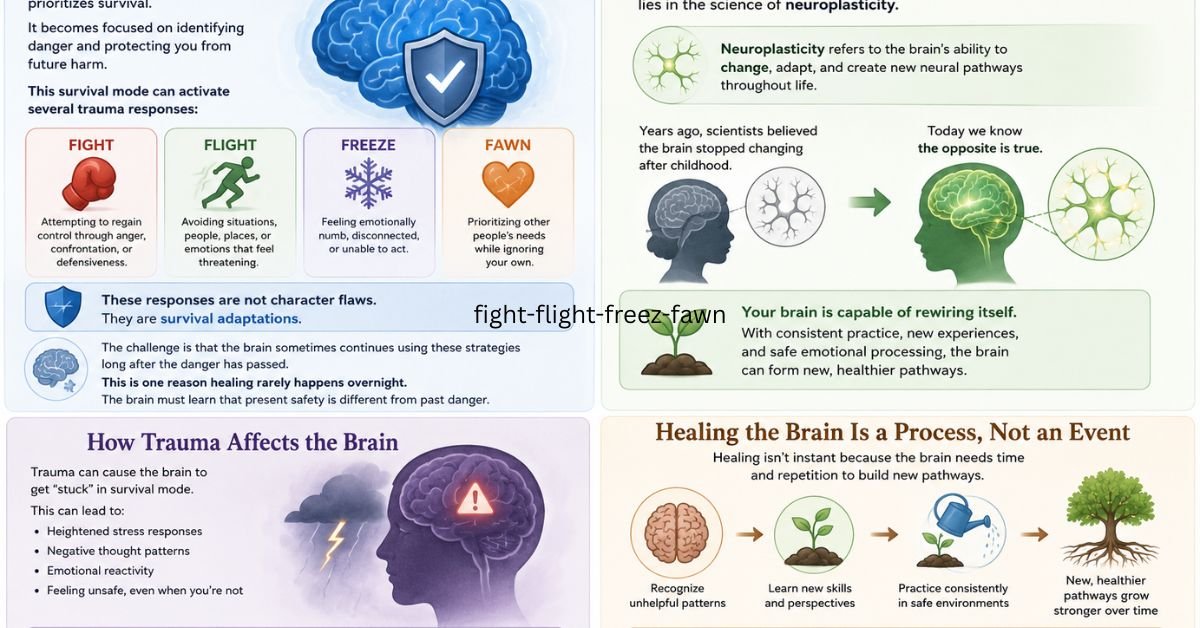
The brain is not fixed.
It has something called:
neuroplasticity (ability to change)
This means:
- new thoughts build new pathways
- calm repetition reduces stress loops
- brain learns safety again
: Simple CBT-Based Morning Reset

Try this daily:
Step 1
Sit quietly for 1 minute
Step 2
Breathe slowly (4–5 times)
Step 3
Say:
“I am safe right now.”
Step 4
Avoid phone for first 10 minutes
This tells your brain:
“No danger exists.”
H2: Healing Happens Slowly (But Surely)
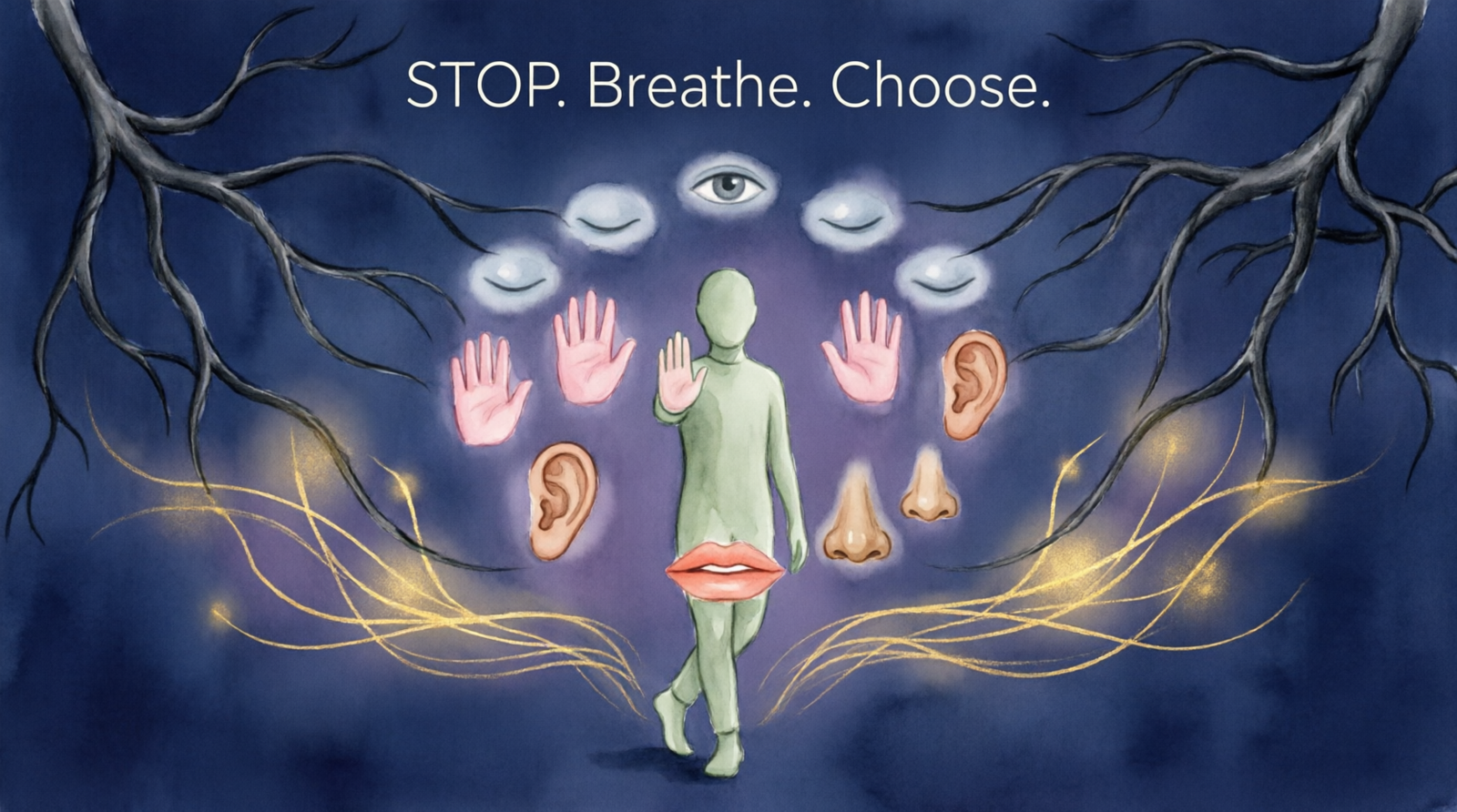
Brain change is not instant.
Because:
- old patterns are strong
- stress pathways are familiar
- brain resists change at first
But consistency creates new identity patterns.
: Why CBT Helps With Waking Up Tired
CBT helps by:
- changing thought patterns
- reducing stress interpretation
- breaking automatic loops
- calming emotional reactions
Over time:
- sleep improves
- mornings feel lighter
- emotional energy returns
: What Healing Actually Feels Like
Healing is not sudden happiness.
It feels like:
- lighter mornings
- fewer racing thoughts
- calmer emotions
- stable energy
When to Take It Seriously
If you experience:
- daily exhaustion
- emotional heaviness
- long-term sleep issues
It may indicate:
- chronic stress
- anxiety patterns
- emotional overload
Professional support or structured CBT practice may help.
FAQs
Q1: Why do I wake up tired even after 8 hours of sleep?
Because your brain may not enter deep emotional rest due to stress patterns.
Q2: Is waking up tired mental or physical?
Often it is mental (emotional fatigue), not just physical tiredness.
Q3: How does CBT help sleep?
CBT changes thought patterns that create stress and improves emotional relaxation.
Q4: What are neurons in simple words?
They are brain cells that control thoughts, emotions, and habits.
Q5: Can stress really affect sleep quality?
Yes, stress directly reduces deep sleep and increases brain activity at night.
Conclusion: Your Tiredness Is Not Random ‘It Is a Pattern
Waking up tired is not a personality flaw.
It is your brain’s response to:
- stress
- emotional overload
- survival thinking patterns
- repeated neural activity
From a CBT and brain science perspective, your mind is not just sleeping—it is still processing life.
But the most important truth is:
Your brain can change.
With awareness, new thought patterns, and emotional safety signals, your nervous system slowly learns to rest again.
And one day, you don’t just wake up after sleep
You wake up refreshed, present, and emotionally lighter
.

-
Day 7: From Survival Mode to Healing Mode – Rebuilding Self-Esteem and Hope with CBT(healora 7 day series)
Table of Contents Why This 7-Day Series Matters What Our Audience Is Saying Why This 7-Day CBT Journey Is Beneficial 1. Science-Backed Healing Day 7: From Survival Mode to Healing Mode 2. You Gain Self-Awareness Without Self-Judgment 3. Practical Tools, Not Just Theory 4. Addresses Root Causes, Not Just Symptoms 5. Builds Long-Term Resilience Day…
-
Healing Your Relationship With Money Does Not Guarantee Income — But It Can Change How You Live | CBT, Money Anxiety & Mindset

.Thank you for reading this post; don’t forget to subscribe! Table of Contents Why Money Feels So Emotional What CBT Says About Money Anxiety Financial Survival Mode: When Protection Becomes Exhaustion Healing Your Relationship With Money Is Not Magical Thinking A CBT Reflection Exercise for Money Anxiety Situation Thought Alternative Thought Why Visualization Can Still…
-
Why Your Brain Repeats Emotional Pain CBT & Brain Science Explained | Healora for Healing
Some pain ends.Thank you for reading this post; don’t forget to subscribe! But emotional pain sometimes stays. You tell yourself: “I want to move on.” Yet days later… A memory returns. A conversation repeats. A feeling comes back unexpectedly. And suddenly it feels like nothing changed. People often believe this means: But brain science suggests…












Leave a Reply