


CBT for Survival Mode & Identity Healing

Thank you for reading this post; don't forget to subscribe!
What If Your Survival Response Is Not Your Identity?hat If Your Survival Response Is Not Your Identity?
Have you ever looked at your life and wondered why you react the way you do?
Why do some situations instantly trigger anger?
Why does your mind constantly prepare for the worst?
Why do you avoid difficult conversations, shut down emotionally, or spend your life trying to keep everyone happy?
Many people believe these behaviors are simply part of their personality.
They say:
- “I have always been anxious.”
- “I am just an angry person.”
- “I am emotionally distant.”
- “I care too much about what people think.”
But what if these patterns are not your identity at all?
What if they are survival responses your nervous system learned during difficult seasons of life?
This is one of the most important lessons taught by Cognitive Behavioral Therapy (CBT).
The human brain is designed for survival.HealoraCBT 7-Day SEO Series
When we experience prolonged stress, emotional pain, trauma, rejection, uncertainty, or overwhelming life events, our nervous system develops strategies to protect us.
These strategies often appear as four common survival responses:
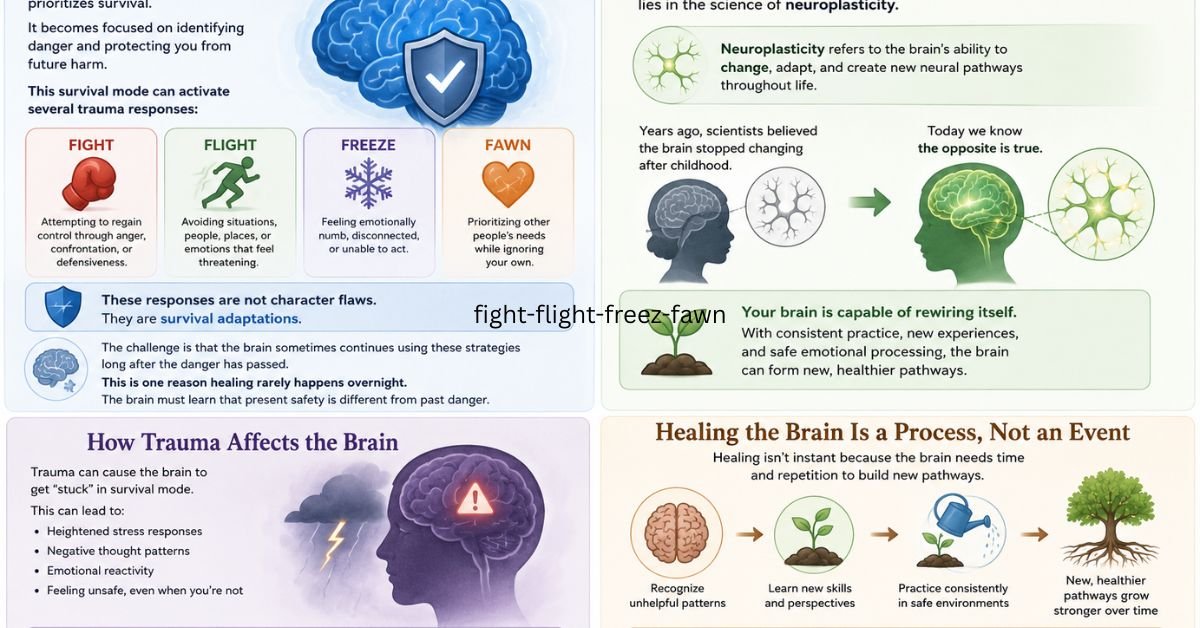
Fight
Trying to regain safety through anger, control, criticism, defensiveness, or confrontation.HealoraCBT 7-Day SEO Series
Flight
Trying to regain safety through avoidance, overworking, perfectionism, anxiety, or constantly staying busy.
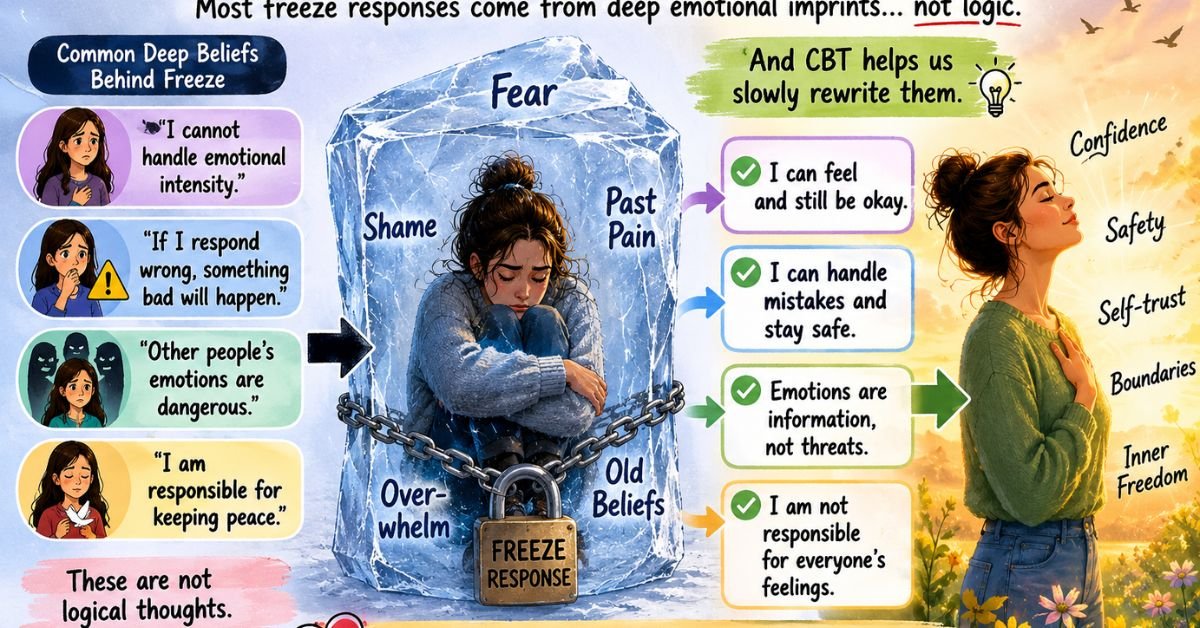
Freeze
Trying to regain safety through emotional shutdown, numbness, procrastination, withdrawal, or feeling stuck.
Fawn
Trying to regain safety through people-pleasing, over-apologizing, sacrificing personal needs, or seeking approval.
These responses are not signs of weakness.
They are signs that your mind and body learned how to survive.
However, problems arise when survival mode becomes a permanent way of living.HealoraCBT 7-Day SEO Series
Instead of responding to present-day reality, we continue reacting to old fears.
Instead of building our identity around our values, strengths, and goals, we build it around protection patterns.
Over time, survival mode can affect:HealoraCBT 7-Day SEO Series
- Self-esteem
- Relationships
- Emotional health
- Confidence
- Decision-making
- Personal growth
The good news is that healing is possible.HealoraCBT 7-Day SEO Series:
CBT teaches us that thoughts, emotions, and behaviors can change.
Your nervous system can learn safety again.
Your self-esteem can be rebuilt.
Your identity can grow beyond survival mode.
That is the purpose of this 7-day HealoraCBT series.
What You Will Learn During This 7-Day Journey
Day 1HealoraCBT 7-Day SEO Series
CBT for Survival Mode: Why Fight, Flight, Freeze & Fawn Become Your Identity
Understand how survival responses develop and why they often become part of how we see ourselves.
Day 2
When Anger Becomes Your Shield: Healing the Fight Response
Learn why anger often protects deeper emotions such as fear, hurt, shame, or vulnerability.
Day 3
Always Running Away? Healing the Flight Response
Explore anxiety, avoidance, perfectionism, and the hidden fear behind constantly staying busy.
Day 4
Feeling Stuck and Emotionally Numb? Healing the Freeze Response
Understand emotional shutdown, overwhelm, and how to reconnect with yourself.
Day 5
People Pleasing Is Not Your Personality: Healing the Fawn Response
Learn how approval-seeking develops and how to build healthier boundaries.
Day 6
You Are Not Your Trauma Response: Rebuilding Identity Through CBT
Discover how CBT helps separate who you are from what you learned to survive.
Day 7
From Survival Mode to Healing Mode: Rebuilding Self-Esteem and Hope
Bring everything together and create a long-term healing path for emotional growth.
A Message Before We Begin

If you recognize yourself in these pages, you are not broken.
You are not failing.
You are not alone.
Many people are living in survival mode without realizing it.
Healing does not begin when your past disappears.
Healing begins when you understand your patterns with compassion instead of judgment.
Over the next seven days, we will explore how CBT can help you move from survival to self-awareness, from fear to understanding, and from coping to healing.
Because hard days can become healing days when we learn that survival responses are part of our story—but they are not our identity.
Big Idea: CBT empowers you to decode and heal your trauma-driven survival responses, transforming them from automatic identity traps into manageable, conscious choices. Audience: Individuals seeking to understand and heal their trauma and survival responses using CBT principles. Density: balanced Visual Style: Empathetic, professional, and structured. Soft, calming color palette with clean typography and gentle, supportive vector illustrations.
- Cover: Healing Survival Responses with CBT(subtitle:A 7-Day Journey to Reclaim Your Authentic Self)
- CBT reframes survival responses so they stop defining your core identity.
- Anger acts as a shield, protecting deeper vulnerabilities that CBT helps uncover.
- Constant busyness is a flight response that CBT gently redirects toward safety.
- The freeze response traps you in paralysis, but CBT provides safe pathways to re-engage.
- People-pleasing is a fawn response that CBT helps you replace with healthy boundaries.
- Daily CBT regulation tools empower you to manage triggers before they escalate.
- Integrating these practices builds long-term resilience and reclaims your authentic self.
CORE Structure
- Deep version: Mental health professionals and therapists seeking a structured CBT framework for trauma-informed care.
- Expanded version: General wellness enthusiasts curious about the intersection of trauma healing and cognitive behavioral therapy.
- Cross-domain version: Corporate HR and leadership teams aiming to build psychologically safe and resilient workplace cultures.
The 7-Day Identity & Survival Tracker
Each day, complete the following grid to build a “fact-based” evidence log. This helps shift your identity from what you feel to what you know.
| Day | Focus Theme | Daily Prompt | Survival Metric |
| 1 | Fact vs. Fiction | What happened vs. what I told myself happened? | Rate: Anxiety (1-10) |
| 2 | Defining Silence | How did I react to a “void” today? | Mood Shift (+/-) |
| 3 | Breaking Cycles | What old identity trait did I release today? | Resilience Score |
| 4 | Neutral Ground | Find a situation with no “meaning”—just data. | Calm Level |
| 5 | Core Values | Is this behavior serving my identity goals? | Alignment % |
| 6 | Acceptance | What can I control? (Focus on the ‘Survive’ part) | Stress Reduction |
| 7 | Integration | What is one new “truth” about myself? | Confidence Level |
How to use this tool
1. The “Truth Audit” (Daily Activity)
Use this structure to process your thoughts during the day:
- The Situation: Write down a specific event that caused distress.
- The Assumption: Identify your “autopilot” interpretation (e.g., “They are ignoring me, so I must be unworthy”).
- The Reality Check: List 3 pieces of objective evidence that contradict the assumption (e.g., “They are busy,” “They sent a text yesterday,” “I am currently safe”).
2. Mood & Survival Calibration
At the end of each day, perform a quick scan:
- Survival Check: Did I meet my basic needs today? (Hydration, movement, rest).
- Identity Check: Did I act in alignment with the version of me I want to be, or the version I am afraid of being?
3. The “Silence” Protocol (Based on your Day 2 Note)
When you encounter silence or a shift in behavior from others, treat it as neutral data rather than a personal signal. Ask yourself:
“If I knew for a fact they were having a bad day, how would I act differently right now?”
A Note on CBT Integration:
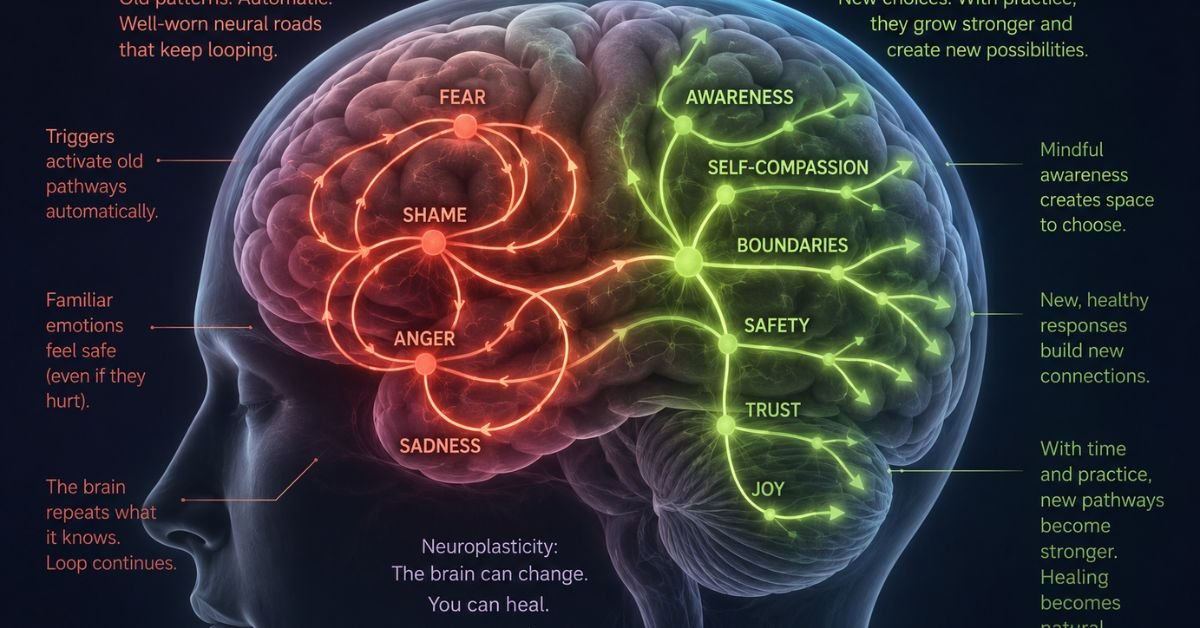
This tool functions as a Thought Record. By journaling your “Assumption” vs. “Reality,” you are physically rewiring the neural pathways that create your emotional triggers. Consistency is more important than perfection; if you miss a day, simply observe your react







Leave a Reply