


.
Thank you for reading this post; don't forget to subscribe!
Why Money Feels So Emotional

Money is often treated as numbers.Healing Your Relationship With Money
But for many people, money feels like:
- safety
- identity
- freedom
- control
- protection
- self-worth
That is why financial stress rarely stays financial.
It becomes emotional.Healing Your Relationship With MoneyCBT, Money Anxiety & Mindset
You may notice:
- checking your account repeatedly
- difficulty resting
- overthinking purchases
- fear of making decisions
- guilt after spending
- feeling behind in life
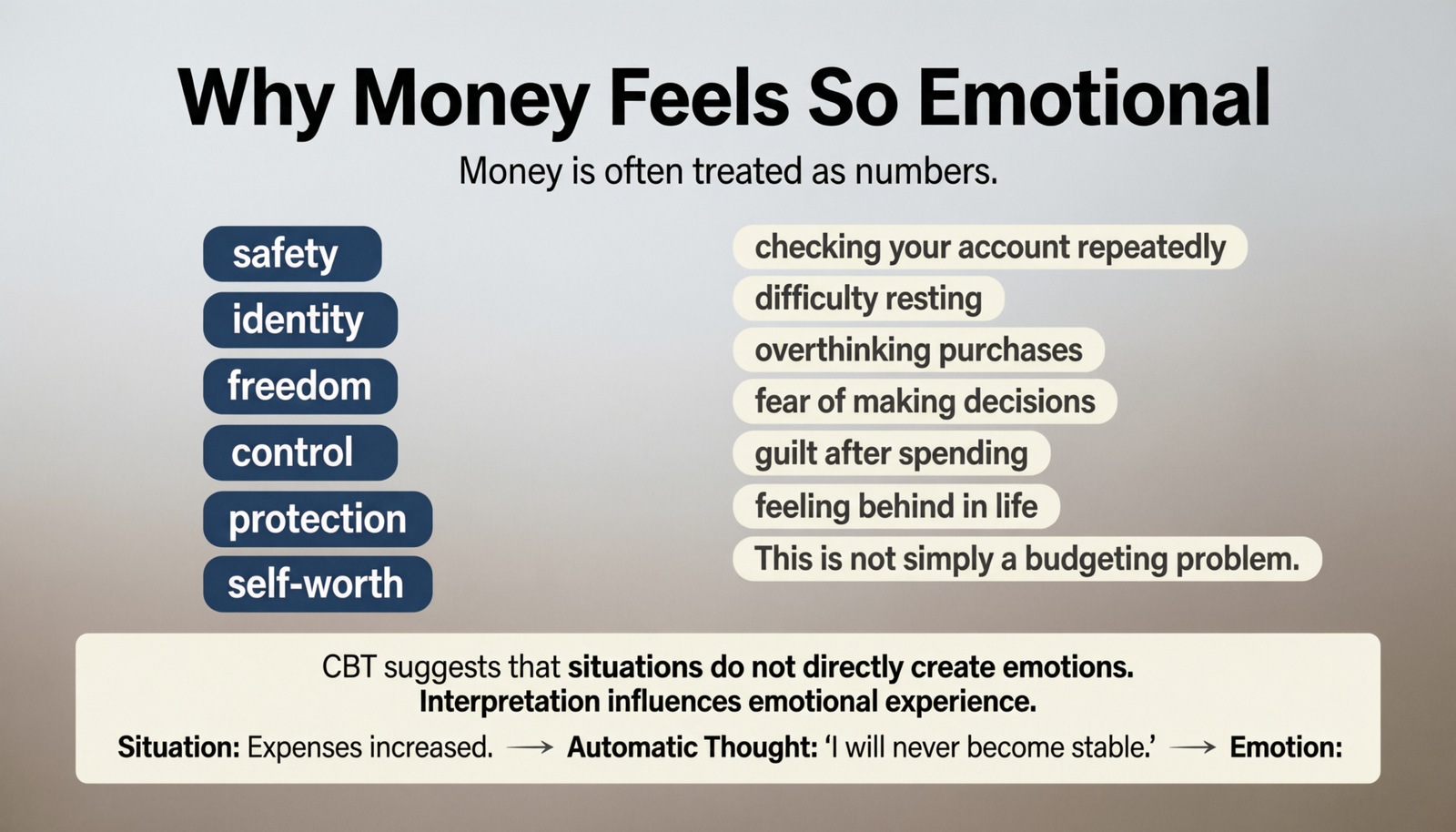
This is not simply a budgeting problem.
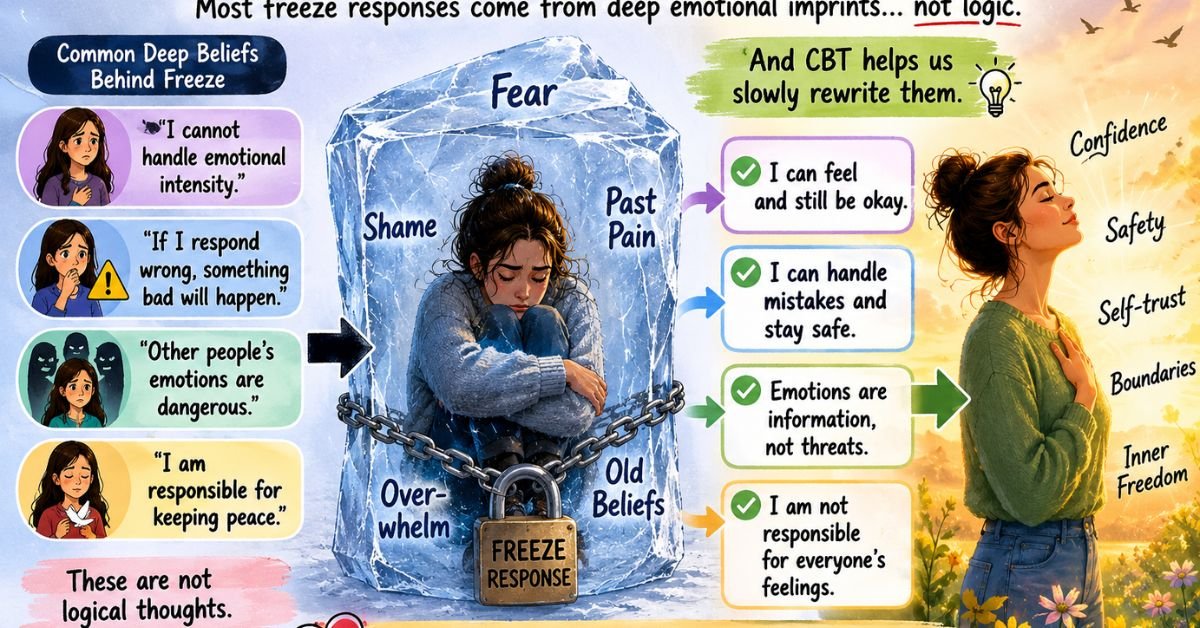
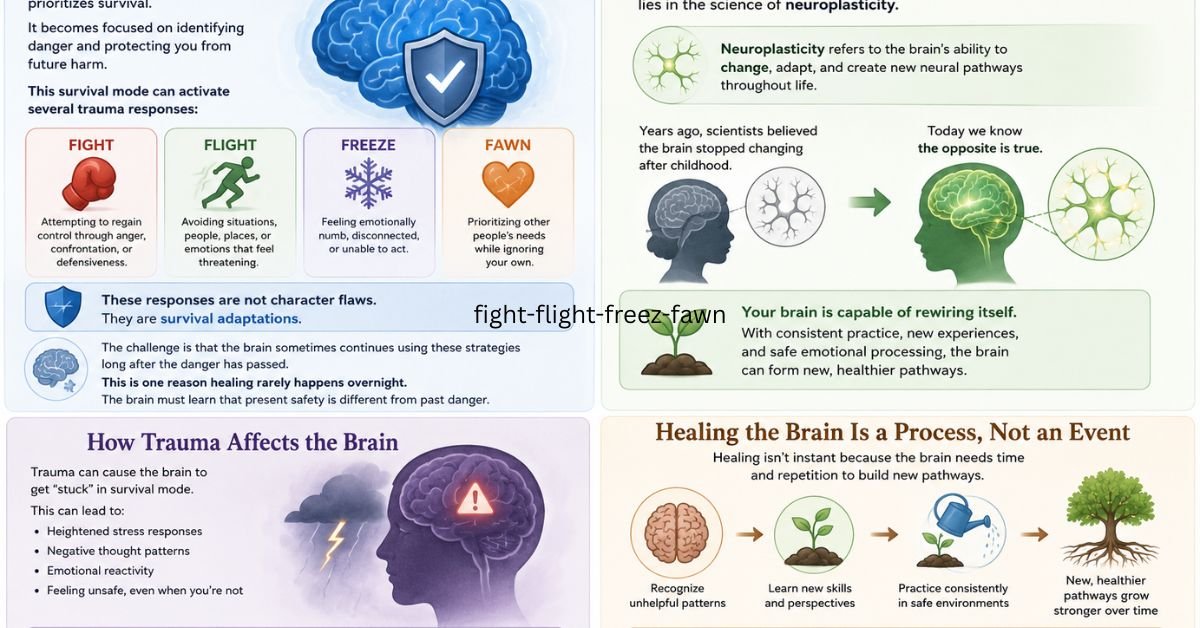
Sometimes the nervous system begins responding as if uncertainty equals danger.
What CBT Says About Money Anxiety
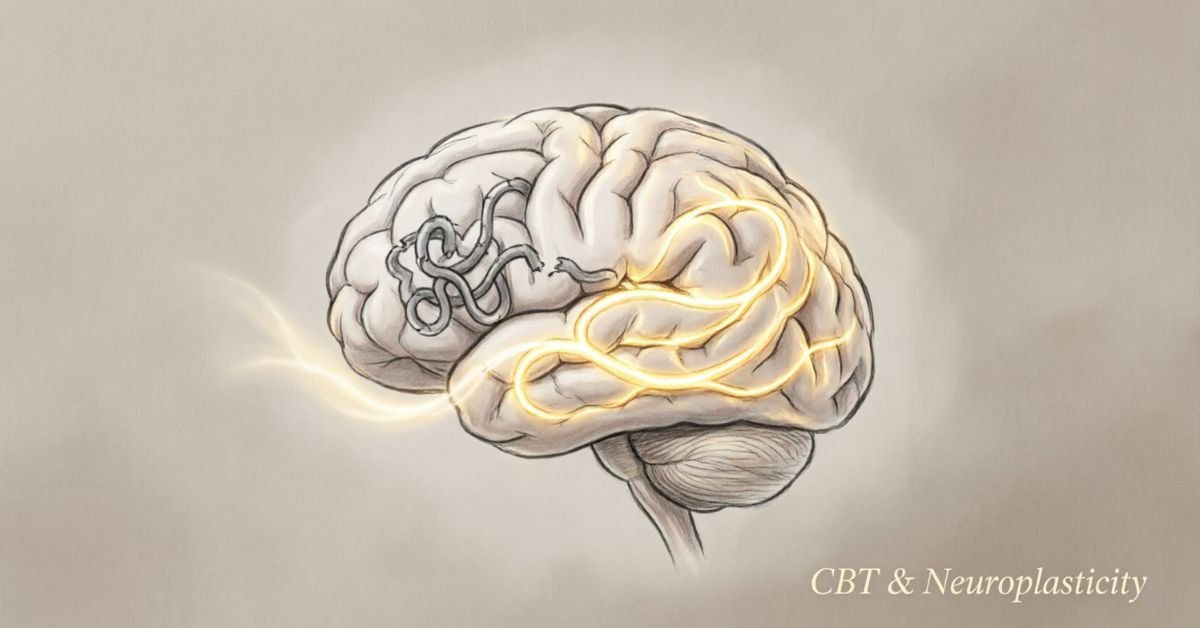
CBT (Cognitive Behavioral Therapy) suggests that situations do not directly create emotions.
Interpretation influences emotional experience.
Example:
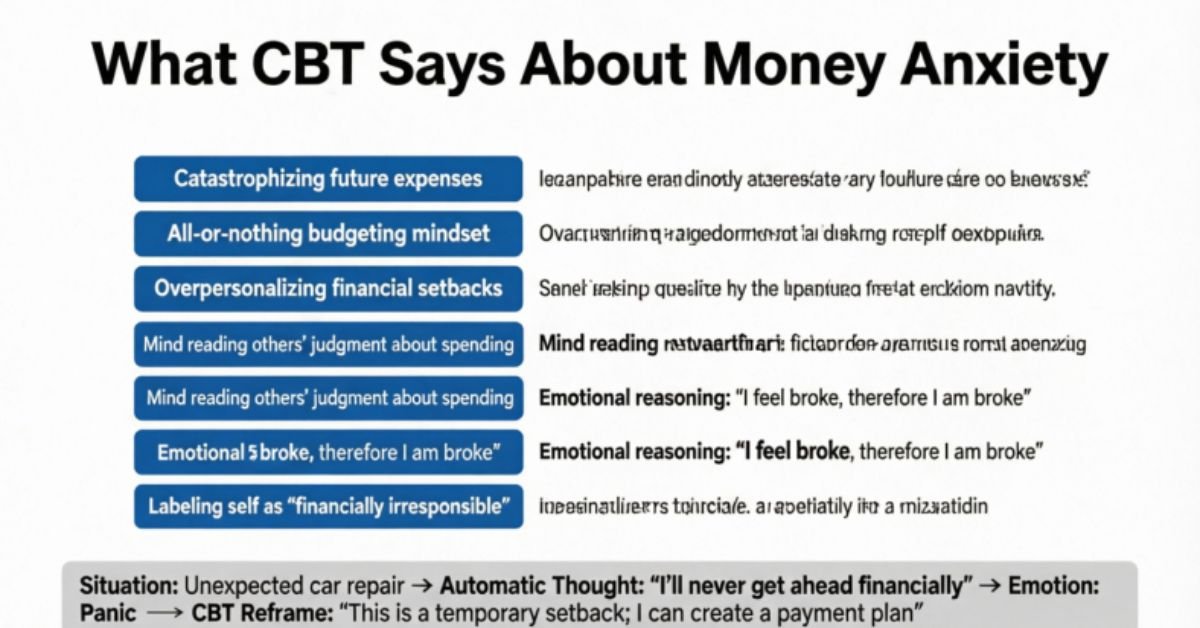
Situation: Expenses increased.
Automatic Thought:
“I will never become stable.”
Emotion:
Fear
Body:
Tension, fatigue
Behavior:
Avoidance, overchecking, panic decisions
Over time this loop becomes familiar.
The brain starts protecting before real danger appears.
Financial Survival Mode: When Protection Becomes Exhaustion
Financial survival mode may sound productive.
But emotionally it can look like:
- staying constantly alert
- difficulty enjoying success
- inability to stop thinking
- expecting financial disaster
- guilt during rest
The brain says:
“If I stay prepared, I stay safe.”
But constant protection eventually becomes emotional exhaustion.
Healing Your Relationship With Money Is Not Magical Thinking
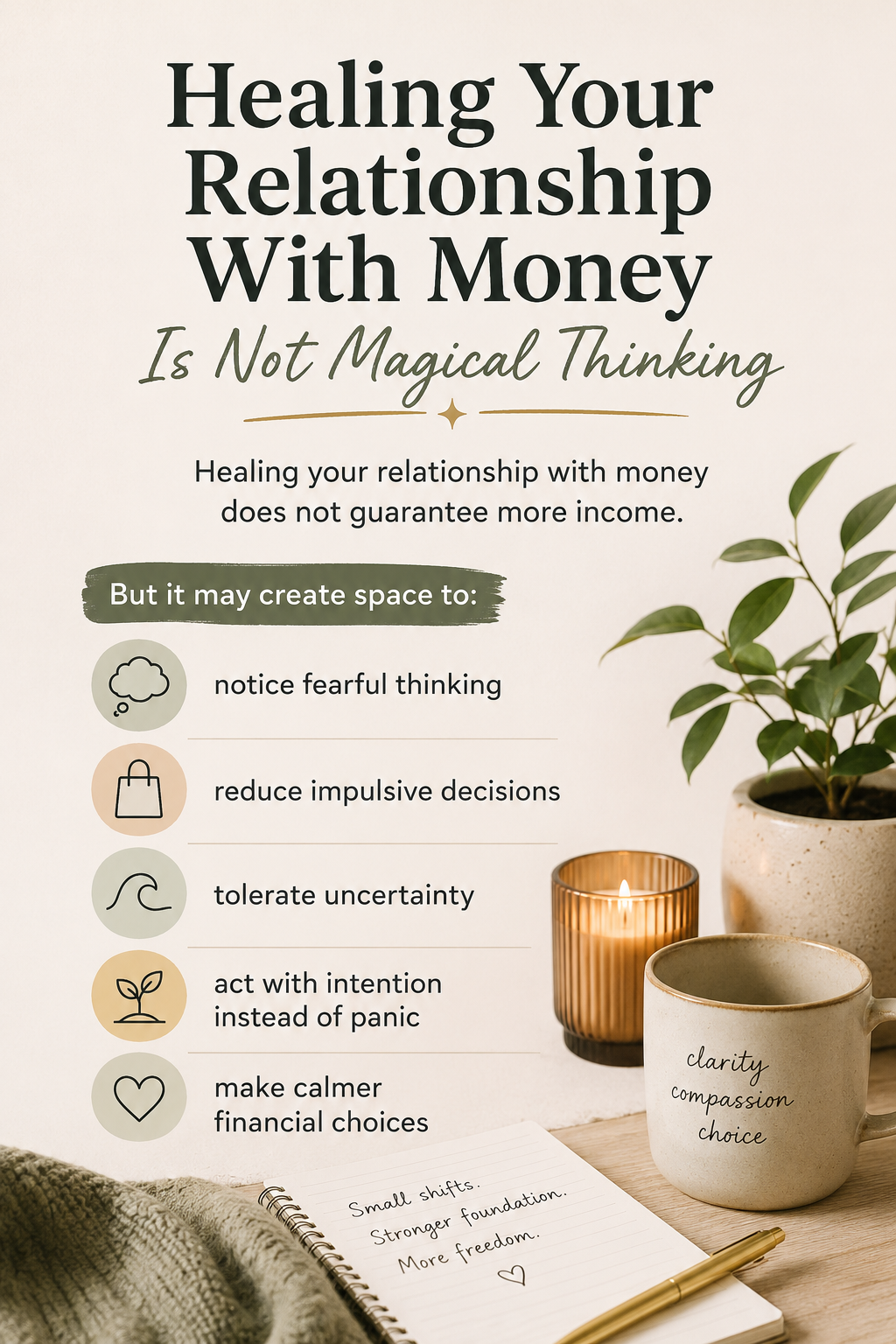
Healing your relationship with money does not guarantee more income.
But it may create space to:
- notice fearful thinking
- reduce impulsive decisions
- tolerate uncertainty
- act with intention instead of panic
- make calmer financial choices
Healing changes the experience of money.
Not the laws of economics.
A CBT Reflection Exercise for Money Anxiety
Write three columns.
Situation
What happened?
Thought
What story did my mind create?
Alternative Thought
What would a calmer version of me say?
Example:
Situation: Unexpected expense
Thought:
“I am failing.”
Alternative Thought:
“This feels stressful, but one expense does not define my future.”
Why Visualization Can Still Be Useful

Visualization becomes healthier when used as direction—not prediction.
Instead of:
“I imagine money will appear.”
Try:
“I imagine becoming someone who makes calmer decisions.”
That small shift changes behavior.
Questions to Journal Tonight
- What does money emotionally represent to me?
- When do I feel most unsafe financially?
- What fear keeps repeating?
- What would intentional action look like this week?
What is the first step toward financial healing?
Notice whether your decisions are coming from panic or intention.
Moving Beyond Survival – Choosing Safety as a Foundation
In our exploration of financial anxiety, we have often framed emotional safety as the final destination. We treat it as the “goal”—that elusive state where the bank account is full, the bills are paid, and the pulse finally slows down.
But what if we have been viewing the map upside down?
Emotional safety is not the final goal; it is the beginning.
When you operate from a place of survival—where every notification from your banking app triggers a fight-or-flight response—you are not making decisions. You are reacting. Your prefrontal cortex, the part of your brain responsible for long-term planning and logical problem-solving, is effectively offline.
The Shift: From Fear to Clarity
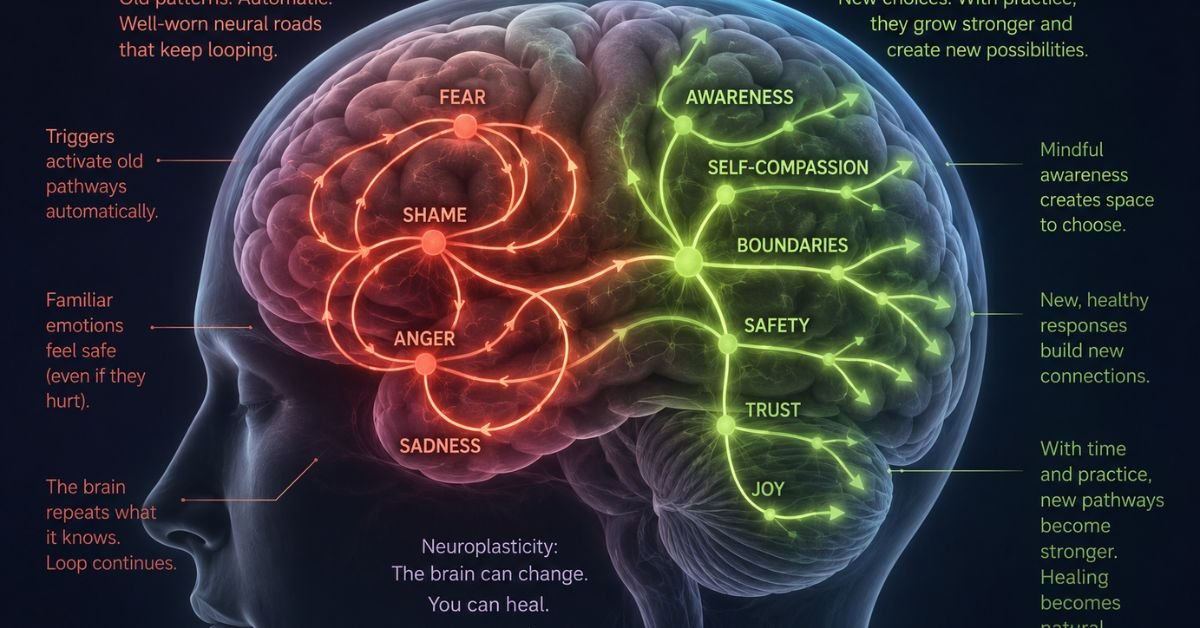
When you apply CBT (Cognitive Behavioural Therapy) and NLP (Neuro-Linguistic Programming) to financial stress, you aren’t just “trying to feel better.” You are physically and mentally widening your window of tolerance.
- The NLP Perspective: Fear functions like a “noise filter” that distorts your perception of reality. It narrows your focus until all you can see is the immediate threat. When that fear becomes quieter through grounding, your decision-making capacity expands. You move from limbic reactivity to executive clarity.
- The CBT Perspective: Financial anxiety often relies on cognitive distortions like catastrophizing (“If I can’t pay this, I will lose everything”) or all-or-nothing thinking. By identifying these patterns, you create a “pause” between the stimulus (the bill) and your response. In that pause, you gain the ability to choose an action based on your values rather than your panic.
Integrating EFT for Financial Regulation
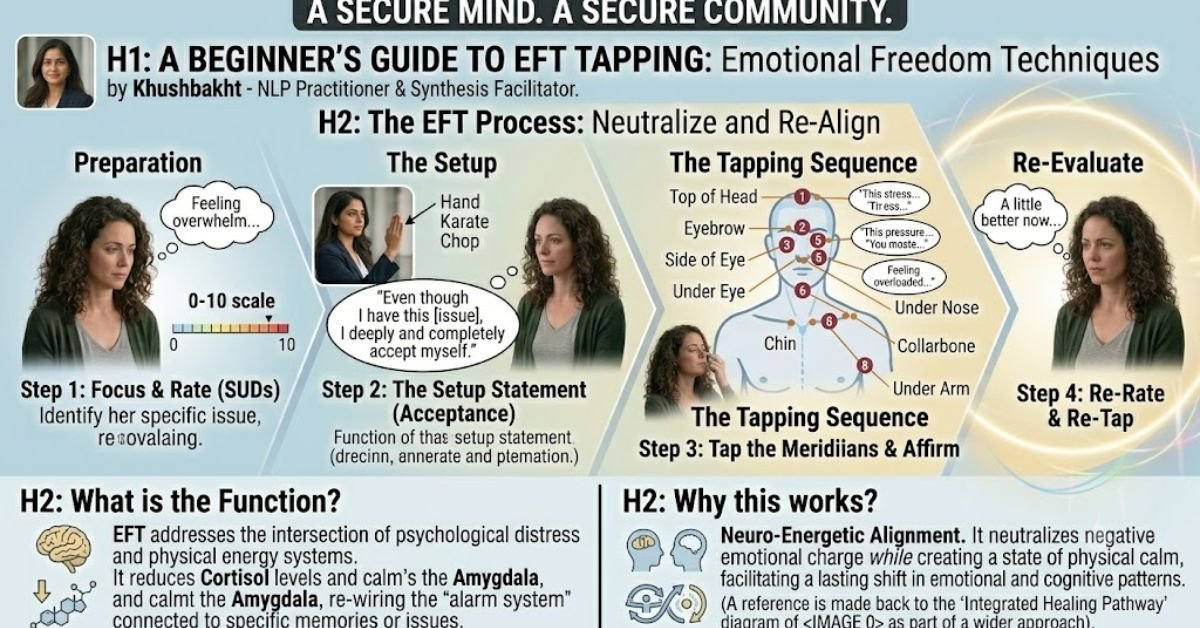
While CBT and NLP help us restructure our thoughts, EFT (Emotional Freedom Techniques) provides the somatic release required to lower the physical intensity of fear.
When your heart races at the sight of a financial statement, you cannot think clearly. EFT allows you to tap into your nervous system and tell your body: “I am physically safe in this moment, even if my bank account is currently signaling danger.”
The “Foundation Building” Tapping Sequence
Use this sequence when you feel your decision-making narrowing due to money stress.
- Setup (Karate Chop Point): “Even though I feel this intense pressure to solve everything right now to be safe, I acknowledge that my fear is not a strategy. I choose to open my mind to a clearer, calmer path.” (Repeat 3 times).
- Tapping through the points:
- Eyebrow: “This financial noise is so loud.”
- Side of Eye: “It’s hard to think when I’m in survival mode.”
- Under Eye: “I am releasing the need to panic to find a solution.”
- Under Nose: “Safety is not the end goal; it’s my starting point.”
- Chin: “When my fear is quiet, my decisions are clear.”
- Collarbone: “I give myself permission to breathe first, decide second.”
- Under Arm: “I am building a foundation of calm.”
- Top of Head: “I am capable of navigating this with clarity.”
Your Action Plan for Today
To move from “Survival” to “Strategy,” focus on one objective, low-stakes decision today.
- The Somatic Check: Before looking at your finances, perform two rounds of the tapping sequence above.
- The Neutral Audit: Look at one single financial task perhaps a budget category or a pending bill.
- The Question: Ask yourself: “If I were already safe, what is the most logical next step I would take?”
By detaching the urgency of survival from the logic of management, you aren’t just surviving the day; you are building the architecture for long-term financial health.
How does your perspective on your current financial “to-do” list change when you approach it from this foundation of safety rather than an attempt to achieve it?
Conclusion
Healing your relationship with money does not promise wealth.
But it may reduce fear.
And when fear becomes quieter, decisions become clearer.
Sometimes emotional safety is not the final goal.
It is the beginning.
FAQs
Can CBT cure money anxiety?
CBT aims to help people understand thoughts, emotions, and behaviors. It may support healthier responses to financial stress.
Does manifestation create money?
Visualization and intention can influence motivation and habits, but they do not guarantee outcomes.
Why do financial problems feel physical?
Stress responses affect emotions, attention, and the body together.
What is the first step toward financial healing?





















Leave a Reply