

Thank you for reading this post; don't forget to subscribe!
- How Your Brain Learns to Respond Differently
- How CBT Rewires the Fear Circuit
- Mindfulness and the Prefrontal Cortex
- Panic Attacks: When the Alarm System Misfires
- Understanding Death Anxiety
- Health Anxiety and Catastrophic Thinking
- Practical CBT Exercises
- Case Example
- Conclusion
- Frequently Asked Questions
- Scientific References
- JSON-LD FAQ Schema
- Suggested Internal Links
- Rank Math Optimization Checklist
How Your Brain Learns to Respond Differently
How Your Brain Learns to Respond Differently
How Your Brain Learns to Respond Differently
CBT for Happy Married Life: How a 90-Second Pause Can Transform Emotional Arguments

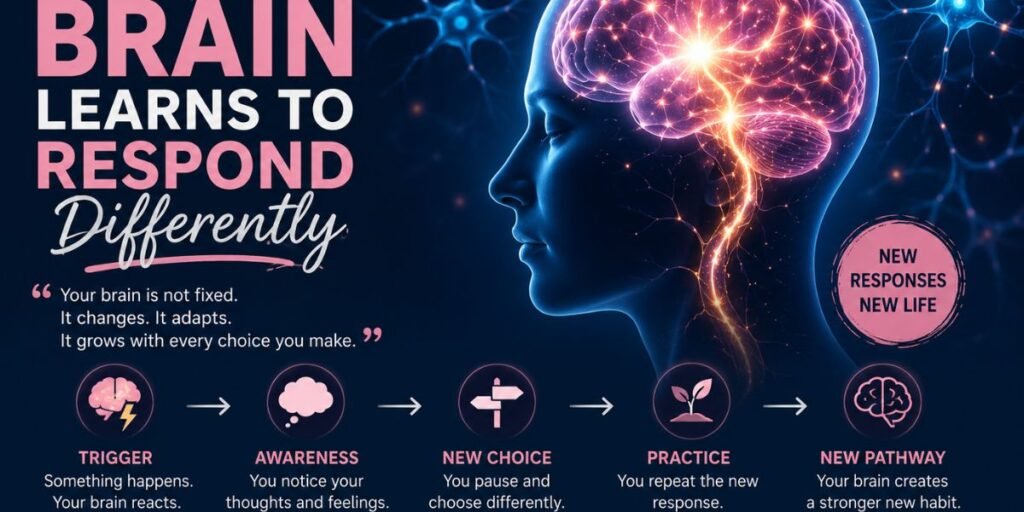
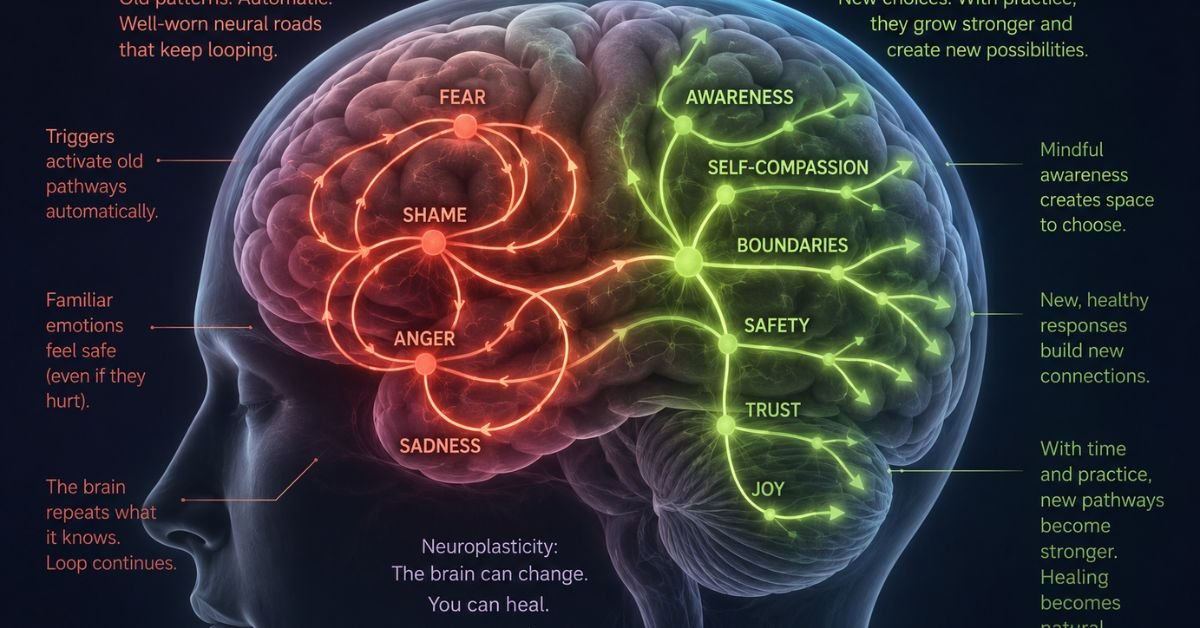
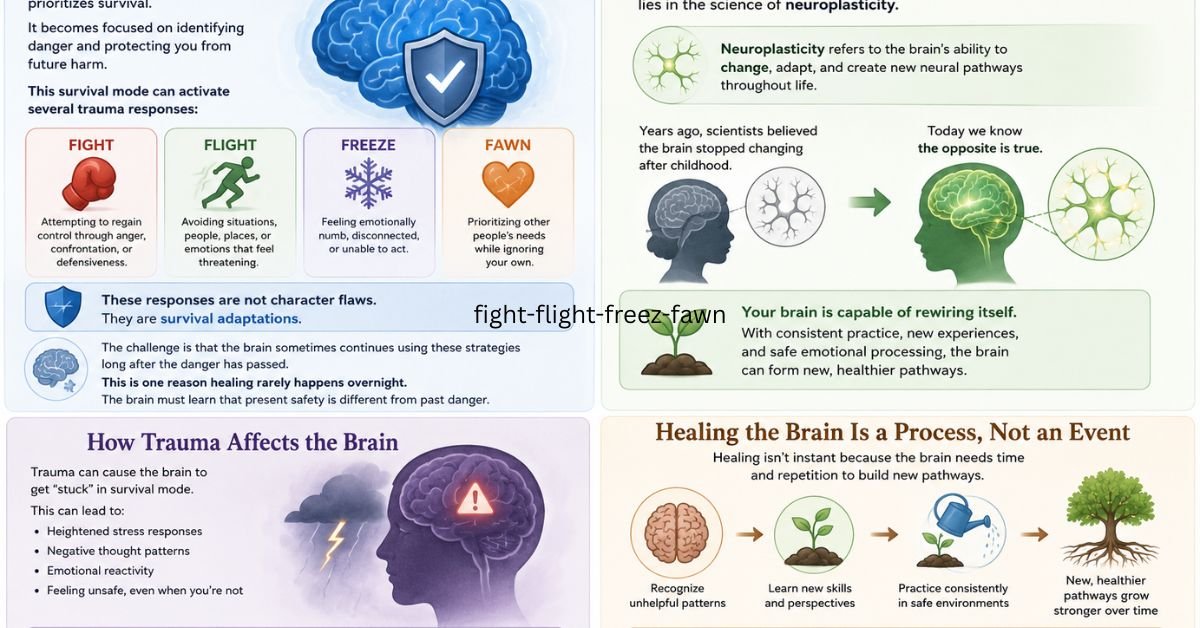
One of the most encouraging discoveries in modern neuroscience is neuroplasticity—the brain’s ability to reorganize itself by creating and strengthening new neural pathways throughout life. This means that anxious thinking patterns are not permanent. With consistent practice, your brain can learn healthier ways to respond to stress, uncertainty, and fear.
For many people living with anxiety, the brain repeatedly activates the same fear pathways. Over time, these pathways become more efficient, making anxious thoughts feel automatic. The good news is that the brain can also strengthen new pathways based on calmer, more balanced responses.How Your Brain Learns to Respond Differently
Cognitive Behavioral Therapy (CBT) uses this principle by encouraging repeated practice of healthier thinking and behavior. Every time you question a catastrophic thought, tolerate uncertainty, or face a feared situation without avoiding it, you reinforce neural circuits associated with reasoning, emotional regulation, and resilience.How Your Brain Learns to Respond Differently
Neuroplasticity is not instant. Like learning a musical instrument or developing a new fitness routine, meaningful change requires consistent repetition. However, research suggests that repeated CBT exercises can produce measurable improvements in emotional regulation and symptom reduction.
How CBT Rewires the Fear Circuit
Fear itself is not the problem. The challenge occurs when the brain begins treating safe situations as dangerous.
In anxiety disorders, the fear circuit can become hypersensitive. A harmless bodily sensation, an intrusive thought, or uncertainty about the future may trigger the amygdala as though immediate danger exists.How Your Brain Learns to Respond Differently
CBT helps interrupt this cycle by changing how the brain interprets these experiences.
Common CBT techniques include:How Your Brain Learns to Respond Differently
- Identifying automatic negative thoughts.
- Examining evidence for and against fearful beliefs.
- Recognizing common cognitive distortions such as catastrophizing, fortune-telling, and all-or-nothing thinking.
- Developing more balanced interpretations.
- Gradually approaching feared situations instead of avoiding them.
Repeated practice strengthens the brain’s ability to pause before reacting emotionally. Over time, many people experience reduced anxiety intensity and increased confidence in managing uncertainty.How Your Brain Learns to Respond Differently
Mindfulness and the Prefrontal Cortex

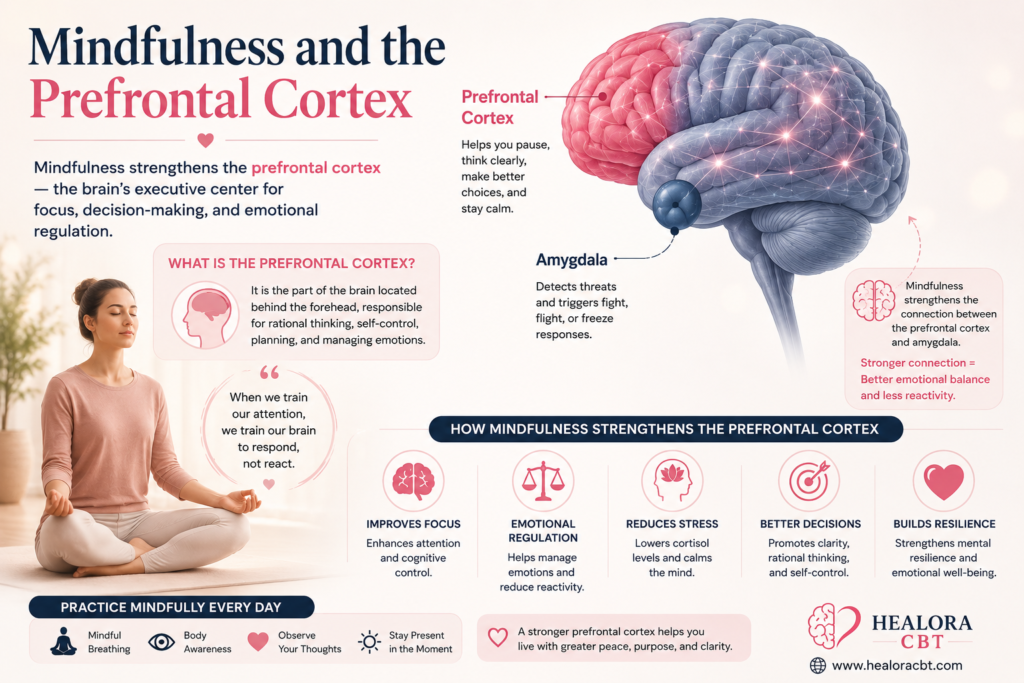
Mindfulness complements CBT by helping people observe thoughts without immediately believing or reacting to them.
Instead of asking, “How do I stop this thought?” mindfulness encourages a different question:
“What happens if I simply notice this thought without fighting it?”How Your Brain Learns to Respond Differently
Research suggests that regular mindfulness practice may improve attention, emotional regulation, and functional communication between the prefrontal cortex and emotion-processing regions of the brain. While mindfulness is not a replacement for CBT, it can enhance the skills learned during therapy.
Simple mindfulness practices include How Your Brain Learns to Respond Differently
- Focusing on the sensation of breathing.
- Observing thoughts without judging them.
- Returning attention to the present whenever the mind wanders.
- Accepting temporary discomfort instead of struggling against it.
These practices help reduce emotional reactivity while supporting calmer decision-making.
Panic Attacks: When the Alarm System Misfires
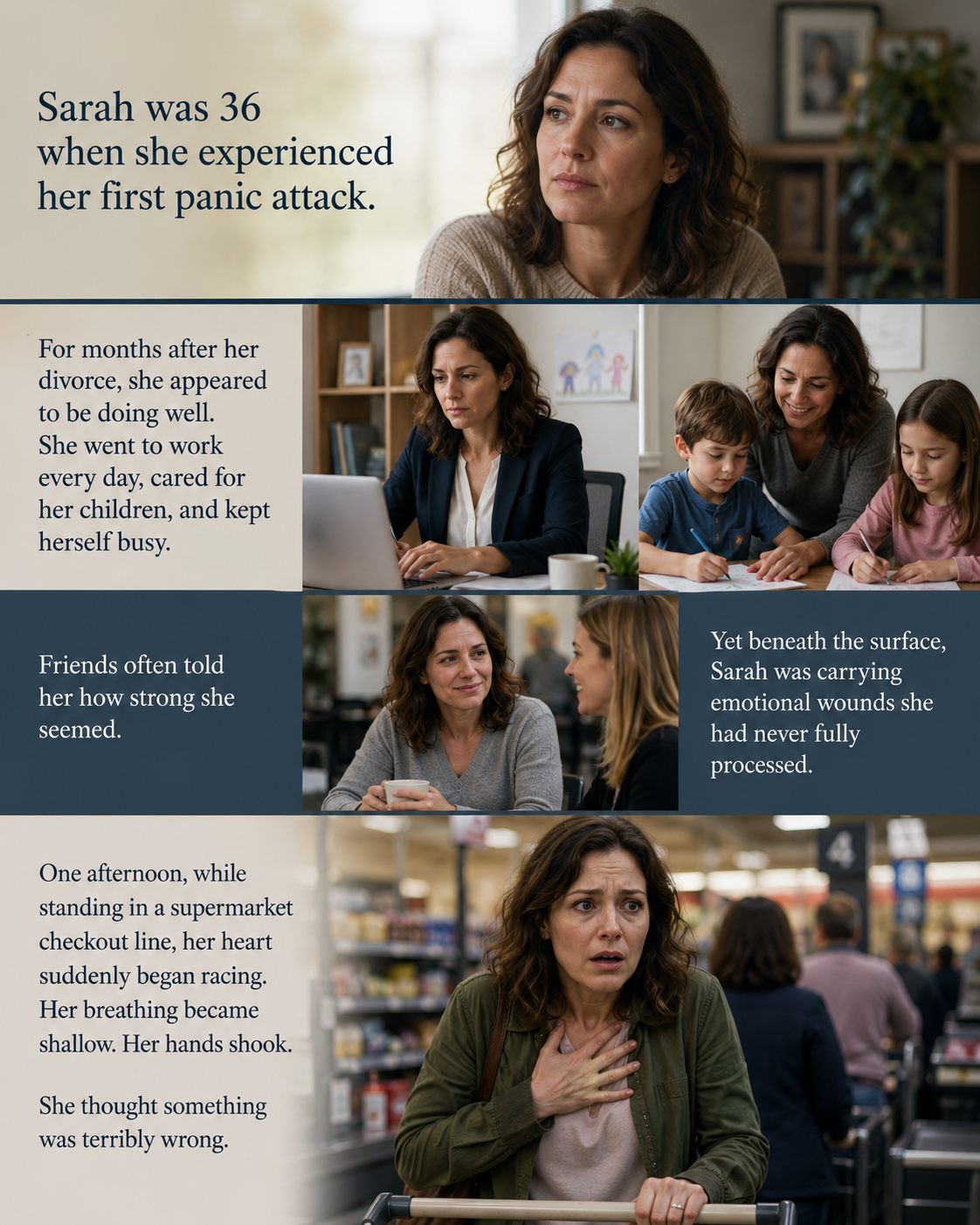
A panic attack is an intense episode of fear accompanied by physical symptoms such as:How Your Brain Learns to Respond Differently
- Rapid heartbeat
- Chest tightness
- Shortness of breath
- Dizziness
- Sweating
- Trembling
- Feeling detached from reality
- Fear of losing control or dying
Although these sensations can feel overwhelming, panic attacks are not proof of immediate danger.
CBT helps people reinterpret these physical sensations accurately. Rather than viewing a racing heart as evidence of a heart attack, individuals learn to recognize it as part of the body’s stress response.
Over time, this reduces fear of the symptoms themselves, breaking the cycle that often maintains panic disorder.
Understanding Death Anxiety
Death anxiety is a fear related to mortality, uncertainty, or the possibility of losing loved ones.
Occasional thoughts about death are a normal part of the human experience. However, when these fears become persistent and interfere with daily life, they may contribute to chronic anxiety.
People experiencing death anxiety often engage in:
- Constant reassurance seeking.
- Excessive health monitoring.
- Repeated internet searches for symptoms.
- Avoidance of conversations about illness or death.
- Intrusive “what if” thoughts.
CBT does not attempt to eliminate uncertainty. Instead, it teaches individuals how to respond to uncertainty without allowing fear to dominate their lives.
Health Anxiety and Catastrophic Thinking
Health anxiety occurs when normal bodily sensations are repeatedly interpreted as signs of serious illness.
For example:
- A headache becomes evidence of a brain tumor.
- A skipped heartbeat becomes evidence of heart disease.
- Temporary dizziness becomes evidence of an emergency.
CBT teaches people to examine these interpretations critically by asking:
- What objective evidence supports this conclusion?
- What alternative explanations exist?
- Have similar symptoms resolved safely before?
- Am I responding to facts or fear?
Learning to answer these questions consistently helps weaken catastrophic thinking over time.
Practical CBT Exercises
1. Evidence Journal
Write down one anxious thought each day.
Record:
- The thought
- Evidence supporting it
- Evidence against it
- A balanced conclusion
2. Five-Senses Grounding
When anxiety rises, identify:
- Five things you can see.
- Four things you can touch.
- Three things you can hear.
- Two things you can smell.
- One thing you can taste.
This exercise redirects attention to the present moment.
3. Behavioural Experiment
Choose one feared prediction.
Test it safely.
Compare what you predicted with what actually happened.
These real-life experiments often reduce anxious beliefs more effectively than reassurance alone.
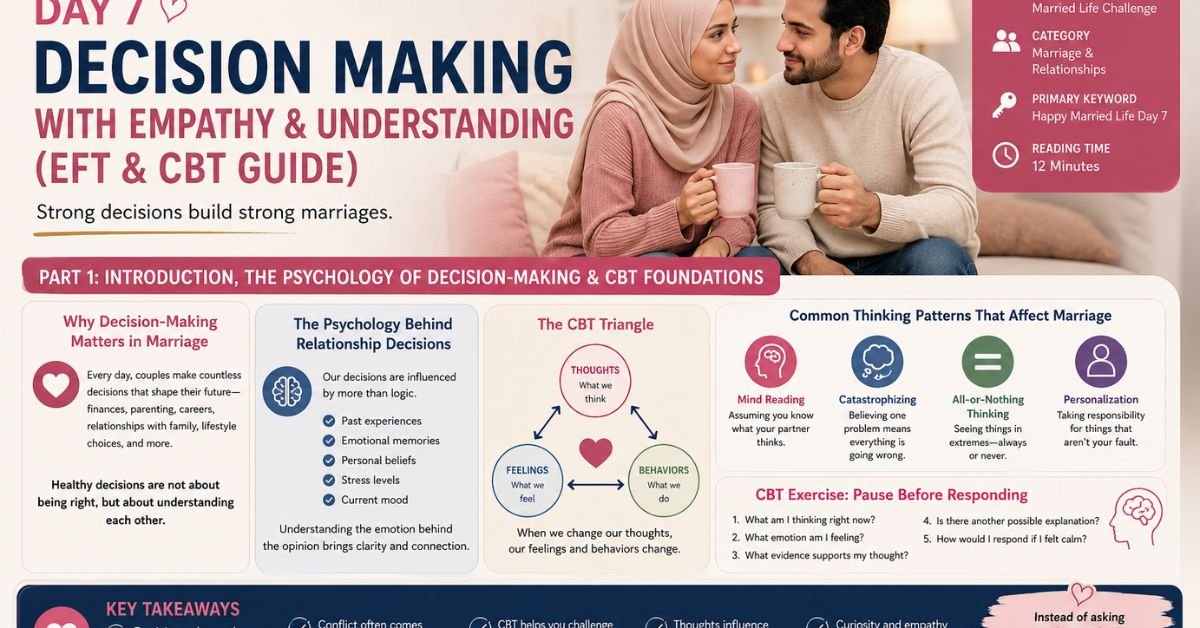
The Thought-Feeling-Behavior Triangle
During the pause, quickly ask yourself:
- Thought: “What am I telling myself right now?” (e.g., “They don’t respect me”)
- Feeling: “What emotion is this creating?” (e.g., Anger, hurt)
- Behavior: “What do I want to do?” (e.g., Attack, withdraw)
- Reframe: “Is there another explanation?” (e.g., “They’re stressed, not attacking me”)
Case Example
Sarah frequently worried that every headache indicated a life-threatening illness. She searched medical websites repeatedly, visited emergency departments for reassurance, and avoided making future plans because she feared dying unexpectedly.
Through CBT, she learned to identify catastrophic thoughts, examine evidence objectively, reduce reassurance-seeking, and gradually tolerate uncertainty.
After several months of consistent practice, Sarah reported fewer panic episodes, less time spent checking symptoms, and greater confidence in her ability to manage anxiety. While occasional worries still occurred, they no longer controlled her daily life.
Conclusion
Understanding how the prefrontal cortex calms fear offers hope to anyone living with anxiety. Although the amygdala reacts quickly to perceived danger, the brain is capable of learning healthier responses through neuroplasticity.
CBT combines scientific understanding with practical skills that help individuals challenge catastrophic thinking, regulate emotions, and build lasting resilience. Recovery does not mean eliminating every anxious thought—it means developing the confidence to respond thoughtfully rather than automatically.
If anxiety, panic attacks, health anxiety, or death anxiety are affecting your daily life, working with a qualified CBT professional can provide structured, evidence-based support tailored to your needs.
Frequently Asked Questions
1. What is the prefrontal cortex?
It is the brain region involved in planning, reasoning, decision-making, and emotional regulation.
2. How does the prefrontal cortex calm fear?
It evaluates whether a threat is real and helps regulate activity in the brain’s fear-processing systems.
3. What role does the amygdala play?
The amygdala detects potential threats and activates the body’s stress response.
4. Can CBT change the brain?
Research suggests CBT is associated with changes in brain activity and improved emotional regulation through repeated practice.
5. What is neuroplasticity?
Neuroplasticity is the brain’s ability to adapt and strengthen new neural pathways throughout life.
6. Is mindfulness the same as CBT?
No. Mindfulness and CBT are different approaches, but they are often used together because they complement one another.
7. How many CBT sessions are usually needed?
Many people notice improvement within 8–20 sessions, although this varies depending on individual circumstances.
8. Can CBT help panic attacks?
Yes. CBT is widely recommended as an evidence-based treatment for panic disorder and panic attacks.
9. Does CBT help health anxiety?
Yes. CBT helps individuals evaluate catastrophic interpretations more realistically and reduce reassurance-seeking behaviors.
10. Can CBT reduce death anxiety?
Many people find CBT helpful for managing distressing thoughts related to mortality by improving tolerance of uncertainty and reducing catastrophic thinking.
11. Does mindfulness reduce fear?
Regular mindfulness practice may improve emotional regulation and reduce reactivity to anxious thoughts.
12. Is anxiety a sign of weakness?
No. Anxiety is a common mental health condition involving complex interactions between brain processes, thoughts, emotions, and behavior.
13. Can anxiety return after treatment?
Symptoms can fluctuate over time, but CBT provides lifelong skills that many people continue using effectively.
14. When should I seek professional help?
If anxiety is persistent, causes significant distress, or interferes with work, relationships, or daily functioning, consult a qualified mental health professional.
15. Can I practise CBT techniques on my own?
Self-help strategies can be valuable, but persistent or severe anxiety often benefits from guidance by a trained CBT therapist.
Scientific References
- Beck, A. T. (1976). Cognitive Therapy and the Emotional Disorders.
- Beck, J. S. (2021). Cognitive Behavior Therapy: Basics and Beyond (3rd ed.).
- American Psychological Association. Clinical Practice Guideline for the Treatment of Anxiety Disorders.
- National Institute for Health and Care Excellence (NICE). Guidelines on Generalised Anxiety Disorder and Panic Disorder.
- National Institute of Mental Health (NIMH). Anxiety Disorders.
- Hofmann, S. G., Asnaani, A., Vonk, I., Sawyer, A., & Fang, A. (2012). The efficacy of Cognitive Behavioral Therapy: A review of meta-analyses. Cognitive Therapy and Research.
- Goldin, P. R., & Gross, J. J. (2010). Effects of mindfulness-based stress reduction on emotion regulation.
JSON-LD FAQ Schema
{
“@context”: “https://schema.org”,
“@type”: “FAQPage”,
“mainEntity”: [
{
“@type”: “Question”,
“name”: “How does the prefrontal cortex calm fear?”,
“acceptedAnswer”: {
“@type”: “Answer”,
“text”: “The prefrontal cortex evaluates potential threats and supports emotional regulation by helping people respond more thoughtfully instead of automatically reacting with fear.”
}
},
{
“@type”: “Question”,
“name”: “Can CBT help reduce panic attacks?”,
“acceptedAnswer”: {
“@type”: “Answer”,
“text”: “CBT is an evidence-based treatment that helps people identify and change unhelpful thought patterns and behaviors contributing to panic attacks.”
}
}
]
}
Suggested Internal Links
- Your Brain’s Built-In Alarm System: Understanding the Amygdala
- What Is Cognitive Behavioral Therapy (CBT)?
- How CBT Stops Catastrophic Thinking
- The CBT Cognitive Triangle Explained
- The CBT Thought Record Worksheet
- Why Anxiety Feels Physical
- Understanding Health Anxiety
- Daily CBT Exercises for Anxiety
- How Mindfulness Changes the Brain
- CBT for Death Anxiety
- Panic Attacks Explained by CBT
- CBT for Overthinking
Rank Math Optimization Checklist
- Focus Keyword: How the Prefrontal Cortex Calms Fear
- Use the focus keyword in the SEO title, URL, first paragraph, one H2 heading, conclusion, meta description, and image ALT text.
- Add descriptive internal links to related CBT resources.
- Include authoritative external references where appropriate.
- Use FAQ schema and Article schema to improve eligibility for rich results.
- Compress images, add descriptive ALT text, and ensure fast page loading.
- Write naturally for readers while answering common search questions to support AI Overviews and voice search.







Leave a Reply