

- What Is Survival Thinking?
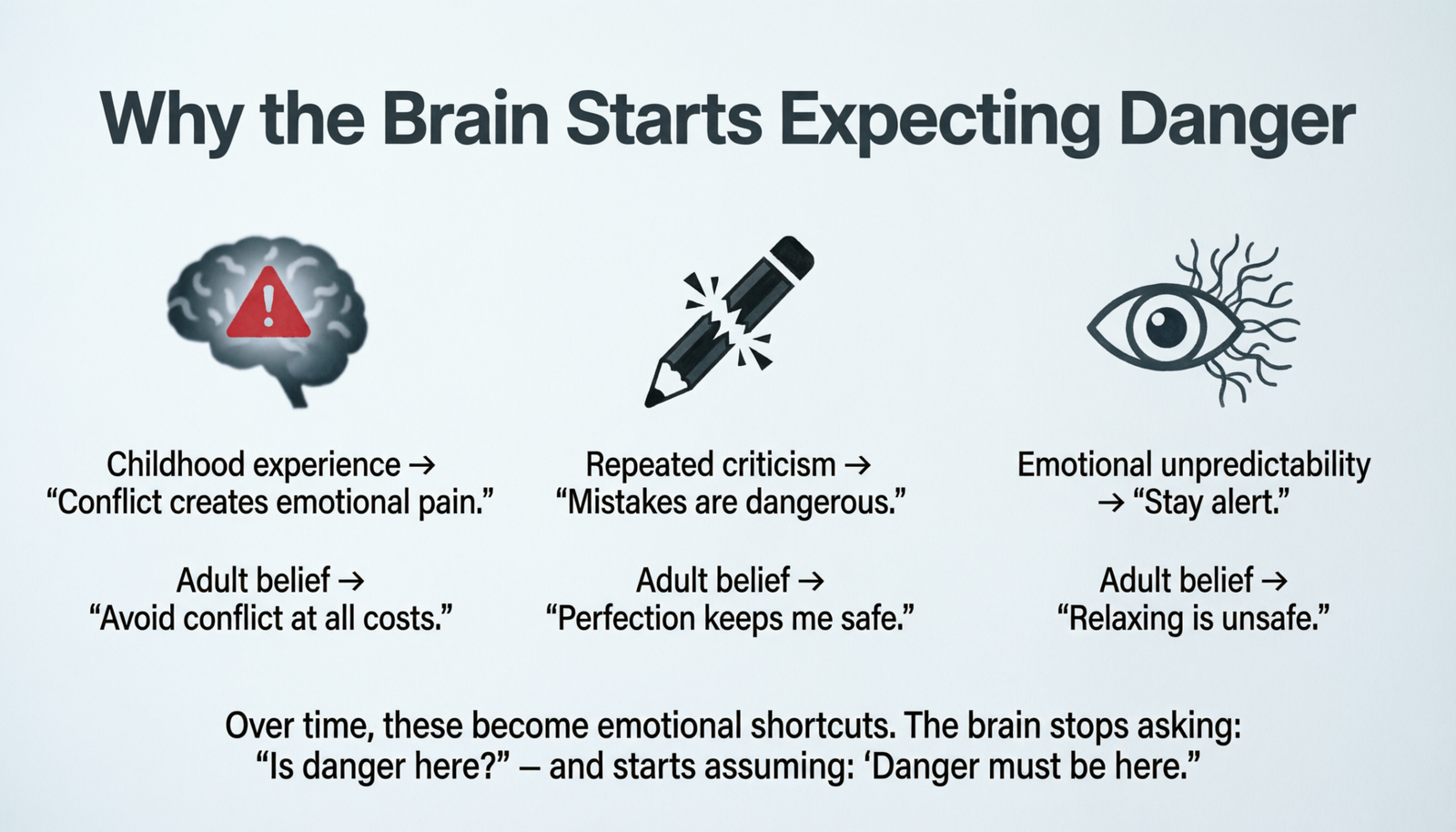
- Why the Brain Starts Expecting Danger
- The Hidden Beliefs Behind Survival Mode
- CBT: Understanding the Thought–Emotion–Behavior Cycle
- Automatic Thoughts: Fast, Protective, and Often Inaccurate
- How Survival Beliefs Shape Emotions
- Common Signs You May Be Living in Survival Thinking
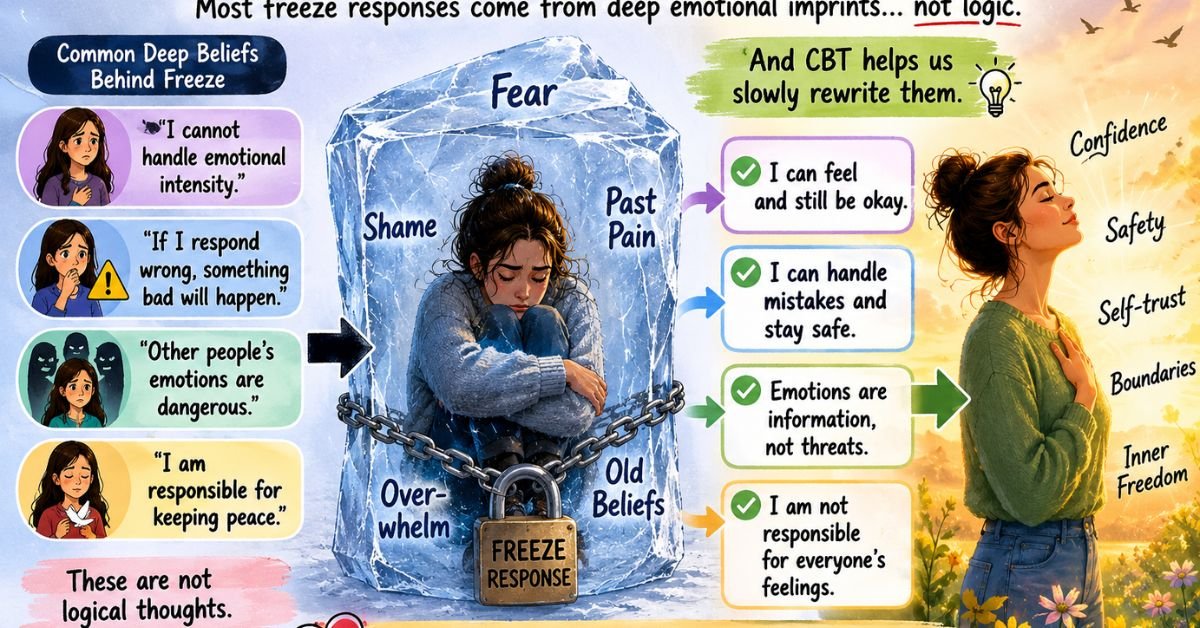
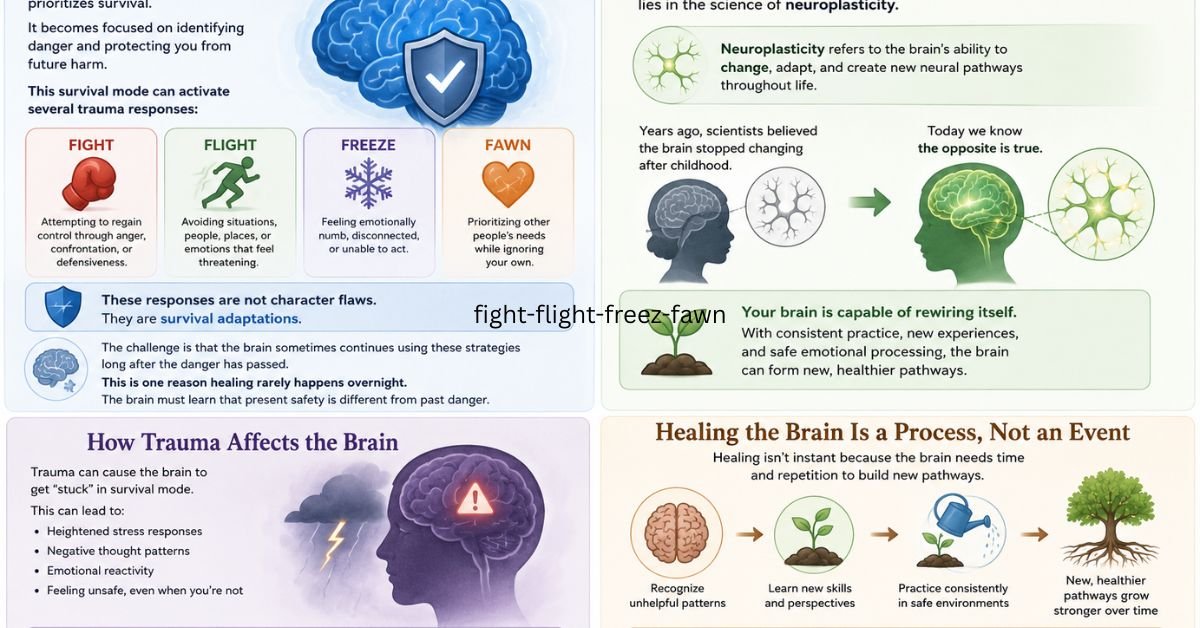
- Understanding Freeze Responses
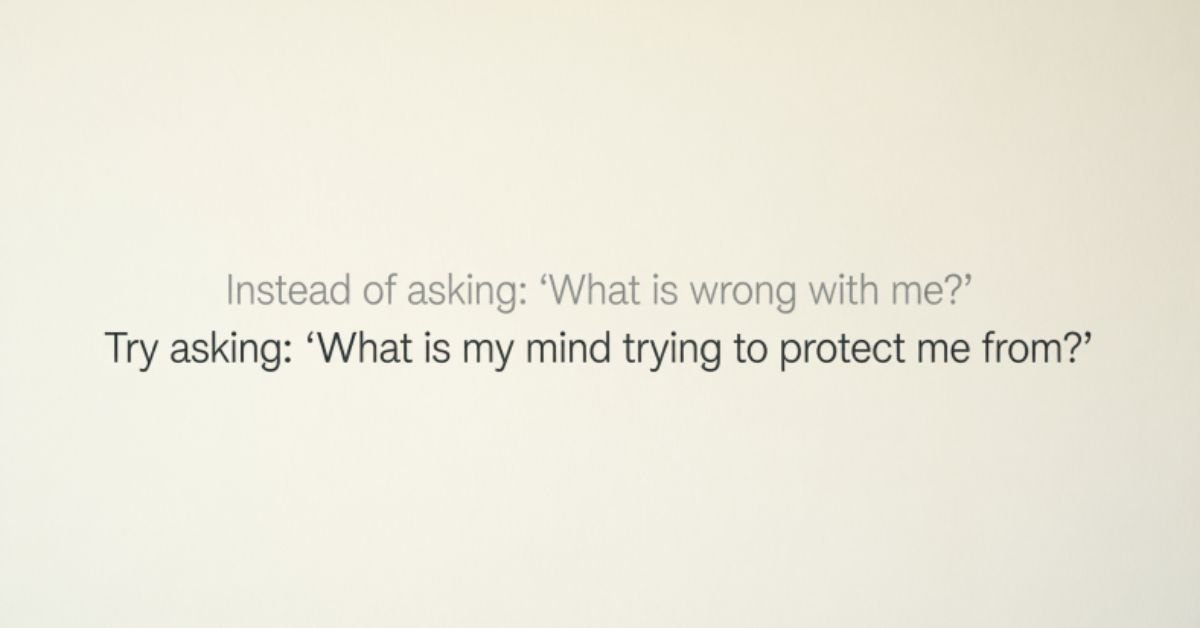
- The Question That Changes Healing
- CBT Practice: Catch the Story Before You Believe It
- Challenging the Belief Gently
- Why Positive Thinking Alone Often Fails
- Creating Emotional Safety
- A Daily CBT Reflection Practice
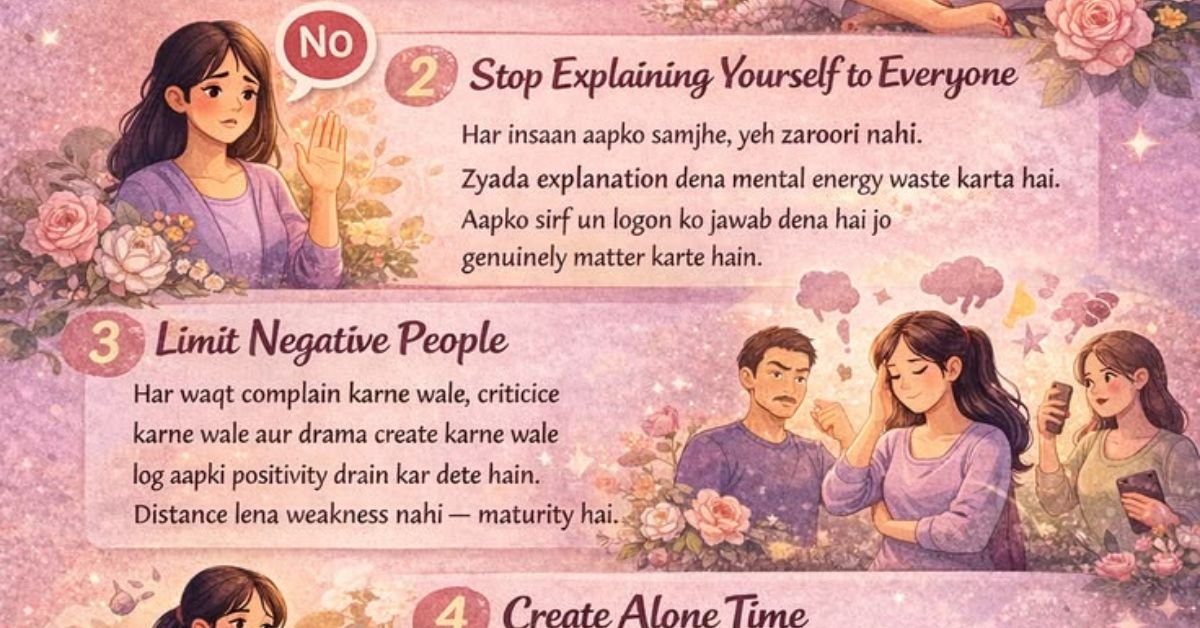
- When You Feel Responsible for Everyone
- Building New Possibilities
- Healing Does Not Mean Becoming Fearless
- A Gentle Reminder for Readers
- Frequently Asked Questions
- Conclusion
Understand How Automatic Survival Beliefs Shape Emotions—and How CBT Creates Space for Calmer, Healthier Responses
: When Life Feels Like Something Is Always About to Go Wrong
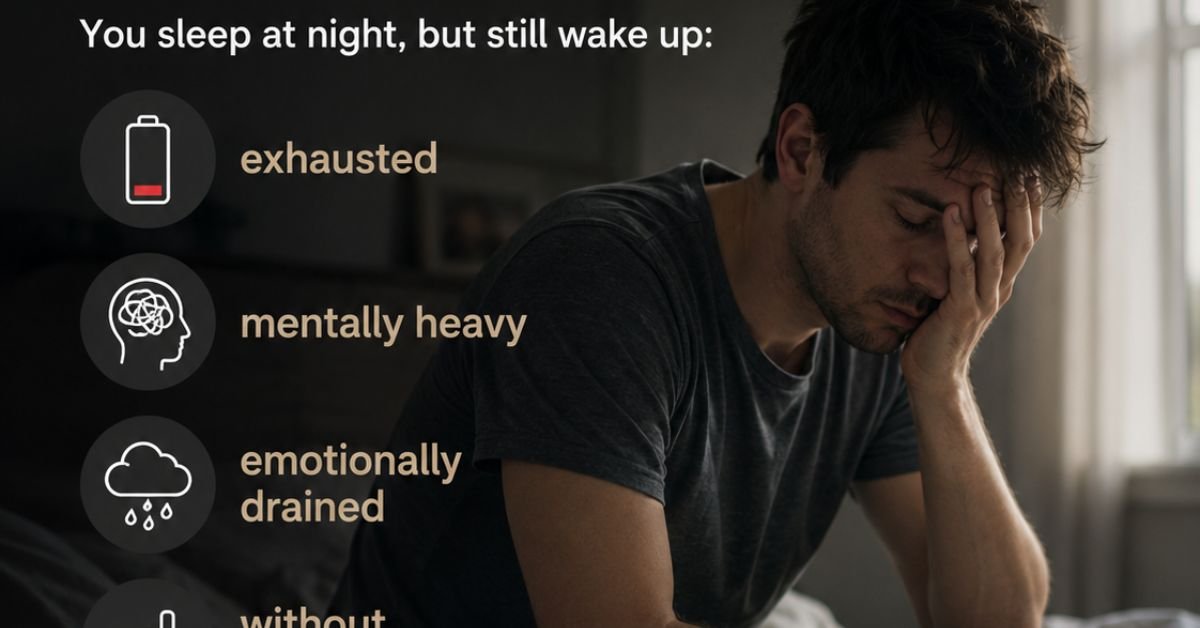
There are people who wake up tired before the day even begins.When Your Mind Expects Danger
Thank you for reading this post; don't forget to subscribe!
Nothing terrible is happening—but their body feels prepared for something terrible anyway.
A delayed message feels dangerous.
A difficult conversation feels overwhelming.
A mistake feels catastrophic.
Someone’s disappointment feels impossible to tolerate.
To outsiders, these reactions may seem exaggerated.
But inside the person experiencing them, the fear feels real.
For many people, this isn’t weakness. It isn’t attention-seeking. It isn’t laziness.
It is survival thinking.When Your Mind Expects Danger
And one of the most powerful ideas in Cognitive Behavioral Therapy (CBT) is this:When Your Mind Expects Danger:
Your mind may still be using old rules that once helped you survive—but are no longer helping you live.
This article explores how automatic survival beliefs shape emotions, why the brain begins expecting danger even in safe situations, and how CBT helps create new possibilities.
What Is Survival Thinking?
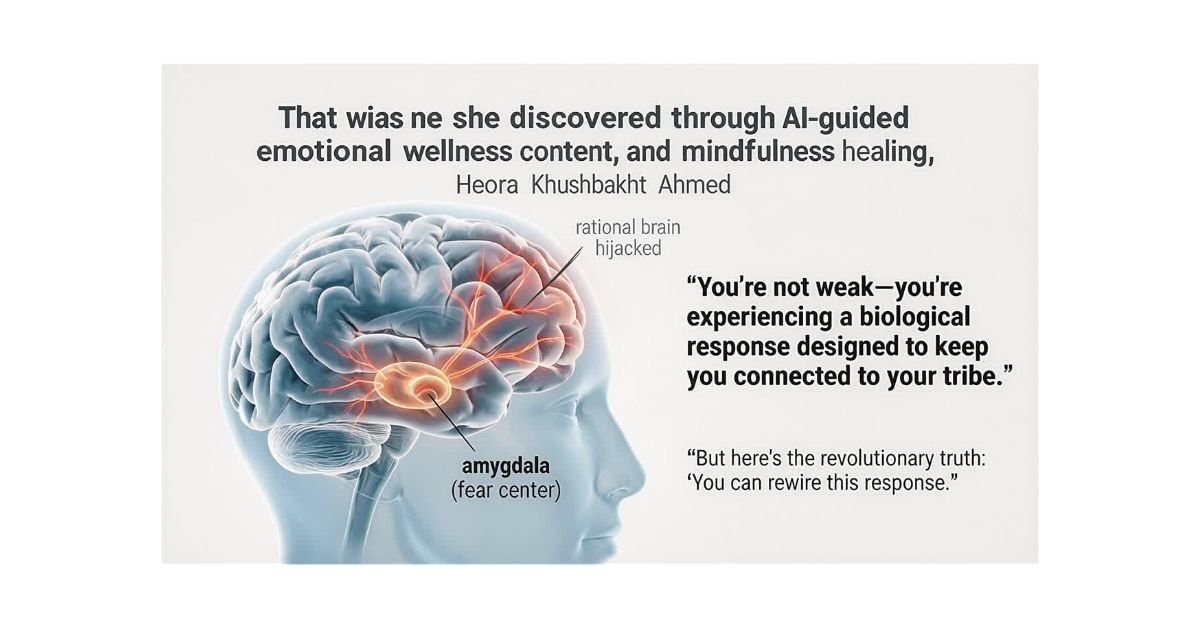
Survival thinking happens when your brain begins treating discomfort as danger.
Your nervous system becomes trained to predict problems before they happen.When Your Mind Expects Danger
The mind starts asking:
- What if something goes wrong?
- What if I disappoint someone?
- What if people become upset?
- What if I cannot handle this?
- What if this feeling never ends?
Over time, these thoughts become automatic.When Your Mind Expects Danger:
You simply react.
Survival thinking often sounds protective.
But eventually protection becomes limitation.
Why the Brain Starts Expecting Danger
The human brain is designed for survival.
Its job is not happiness.
Its job is safety.
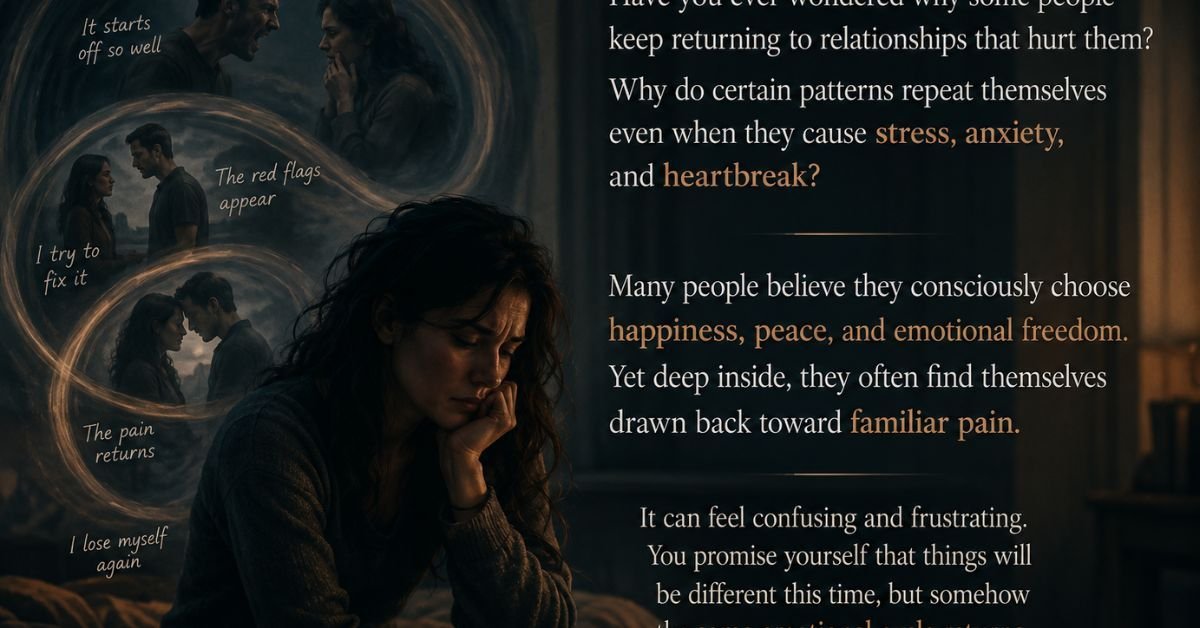
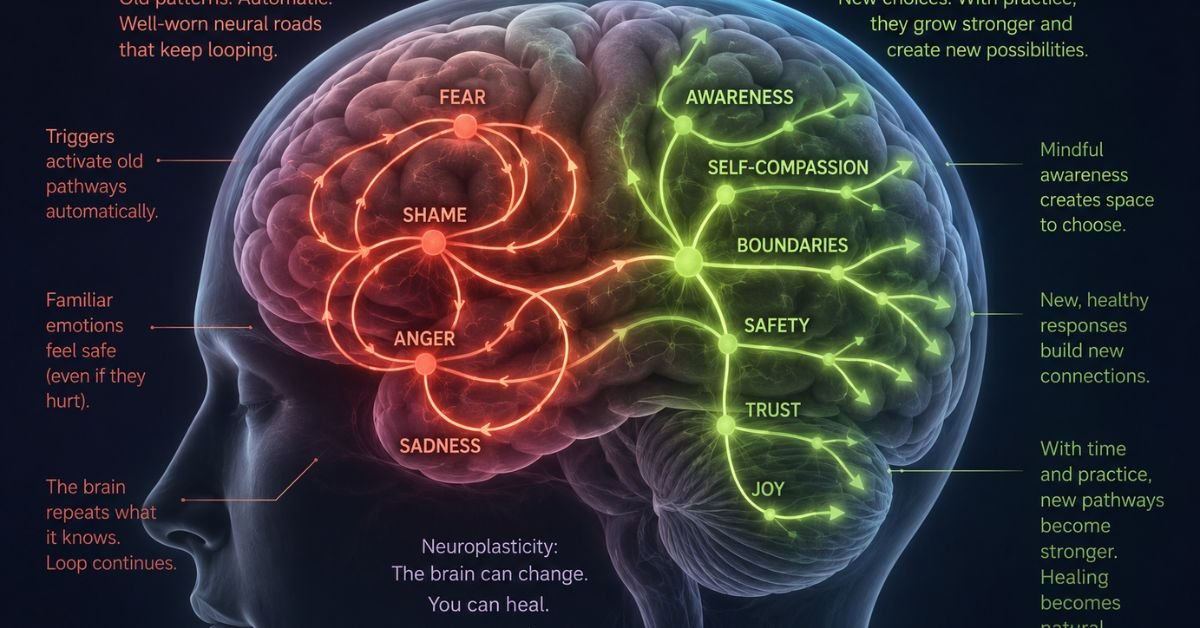
If painful experiences repeat enough times, the brain learns patterns.
Examples:
Childhood experience “Conflict creates emotional pain.”
Adult belief “Avoid conflict at all costs.”
Repeated criticism → “Mistakes are dangerous.”
Adult belief → “Perfection keeps me safe.”
Emotional unpredictability Home “Stay alert.”
Adult belief → “Relaxing is unsafe.”
Over time these become emotional shortcuts.
The brain stops asking:
“Is danger here?”
And starts assuming:
“Danger must be here.”
The Hidden Beliefs Behind Survival Mode
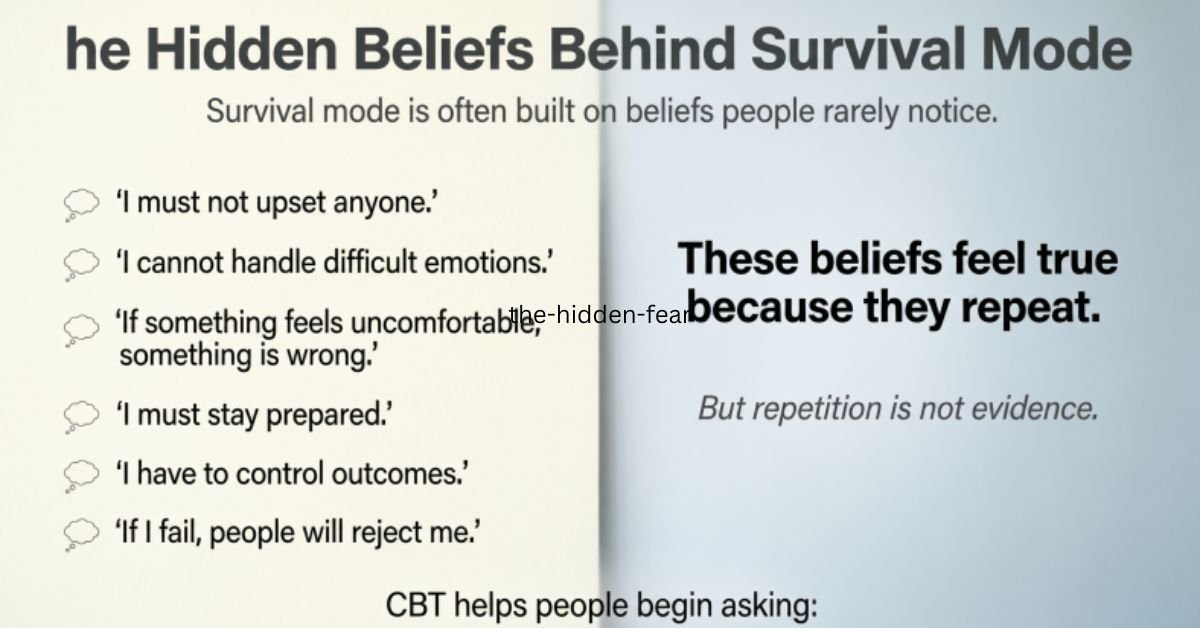
Survival mode is often built on beliefs people rarely notice.
Examples include:
“I must not upset anyone.”
“I cannot handle difficult emotions.”
“If something feels uncomfortable, something is wrong.”
“I must stay prepared.”
“I have to control outcomes.”
“If I fail, people will reject me.”
These beliefs feel true because they repeat.
But repetition is not evidence.
CBT helps people begin asking:
Where did I learn this?
CBT: Understanding the Thought–Emotion–Behavior Cycle
CBT teaches that thoughts influence emotions and emotions influence behavior.
The cycle often looks like this:
Situation → Thought → Emotion → Behavior
Example:
Situation: Someone replies late.
Thought:
“They are upset.”
Emotion:
Anxiety.
Behavior:
Overthinking, checking messages, withdrawing.
Result:
Temporary relief but stronger anxiety later.
This cycle becomes automatic.
CBT interrupts the process.
Automatic Thoughts: Fast, Protective, and Often Inaccurate
Automatic thoughts happen instantly.
They arrive before logic.
Examples:
“They hate me.”
“I will fail.”
“I cannot do this.”
“This means disaster.”
The problem is not having thoughts.
The problem is treating every thought as truth.
CBT introduces a new question:
What else could be true?
How Survival Beliefs Shape Emotions
Thoughts create emotional predictions.
Belief:
“People’s emotions are dangerous.”
Emotion:
Fear.
Behavior:
People pleasing.
Belief:
“I must perform perfectly.”
Emotion:
Pressure.
Behavior:
Avoidance.
Belief:
“I cannot handle discomfort.”
Emotion:
Anxiety.
Behavior:
Escape.
Eventually life becomes smaller.
Not because capability disappeared—
but because protection became excessive.
Common Signs You May Be Living in Survival Thinking
You may recognize some of these patterns:
Emotional Signs
- Constant tension
- Fear before decisions
- Guilt after rest
- Emotional numbness
Thinking Signs
- Catastrophizing
- Overanalyzing
- Expecting rejection
- Assuming the worst
Behavioral Signs
- Avoidance
- Perfectionism
- Freeze responses
- Difficulty relaxing
These responses often began as protection.
Understanding Freeze Responses
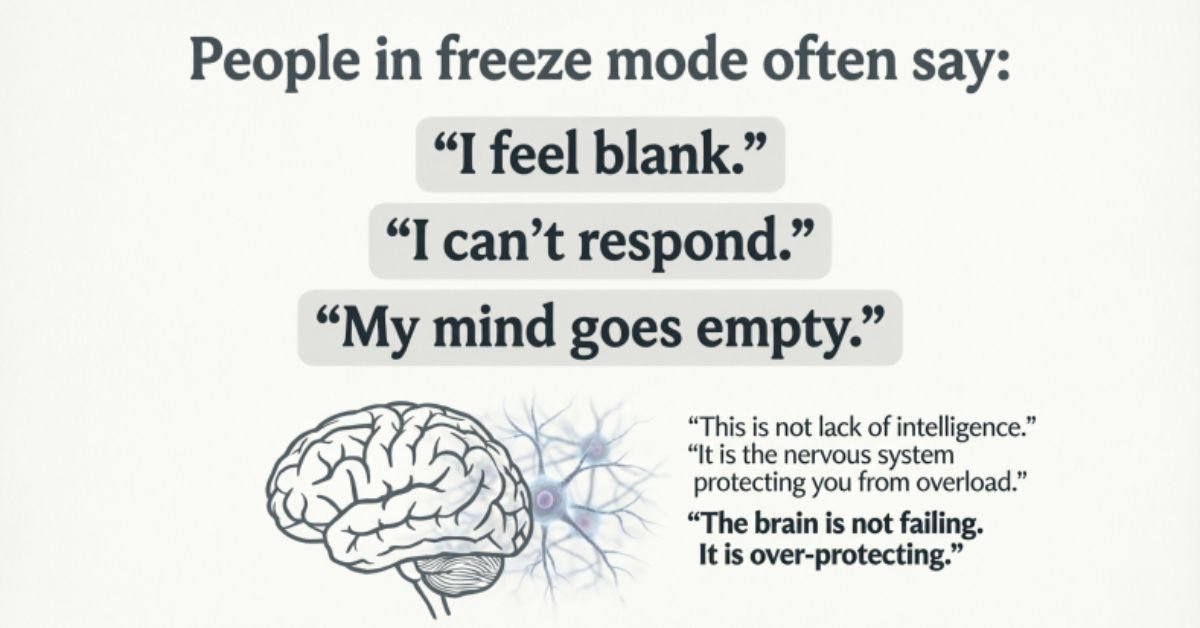
People usually talk about fight or flight.
But freeze is equally common.
Freeze can sound like:
“I know what to do but cannot move.”
“My mind goes blank.”
“I avoid responding.”
“I shut down.”
Freeze is not laziness.
It is the nervous system reducing overload.
The brain believes stillness creates safety.
CBT helps gently question that prediction.
The Question That Changes Healing
Instead of asking:
“What is wrong with me?”
Try asking:
“What is my mind trying to protect me from?”
This shift matters.
Because survival responses usually have a reason.
Understanding the reason creates room for change.
CBT Practice: Catch the Story Before You Believe It
Next time fear appears, pause and write:
Situation:
What happened?
Automatic thought:
What did my mind predict?
Emotion:
What did I feel?
Evidence:
What supports this thought?
Alternative:
What else may be true?
New response:
What action supports growth?
This small exercise teaches awareness.
Awareness comes before change.
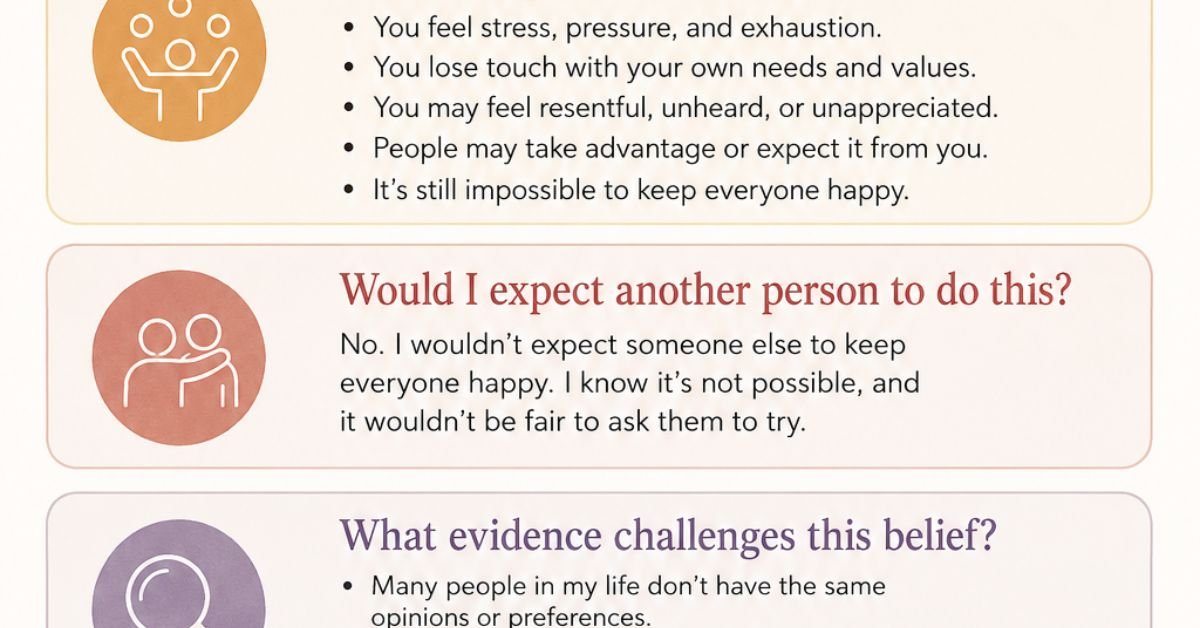
Challenging the Belief Gently
Imagine this belief:
“I must keep everyone happy.”
Questions:
Is that realistic?
What happens when I try?
Would I expect another person to do this?
What evidence challenges this belief?
New belief:
“I can care without controlling.”
Notice:
Healing is not forced positivity.
It is creating more flexible thinking.
Why Positive Thinking Alone Often Fails
People sometimes say:
“Just think positively.”
But survival mode does not disappear through pressure.
CBT does not ask you to ignore fear.
It asks you to investigate fear.
Healthy thinking sounds like:
“This feels difficult—and I may still handle it.”
Not:
“Everything is perfect.”
Creating Emotional Safety
Your nervous system learns through experience.
Small experiences matter.
Examples:
Speak once.
Rest without guilt.
Say no respectfully.
Allow discomfort.
Notice survival predictions that never happened.
Each experience teaches:
Safety can exist without control.
A Daily CBT Reflection Practice
Every evening ask:
What triggered stress?
What story did my mind tell?
Was that prediction accurate?
What would I tell someone I love?
What belief helped me today?
Five minutes daily can begin changing emotional patterns.
When You Feel Responsible for Everyone
Many people in survival mode carry invisible responsibility.
They believe:
If someone is upset → I failed.
If conflict happens → I caused it.
If people struggle → I must fix it.
But responsibility has limits.
Compassion does not require carrying everyone.
Building New Possibilities
Old belief:
“I must stay alert.”
New possibility:
“I can respond without constant preparation.”
Old belief:
“I cannot handle discomfort.”
New possibility:
“Discomfort does not automatically mean danger.”
Old belief:
“I must never fail.”
New possibility:
“I can learn through mistakes.”
Change begins quietly.
Healing Does Not Mean Becoming Fearless
Healing is not removing all fear.
Healing means fear no longer makes every decision.
You may still feel uncertain.
You may still pause.
You may still overthink sometimes.
But slowly:
pause becomes choice.
choice becomes confidence.
confidence becomes freedom.
A Gentle Reminder for Readers
If your mind expects danger—
that does not automatically mean danger exists.
Sometimes it means your nervous system learned to protect you early.
That protection deserves understanding.
And understanding creates options.
You do not have to erase your past.
You can teach your mind new experiences.
One thought.
One response.
One day at a time.
Frequently Asked Questions
Can CBT stop survival mode?
CBT can help people identify and change patterns of thinking and behavior that maintain survival responses. Progress varies by person.
Why do I feel danger when nothing is wrong?
Sometimes the brain predicts threat based on previous experiences, stress patterns, or learned beliefs.
Is overthinking part of survival thinking?
It can be. Overthinking often attempts to prevent uncertainty or discomfort.
Why do I freeze during stress?
Freeze responses may occur when the nervous system interprets situations as overwhelming.
How long does CBT take?
Experiences vary. Some people notice changes within weeks while deeper patterns can take longer.
Conclusion
The mind that expects danger is not necessarily trying to hurt you.
Often, it is trying to protect you using old instructions.
CBT offers another path.
Not denial.
Not forced positivity.
But curiosity.
Because once thoughts become visible—
they become changeable.
And once beliefs become flexible—
new possibilities begin.
— HealoraCBT Series
Day 2











Leave a Reply