

This parent observation journal helps you notice possible triggers, your child’s responses, and which supportive strategies seem helpful. For example, you might record that a difficult school task triggered distress, you stayed calm and offered help, and your child eventually began the task with support. Over time, these observations can help you recognise patterns and share useful information with your child’s teacher or a qualified healthcare professional.
HealOra CBT · Parenting & Emotional Wellness
School Refusal in Children: A CBT-Informed Guide for Parents
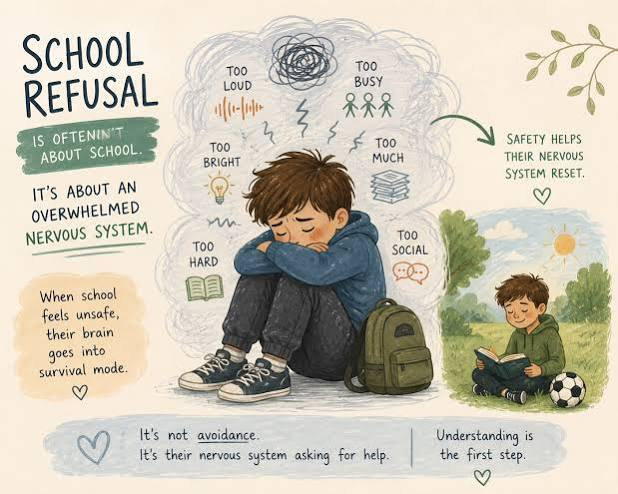
When a child refuses to go to school, the morning can become exhausting for the entire family. Tears, stomachaches, repeated arguments, and a desperate “I can’t go” may leave parents wondering whether their child is being defiant or struggling with something they cannot explain.
School refusal in children can have several causes. Anxiety, bullying, academic difficulties, physical illness, social stress, and changes at home are among the possibilities worth exploring. The behaviour alone does not tell us which explanation is correct.
At HealOra CBT by Khushbakht Ahmed, our educational approach encourages parents to understand behaviour, respond thoughtfully, and establish consistent boundaries without shame or humiliation.

The Morning Battle: When Going to School Feels Overwhelming
Imagine a morning when the alarm rings, breakfast is ready, and the school bus is approaching. Your child pulls the blanket over their head and refuses to get dressed. When you insist, they cry, complain of stomach pain, or repeatedly say, “I can’t go.”
You may feel anxious about work, attendance records, missed lessons, and what the school will think. Your child may be experiencing distress that they do not yet have the words to explain.
This situation can create a cycle: the child becomes distressed, the parent becomes increasingly worried, both react more strongly, and getting out of the house becomes harder.
That does not mean every school refusal episode is caused by anxiety. It means the behaviour deserves careful attention before a parent decides how to respond.
The Story of Aidan: When the Mind Hits a “404 Error”
Note: Aidan is a fictional illustrative example, not a documented clinical case.
Aidan is an 11-year-old sixth-grade student. Over several weeks, his school mornings have become increasingly difficult. He stays in bed, becomes tearful when asked to get ready, and sometimes complains of stomach discomfort.
His mother initially assumes that he is refusing school because he wants to stay home. Worried about being late for work, she repeats instructions, threatens to remove privileges, and tries to persuade him to hurry.
The more urgent she becomes, the more distressed Aidan appears. Neither of them understands what is driving the pattern.
His mother decides to change her first question. Instead of asking, “Why are you behaving like this?” she asks, “What feels hardest about going to school today?”
That question opens a conversation about what Aidan has been experiencing. His mother listens, contacts the school to explore possible difficulties, and works with him on a manageable morning plan.
HealOra sometimes uses the metaphor of a “Mental 404 Error” to describe a moment when someone feels stuck and cannot identify their next step. It is a storytelling metaphor, not a medical or psychological diagnosis.
The lesson is simple: when a child appears stuck, increasing pressure may not reveal the reason. Calm questions, observation, and appropriate support can help the family understand what needs to change.

Why Children May Refuse to Go to School
1. Academic or Performance Anxiety
A child may worry about tests, reading aloud, answering questions, making mistakes, or falling behind. A difficult subject can feel especially overwhelming when the child believes that asking for help will lead to criticism.
Ask which part of the school day feels difficult. If learning is the problem, speak with the teacher about appropriate academic support.
2. Friendship Problems, Bullying, or Social Pressure
Peer conflict, exclusion, bullying, embarrassment, or fear of being judged can make school feel difficult. Children do not always disclose these experiences immediately.
Ask gentle, specific questions about friendships, breaks, classroom experiences, and whether anyone has made the child feel unsafe. Take disclosures seriously and work with the school to address safety concerns.
3. Changes in Routine or Environment
Moving home, changing schools, family conflict, bereavement, disrupted sleep, or other stressful experiences can affect a child’s ability to manage daily demands.
These factors do not automatically explain school refusal. They are reasons to ask what has changed and whether the child needs additional support.
4. Physical Symptoms or Health Concerns
Stomach pain, nausea, headaches, and tiredness may accompany emotional distress, but they can also have physical causes. Do not assume that a symptom is anxiety simply because it appears before school or improves later.
Seek medical advice for persistent, severe, recurring, or otherwise concerning symptoms. Severe pain, fainting, difficulty breathing, or other urgent symptoms may require prompt medical attention.
What Can Happen When School Avoidance Continues?
Missing school can create practical and emotional difficulties, especially when absences accumulate. A child may miss lessons, lose confidence about catching up, become disconnected from friends, or feel increasingly worried about returning.
In some cases, staying home provides immediate relief from a stressful situation. That relief can unintentionally strengthen avoidance, making the next attempt to attend feel harder. However, this pattern should not be assumed in every child.
The aim is neither to force attendance without understanding the problem nor to allow avoidance to continue without a plan. Families should investigate the cause, address any safety or health concerns, and work towards appropriate school participation with support.
The HealOra Approach: Become a Calm and Supportive Anchor
Parents cannot control every emotion their child experiences, but they can practise responding in a steady and supportive way.
Use this as a reminder to pause and assess the situation, not as proof that anxiety is the cause of the child’s behaviour.
Step 1: Regulate Your Own Response
Before repeating an instruction, pause briefly. Feel your feet on the floor, relax your shoulders, and take a few comfortable breaths.
You might say, “I can see that this morning is difficult. I am going to speak calmly so we can work out the next step.”
Step 2: Listen Before Solving
Ask, “What feels hardest about going to school today?” Allow the child time to answer. Avoid immediately arguing, dismissing their feelings, or promising that everything will be fine.
You can acknowledge distress without agreeing that staying home is the only solution.
Step 3: Establish Predictable Boundaries
Keep the morning routine as predictable as possible. Prepare clothes and school materials the night before, allow adequate time to get ready, and use short, clear instructions.
Say, “I understand that you are upset. We still need to work out today’s school plan. Let’s decide what help you need.”
Step 4: Work With the School
Contact the teacher, school counsellor, or appropriate school staff. Share your observations and ask whether they have noticed academic, social, attendance, or behavioural changes.
Where appropriate, discuss a supported arrival, a trusted staff contact, or other adjustments that address the actual barrier. The plan should support attendance and safety without reinforcing unnecessary avoidance.
Step 5: Seek Professional Guidance When Needed
If refusal persists, distress is severe, or the child’s functioning is significantly affected, consult a qualified child mental health professional or paediatric healthcare provider. A professional can help assess possible causes and recommend an appropriate plan.
HealOra Parent Observation Journal: Day 1
Recording what happens can help parents notice patterns without labelling the child. Use the journal to describe observable events, your response, and what happened next.
| Log category | Journal details |
|---|---|
| Day / Entry | Day 1 |
| Trigger event | Task or school-related demand feels too difficult. The specific cause still needs to be explored. |
| Parent response | Parent stayed calm, listened, and offered practical help. |
| Immediate outcome | Child started the task with support. This is a small observation, not proof that the underlying problem has been resolved. |
| Next step | Ask what helped, observe the next school morning, and contact the school or a professional if concerns persist. |
Frequently Asked Questions
Is my child being lazy or manipulating me to avoid school?
School refusal alone cannot establish a child’s motive. Avoidance may be related to anxiety, bullying, learning difficulties, physical illness, family stress, or other concerns. Explore the pattern before deciding how to respond.
Should I let my child stay home if they complain of stomach pain?
Take physical symptoms seriously. Repeated or severe symptoms should be discussed with a healthcare professional. If school-related distress is suspected, work with the child’s healthcare provider and school on a plan that addresses the cause while supporting appropriate attendance.
What if my child cries or becomes angry every morning?
Stay as calm as possible, use clear and brief language, and avoid turning the morning into a prolonged argument. Ask what feels difficult, assess immediate safety, and seek professional guidance if the pattern persists or causes significant distress.
Should I force my child to attend school?
Do not rely on force, threats, or humiliation as your primary strategy. At the same time, avoid making indefinite absence the default response without investigating the cause. Work with the school and appropriate professionals to establish a safe, realistic attendance plan.
When should I contact a school counsellor or child psychologist?
Seek guidance when school refusal persists, absences accumulate, academic or social functioning declines, or the child experiences significant emotional distress. Seek urgent help if the child is in immediate danger or expresses thoughts of self-harm.
Can CBT-informed strategies help with school refusal?
CBT-informed strategies may help children and parents identify unhelpful thought patterns, practise coping skills, and take manageable steps towards difficult situations. The right approach depends on the individual child’s needs, and some children require professional assessment and treatment.
Conclusion: Understand the Child Before Judging the Behaviour
School refusal is a behaviour that deserves investigation, not a label that defines a child or their parents. The underlying reasons can differ, and the right response begins with understanding the individual situation.
By regulating their own reactions, listening carefully, setting predictable boundaries, and working with the school, parents can create a more constructive path forward.
At HealOra CBT by Khushbakht Ahmed, we encourage a practical principle: connect before you correct, understand before you label, and support your child while building the skills needed to move forward.
Explore HealOra Self-Help
HealOra Self-Help shares educational resources to help people understand emotional challenges and explore practical coping strategies.
If you need individual support for yourself or your family, ask about available affordable support options. A child’s needs may require a qualified child-focused professional.
Contact: Khushbakht Ahmed, HealOra CBT
References and Further Reading
- World Health Organization: Doing What Matters in Times of Stress — An Illustrated Guide
- American Academy of Child and Adolescent Psychiatry
- HealthyChildren.org — Parenting and child health information from the American Academy of Pediatrics
Disclaimer: This article is for educational and self-help purposes. It offers general parenting ideas informed by CBT concepts and stress-management principles. It does not provide a diagnosis, personalised medical advice, or a substitute for professional assessment or treatment. Each child’s circumstances are different. Consult an appropriate healthcare professional about persistent school refusal, concerning physical symptoms, or significant emotional distress.
0300 923066095059 personal support



Pingback: parent-observation-journal-day-2