
HealOra Parent Observation Journal: Day 2 — What Does My Child Need?
HealOra Parent Observation Journal is a practical resource for parents who want to understand difficult school mornings without immediately labelling their child as lazy, stubborn, or anxious. Day 2 focuses on listening, recording what your child says they need, and noticing which responses make the next step easier.
A child who struggles to get ready for school may be dealing with different concerns. Schoolwork, friendship problems, bullying, sleep difficulties, physical illness, changes at home, or emotional distress are among the possibilities. One difficult morning cannot tell you the cause.
HealOra principle: Observe before assuming. Listen before solving. Support your child while exploring what is making school difficult.
Day 2: What Did My Child Say They Needed Today?
Yesterday, you may have noticed that your child started a difficult task after you stayed calm and offered help. Today, look beyond the immediate outcome. Did your child explain what felt difficult? Did they ask for help, reassurance, more time, or something else?
You do not need to obtain a perfect answer. Some children find it difficult to explain their feelings, particularly when they are upset or under time pressure. Your goal is to make conversation safer, not to interrogate your child.
“I noticed this morning felt difficult. What was the hardest part for you? I want to understand so we can work out what might help.”
Give your child time to answer. If they do not want to talk immediately, consider trying again at a calmer time.
Why Might School Mornings Feel Difficult?
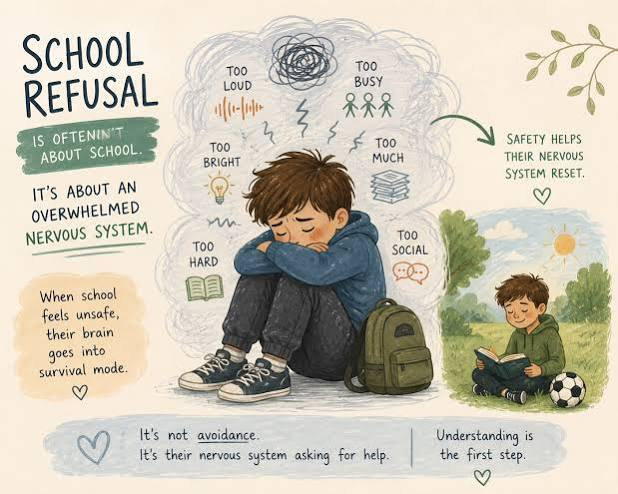
School refusal is a description of a behaviour, not an explanation of its cause. Consider the possibilities below without deciding in advance which one applies to your child.
1. A task feels too difficult
Your child may be worried about a test, reading aloud, unfinished homework, making mistakes, or asking the teacher for help. Ask which part feels difficult and whether a smaller first step or extra learning support would help.
2. Something is happening with friends
Friendship conflict, exclusion, embarrassment, social pressure, or bullying can make school feel uncomfortable or unsafe. Ask specific, non-leading questions about break times, classmates, and whether anyone has made your child feel unsafe. Take safety concerns seriously and contact the school when appropriate.
3. The routine feels overwhelming
Rushed mornings, insufficient sleep, transitions, or changes at home can add pressure. Notice whether the difficulty begins when your child wakes up, gets dressed, leaves home, arrives at school, or anticipates a particular lesson.
4. Physical discomfort needs attention
Headaches, stomach pain, nausea, and tiredness can have physical causes and may sometimes occur alongside emotional distress. Do not assume symptoms are caused by anxiety because they happen before school. Seek medical advice for persistent, recurring, severe, or concerning symptoms.
Behavioural Exercise: Pause, Ask, Observe, Support
This short exercise helps parents replace repeated arguments with a more thoughtful response. It is an observation exercise, not a test and not a treatment plan for every child.
Step 1: Pause before responding
Take a few comfortable breaths, relax your shoulders, and lower your voice. You do not have to remove every emotion before responding; simply aim to avoid escalating the moment.
Try saying: “Let’s slow down. I want to understand what is happening.”
Step 2: Ask one open question
Ask, “What feels hardest about school today?” Listen without immediately correcting, arguing, or promising that everything will be fine.
If your child says, “The work is too hard,” you might ask, “Which part would you like help with?” If they say they feel unsafe, investigate that concern rather than treating it as ordinary reluctance.
Step 3: Agree on one manageable next step
Depending on what you learn, the next step might be packing one school item together, asking the teacher about a difficult assignment, contacting school staff about a friendship concern, or arranging healthcare advice for physical symptoms.
Do not use small steps to dismiss a genuine safety, health, or learning concern. The plan should address the barrier, not merely make the child comply.
Step 4: Observe what happens
Record the response you tried and what happened afterwards. Did your child share more information? Did they begin a task? Did distress remain the same or increase? Record what you actually observed rather than guessing what your child felt.
HealOra Parent Observation Journal: Day 2 Record
Use this example as a guide. Change the details to match your own child’s experience; do not record the example as a real event if it did not happen.
| Log category | Day 2 journal details |
|---|---|
| Day / Entry | Day 2 |
| Trigger event | The child hesitated or became upset while preparing for school. The reason is not yet known. |
| Parent response | Parent stayed calm, listened without blame, and asked what felt hardest about going to school. |
| Immediate outcome | Record the child’s actual response and whether they were willing to talk. Do not assume the concern was resolved. |
| Next step | Note the child’s own words, observe the next school morning, and follow up on any health, learning, friendship, or safety concern. |
Parent Reflection: Complete Your Day 2 Journal
Take a few quiet minutes to answer these questions after the morning rush. There are no perfect answers. Honest observations are more useful than trying to make the day look successful.
1. What did my child say they needed today?
Write their words as accurately as possible. If they did not answer, record that rather than guessing.
2. What seemed helpful?
Consider whether listening, extra time, practical help, a calmer routine, or contacting someone at school made any observable difference.
3. What should I observe tomorrow?
Choose one specific thing, such as when distress begins, what task is involved, whether a physical symptom occurs, or what your child says about school.
4. Is there anything that needs follow-up?
Note any concern about safety, bullying, health, learning, attendance, or emotional wellbeing that may require help from school staff or a qualified professional.
What If My Child Does Not Tell Me What Is Wrong?
Some children cannot explain their experience in the moment. Others may worry about getting someone into trouble, disappointing a parent, or not being believed. Avoid repeatedly questioning them during a rushed morning.
Choose a calmer time, offer a few opportunities to talk, and pay attention to changes in behaviour. You might say, “You do not have to explain everything right now. I am ready to listen when you feel able.”
If you suspect bullying or a safety concern, do not wait for your child to provide a perfect explanation before taking reasonable steps to investigate. Contact the school or an appropriate professional.
Frequently Asked Questions
What is the purpose of the HealOra Parent Observation Journal?
It helps parents record triggers, observable behaviour, their own responses, and what happened next. These notes may help families recognise patterns and communicate more clearly with teachers or healthcare professionals.
What should I write if my child does not answer my question?
Record that your child did not answer at that time. Note the circumstances and try a calmer conversation later. Do not invent an explanation or pressure your child to disclose information.
Should I let my child stay home when they feel distressed?
The decision depends on the child’s health, safety, circumstances, and level of distress. Do not force attendance without investigating serious concerns, but do not let repeated absence continue without a plan. Work with the school and appropriate healthcare professionals to address the cause and support safe, suitable attendance.
Can a parent journal diagnose school anxiety?
No. A journal records observations; it cannot establish a diagnosis or determine why a child is struggling. A qualified professional can assess persistent distress, school refusal, or other concerns.
When should I seek professional help?
Seek advice if school refusal persists, absences accumulate, distress significantly affects daily life, physical symptoms recur, or you suspect bullying or another safety issue. Seek urgent help when there is immediate danger or a serious medical concern.
Conclusion: Listen for the Need Behind the Behaviour
The purpose of Day 2 of the HealOra Parent Observation Journal is not to make every school morning perfect. It is to help you move from assumptions to careful observation. What did your child say? What did you try? What happened next? What still needs attention?
One calmer conversation may offer useful information, but it does not prove that the underlying concern has been resolved. Continue observing patterns, respond with compassion, and involve the school or a qualified professional when needed.
At HealOra, our educational approach encourages parents to connect before correcting, understand before labelling, and take practical steps that respect both a child’s wellbeing and their educational needs.
Continue Your HealOra Self-Help Journey
Explore the main HealOra Parent Observation Journal for the Day 1 entry and further parent observations.
You can also read our author and practitioner information to learn more about HealOra’s educational approach.
References and Further Reading
- American Academy of Child and Adolescent Psychiatry (AACAP)
- HealthyChildren.org — American Academy of Pediatrics
- World Health Organization — Doing What Matters in Times of Stress
Disclaimer: This article is for general educational and self-help purposes. It is not a diagnostic tool and does not replace individual medical, psychological, or educational advice. A child’s needs and circumstances differ. Consult an appropriate qualified professional about persistent school refusal, physical symptoms, significant distress, or safety concerns.