

Emotional Wellness Begins With Understanding Your Mind
Welcome to HealOra Self-Help by Khushbakht Ahmed — a space to explore your emotions, understand your thought patterns, and learn practical ways to approach everyday challenges with greater awareness.
Sometimes, we know we want to respond differently, break an old pattern, or stop getting caught in painful memories. Yet knowing what we want to change and actually changing how we respond can feel very different.
If expensive courses are beyond your budget, or you are not ready to begin therapy, learning about yourself can be a starting point. You can explore educational resources, reflect on your experiences, and practise small, realistic steps toward change.
Introducing the HealOra Silva Self-Help Course — an educational journey into the history of José Silva’s method and its use of relaxation, visualization, and mental rehearsal.
We will explore these practices with curiosity and realistic expectations, considering how they may support self-reflection and help you prepare for more considered responses in everyday life.
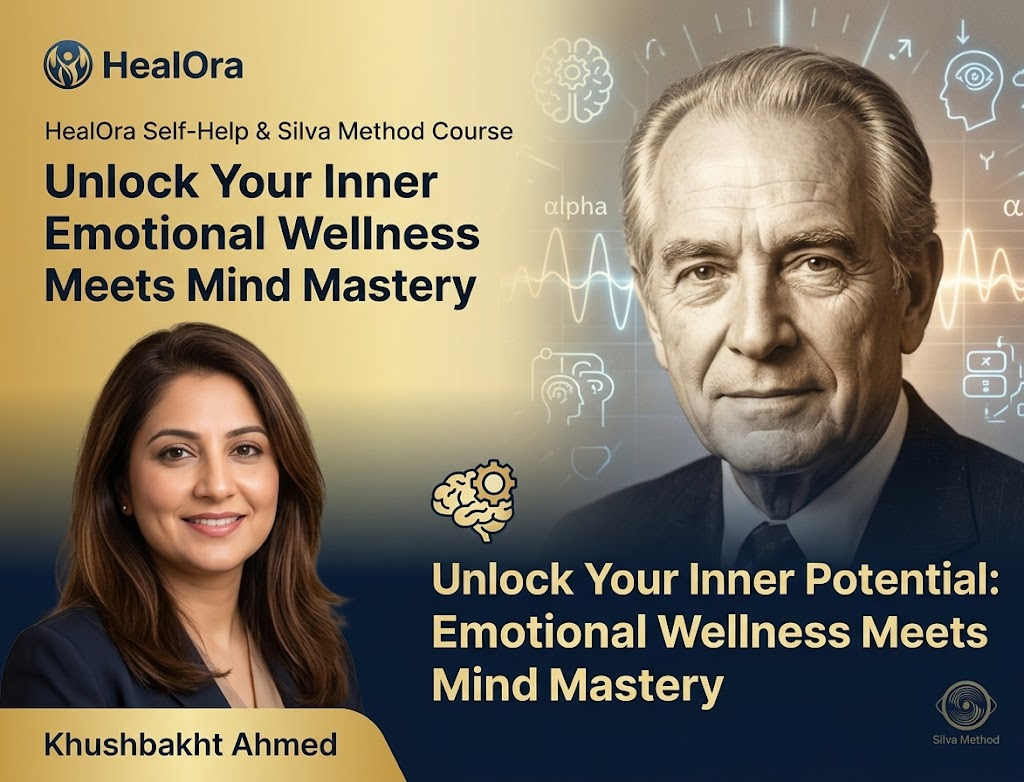
Let’s begin by discovering who José Silva was, why he developed his method, and what we can realistically learn from his story.
Who Was José Silva?
José Silva (1914–1999) was an American self-help pioneer who developed the Silva Method, a mental-training approach that became publicly available through courses in the 1960s.
His approach emphasised relaxation, visualization, mental rehearsal, and focused attention. The aim was to encourage people to explore their mental habits and use structured mental exercises for personal development and everyday problem-solving.
The Silva Method has attracted people interested in self-improvement and the potential role of mental imagery in daily life. However, the method’s history and popularity should be distinguished from scientific evidence: not every claim associated with it has been independently established.
He Worked With Electronics. How Did He Develop the Silva Method?
Here is an interesting part of José Silva’s story: his professional background was in electronics repair, rather than formal training as a psychologist or neuroscientist. Yet his curiosity about the human mind led him to explore mental training and develop the approach that became known as the Silva Method.
His journey raises a question that applies far beyond self-help:
Do You Have to Be an Expert Before You Begin?
Not necessarily. You can begin with a question, a genuine interest, and a willingness to learn. Expertise develops through study, practice, feedback, and experience.
Curiosity can help you notice a possibility. Focus can help you give it attention. Experimentation can help you discover what works and what does not.
This does not mean concentration alone guarantees an invention or success. New ideas often require patience, evidence, repeated attempts, and the willingness to correct mistakes.
Still, you do not have to know everything before taking your first step. Sometimes, the most useful question is: What could I learn if I gave this goal consistent attention?
Why Did José Silva Develop His Method?
Silva’s interest in mental training grew from his attempts to understand learning, attention, and human potential. His work eventually developed into a structured method that taught people to practise relaxation and mental imagery.
Accounts of the method describe an interest in whether a calmer state of mind and deliberate mental exercises could help people approach challenges differently. These ideas became part of the Silva Method’s teaching approach.
It is important to distinguish Silva’s intentions and the method’s own explanations from what independent research has demonstrated. The broader claims associated with the method should be evaluated individually rather than accepted simply because the method has a long history.
At HealOra, our interest is practical: what can a reader learn from relaxation, reflection, and rehearsal without expecting these exercises to replace real-world action or professional support?
Three Practices Explored in the Silva Method
Relaxation, visualization, and mental rehearsal are central to many descriptions of the Silva Method. These practices also appear in other self-development and psychological approaches. Their presence in the Silva Method does not mean every claim made about the method is scientifically proven.
1. Relaxation
Relaxation exercises invite you to slow down, settle into a comfortable position, and bring attention to your breathing or bodily sensations.
Try this: Sit comfortably and take a few gentle, unforced breaths. Stop if the exercise makes you uncomfortable.
2. Visualization
Visualization involves imagining a situation, an action, or a possible outcome. People use it in different settings, including skill practice and personal goal-setting.
Try this: Imagine yourself taking one realistic step toward a goal, rather than picturing success without a plan.
3. Mental Rehearsal
Mental rehearsal means mentally practising how you might respond in a specific situation before you encounter it.
Try this: Picture a difficult conversation and rehearse a calm, respectful sentence you could use.
4. Focused Attention
Focused attention means deliberately returning your attention to a chosen task, thought, or exercise when distractions arise.
Try this: Choose one small task, work on it for five minutes, and notice when your attention wanders without judging yourself.
Your Past Is Part of Your Story, Not a Script for Every Future Choice
Have you ever found yourself reacting to a present situation as if an old experience were happening all over again? Perhaps a message reminds you of a difficult relationship, a familiar place brings back uncomfortable feelings, or uncertainty makes you expect the same disappointment.
Memories and learned patterns can influence how we interpret the present. But noticing a familiar feeling does not mean you must repeat an old response.
Visualization and mental rehearsal may help some people prepare for a different response. For example, you might imagine receiving an upsetting message, pausing before replying, and choosing a response that reflects your values and boundaries.
Imagining a new response is only preparation. Real change also involves practising that response in everyday life, reviewing what happened, and adjusting when necessary.
If memories cause severe distress, flashbacks, or significant disruption to daily life, a self-help exercise may not be enough. Consider seeking support from a qualified mental health professional.
A Simple HealOra Exercise: Pause, Imagine, Act
You do not need special equipment or a perfect environment to begin reflecting on a goal. Try this brief educational exercise when you feel comfortable.
- Choose one situation.
Identify a manageable challenge, such as responding calmly to criticism or beginning a task you have been avoiding. - Pause and settle.
Sit comfortably and allow yourself a moment to relax. Keep your breathing natural; there is no need to force yourself into a particular mental state. - Imagine a realistic response.
Picture yourself taking one helpful action. Focus on what you would actually do, not on guaranteeing a perfect outcome. - Prepare for an obstacle.
Ask yourself what might get in the way. Imagine how you could respond if the situation becomes difficult or does not go as planned. - Take one practical step.
After the exercise, decide on a small action you can take today. Write it down if that helps you follow through.
The purpose is not to control the future with your thoughts. It is to clarify your intention, rehearse a possible response, and connect reflection with action.
Your Reflection Question
What is one response you would like to practise this week, and what small action could help you begin?
What Can the Silva Method Realistically Offer?
The Silva Method offers a structured way to explore mental exercises, including relaxation and visualization. Some people may find these practices useful as part of personal reflection, goal preparation, or a broader self-development routine.
However, the benefits will not be the same for everyone. The existence of relaxation or visualization research does not establish that every claim made by the Silva Method is effective. Approach extraordinary claims with healthy curiosity and look for reliable, independent evidence.
What You Can Practise
- Taking a pause before reacting.
- Reflecting on your thoughts and goals.
- Mentally rehearsing a realistic response.
- Connecting intentions with practical action.
What You Should Not Assume
- That visualization guarantees success.
- That a mental exercise can erase painful memories.
- That every Silva Method claim is scientifically established.
- That self-help can replace needed professional care.
Self-help is most responsible when it encourages realistic expectations, personal choice, and appropriate support—not pressure to heal quickly or blame when progress is difficult.
Your Next Step Begins With Learning
José Silva’s journey offers a reason to stay curious about what we can learn and explore. His background in electronics repair did not prevent him from turning his attention toward questions about the human mind. His story also reminds us that curiosity alone is not enough: learning, experimentation, and practical effort matter.
At HealOra Self-Help, we approach the Silva Method as an opportunity to explore relaxation, visualization, and mental rehearsal with open-mindedness and realistic expectations.
You do not have to change everything at once. Begin with one question, one useful exercise, or one small action. Notice what helps, be willing to adjust, and give yourself permission to seek additional support when you need it.
Frequently Asked Questions
Who was José Silva?
José Silva (1914–1999) was an American self-help pioneer known for developing the Silva Method, a mental-training approach involving relaxation, visualization, and other mental exercises.
What is the Silva Method?
The Silva Method is a self-development approach that teaches mental exercises such as relaxation and visualization. Claims about its effects should be assessed individually, and its broader claims should not be assumed to be scientifically proven.
Can visualization guarantee success?
No. Visualization may help some people clarify goals or mentally rehearse an action, but it cannot guarantee an outcome. Skills, circumstances, planning, and real-world action also matter.
Can the Silva Method erase painful memories?
There is no sound basis for promising that the Silva Method can erase painful memories. Some people may use reflective exercises to change how they respond to familiar situations, but persistent or distressing memories may require professional support.
Can I use self-help if I cannot afford therapy?
Educational self-help resources may provide a starting point for learning about emotions and practising everyday coping skills. They are not a replacement for professional assessment or treatment when needed. If you are struggling significantly, explore suitable low-cost or community-based support where available.
Who is HealOra Self-Help for?
HealOra Self-Help is for readers who want to learn about emotional wellness, reflect on their habits, and explore practical self-help exercises. It is educational content, not a diagnosis or a promise of treatment.
Looking for Additional Support?
Self-help can be a starting point, but you do not have to navigate every challenge alone. If you would like to ask Khushbakht Ahmed about available support options and fees, you can get in touch through WhatsApp.
Ask About Support on WhatsAppPlease ask about the service offered, the practitioner’s qualifications, fees, and whether it is appropriate for your needs before arranging support. Contacting us does not guarantee an appointment or a particular outcome.
Educational disclaimer: This article and the HealOra Silva Self-Help Course are intended for education and personal reflection. They do not provide a diagnosis, constitute mental health treatment, or replace care from a qualified professional. The Silva Method’s claims vary in evidential support; no specific outcome is guaranteed. If you are experiencing severe distress or are concerned about your safety, seek appropriate professional or emergency support.
© HealOra Self-Help by Khushbakht Ahmed. All rights reserved.