


Why does your mind stubbornly refuse to untangle your identity from someone who left you behind in absolute silence? This devastating loop is driven by emotional fusion—The Technical 404 Error of the Mind a subconscious state where your nervous system reacts as if your survival is still bound to their presence. When a past flashback enters your safe workspace today, your brain treats that old memory as an active command to feel rejected all over again. Just like a website glitch that creates infinite tracking loops on an administrator’s dashboard, your internal algorithm is executing outdated code. Recognizing that this automatic replay i merely a system reflex—not a real-time reflection of your worth—is the exact moment you break the loop.
If Traps You in the Fog of Emotional Fusion
Have you ever reopened an old conversation even though you already knew there was nothing new to find?
You check the messages, replay the last conversation, search for a hidden meaning—and somehow your mind sends you back there again.
It can feel like a website returning a 404 error, except the missing page is not on the internet. It is an unanswered part of your emotional story.

Why Your Mind Keeps Returning to the Same Emotional “URL
When someone ghosts you without an explanation, your brain may keep returning to the same emotional “URL,” searching for information that was never completed. You may reread old messages, reconstruct conversations, or imagine different endings because your mind is trying to make sense of an unresolved experience. In this metaphor, the emotional page has disappeared, but your internal system continues sending requests for an explanation. The repeated search can become mentally exhausting—not because you are weak, but because uncertainty can keep attention locked onto an unfinished story. Healing begins when you recognize that sometimes the missing information cannot be recovered and that your next step is not finding the deleted page, but learning to move forward without it.
Healing the Broken Link: How to Move Forward Without the Missing Answers
| Step | Healing Exercise | What to Do |
|---|---|---|
| 1. Name the missing information | The Unanswered Question | Write down the one question you keep wanting them to answer. Then write: “I may never receive this answer, and I can still heal.” |
| 2. Separate facts from assumptions | Reality Check | Create two columns: What I Know and What I’m Assuming. This helps your mind stop treating imagined explanations as facts. |
| 3. Close the emotional tab | Closure Statement | Say or write: “I cannot change how this story ended, but I can decide what happens next.” Take a slow breath and redirect your attention to something meaningful today. |
| 4. Build a new internal URL | Future-Focused Action | Choose one small action that supports your present life—exercise, journaling, talking to someone safe, or completing a personal goal. Healing becomes easier when attention gradually returns to your life, not their silence. |
Why Unanswered Questions Keep Your Brain Searching
When someone disappears without explaining what happened, the silence can leave your mind with a problem it cannot easily solve. You may know that the relationship has ended, yet part of you continues looking for the missing information: What changed? What did I do wrong? Did they ever care? Why didn’t they say goodbye?
This is where the Technical 404 Error of the Mind becomes a useful metaphor. A website may return a 404 error when the page you requested cannot be found. Your emotional experience can feel similar when your brain keeps requesting an explanation that is no longer available. You may revisit old messages, reconstruct conversations, or imagine alternative endings because your mind is still searching for a complete story.
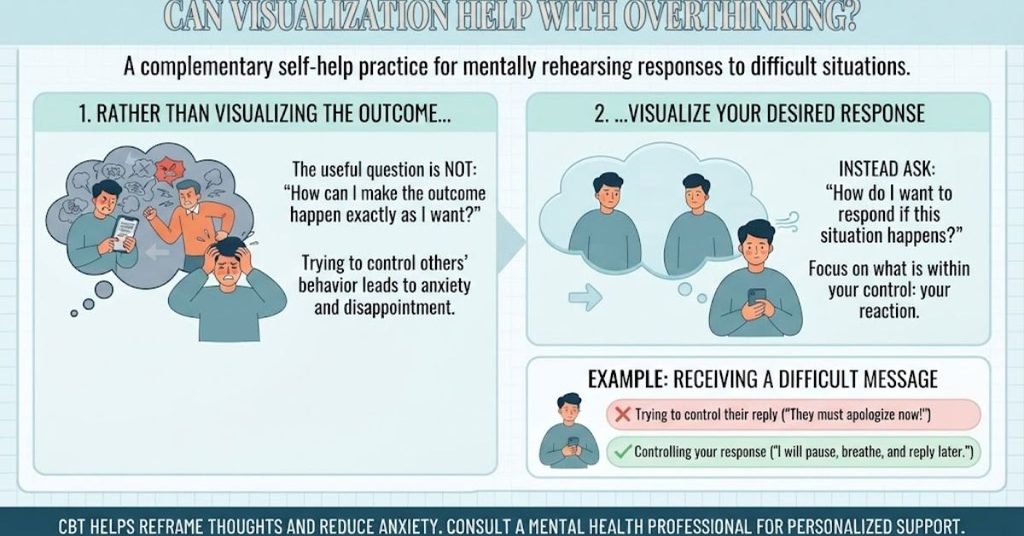
From a Cognitive Behavioral Therapy (CBT) perspective, the goal is not to force yourself to stop thinking about the experience. Instead, CBT can help you notice the thoughts, interpretations, and behaviors that keep the cycle going. For example, the thought “If I could just understand why they left, I would finally feel better” can encourage more checking, analyzing, and replaying.
Use the CBT Thought-Checking Technique
When you notice your mind returning to the same unanswered question, pause and write down three things:
- Thought: What am I telling myself right now?
- Evidence: What facts actually support this thought, and what am I assuming?
- Balanced response: What is a more realistic and compassionate way to view the situation?
For example, you might notice the thought: “They left because I wasn’t good enough.” The evidence may show that you do not actually know why they left. A more balanced response could be: “I do not know their reason for leaving. Their decision does not determine my worth.”
Practice Behavioral Redirection
CBT also looks at what you do after a difficult thought appears. If every unanswered question leads you to reread messages or check someone’s profile, the behavior can keep your attention attached to the past. Instead, try a deliberate behavioral redirection: notice the urge, delay acting on it, take a few slow breaths, and move into a present-focused activity.
The aim is not to pretend that you do not care. It is to teach your brain that an unanswered question does not require another search. Each time you notice the emotional “404,” challenge the interpretation, tolerate the uncertainty, and return your attention to the present.
With practice, the question can gradually change from “How do I find the missing answer?” to “How can I respond to this thought without letting it control me?” That is where the metaphorical broken link can begin to lose its power.
CBT techniques can be useful for managing unhelpful thought patterns, but this educational exercise is not a substitute for individualized mental health care from a qualified professional.
Conclusion
When someone ghosts you, the hardest part may not be losing the person—it may be living with the unanswered questions. You may reread old messages, replay conversations, or imagine what you would say if they came back. These reactions are understandable, but they can keep your mind stuck in a story that no longer has new information.
You may never receive the explanation you wanted. Healing can begin when you stop waiting for someone else to provide closure and start creating your own. With awareness, healthy boundaries, and tools such as CBT, you can gradually reduce the mental replay and redirect your attention toward the life in front of you.
Not every unanswered question needs another search. Sometimes, peace begins when you stop looking for the missing answer.
A Gentle Next Step
If you find yourself overthinking today, pause for a moment and ask: “What do I need right now—not from them, but for myself?” Start there, one small step at a time.
A Compassionate Note
This information is for education and support, not a substitute for professional mental health care. If overthinking, distress, or emotional pain feels overwhelming or continues to interfere with daily life, consider speaking with a qualified mental health professional. You do not have to work through it alone.
mind keeps returning to old memories mind keeps returning to someone who ghosted you unresolved emotional story unanswered questions emotional closure healing after ghosting
FAQs
Why do I keep thinking about someone who ghosted me?
Because your mind is trying to make sense of an unexplained ending.
Why do I reread old messages?
You may be searching for clues, meaning, or reassurance.
Why does my brain need closure so badly?
The brain naturally prefers clear endings over uncertainty.
Why do unfinished relationships stay in my mind?
Unresolved emotions and unanswered questions can keep them mentally active.
Does ghosting make overthinking worse?
Yes, uncertainty can trigger more questioning and mental replay.
How do I stop replaying the same conversation?
Notice the replay, then gently redirect your attention to the present.
Why do I create imaginary conversations?
Your mind may be processing things you never got to say.
Can CBT help with an unanswered message?
Yes. CBT can help you challenge unhelpful thoughts and tolerate uncertainty.
How do I accept I may never get an explanation?
Accept that their explanation is outside your control and focus on your healing.
How can I move forward without closure?
Create your own closure by accepting what happened and choosing to move forward.