

Where CBT and Reiki First Meet
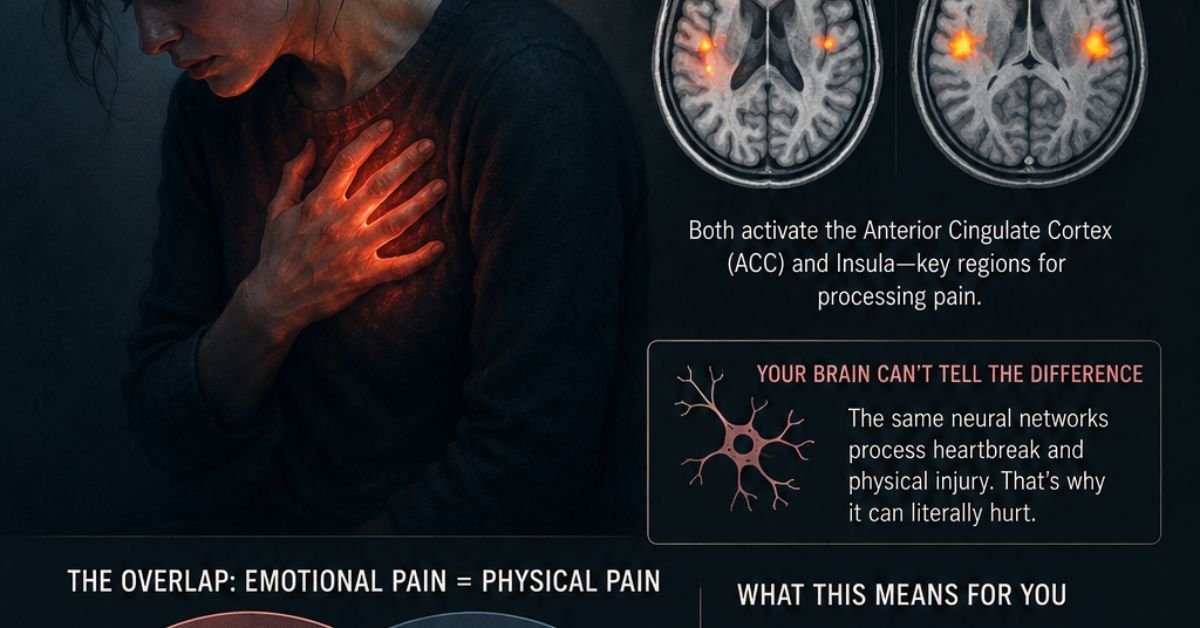
Research has shown that emotional rejection activates many of the same neural pathways involved in physical pain.
Thank you for reading this post; don't forget to subscribe!
When a relationship ends, the brain interprets the loss as a threat to safety and attachment.Why Breakups Feel Physical The Brain
This can trigger:
- Stress hormones
- Increased cortisol
- Anxiety responses
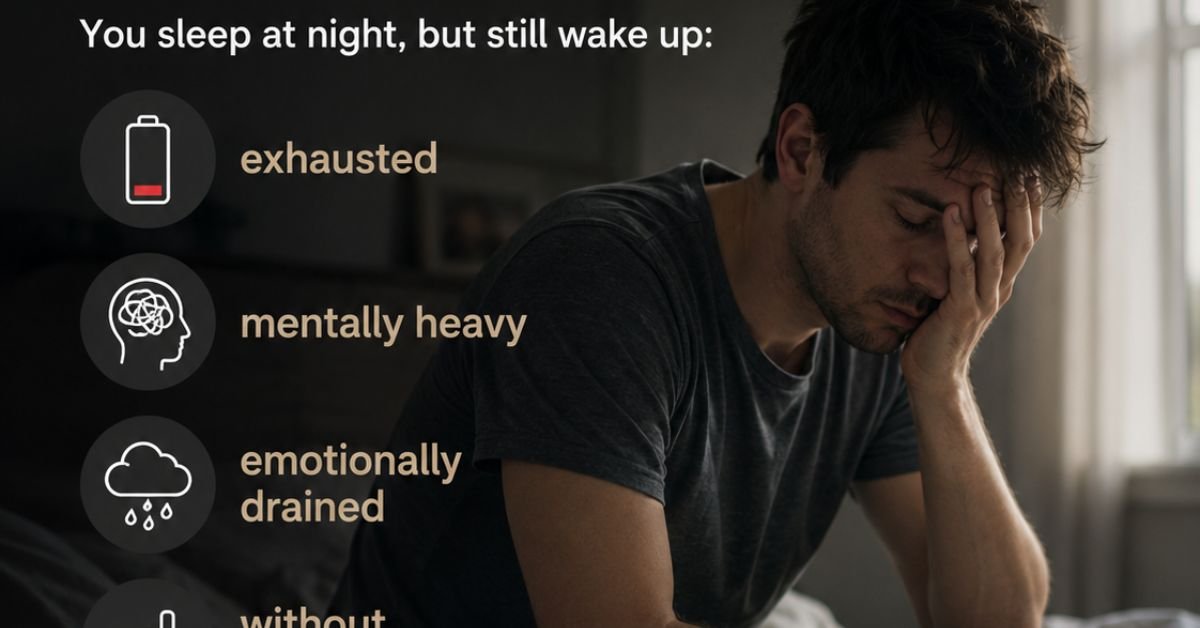
- Sleep disruption
- Emotional overwhelm
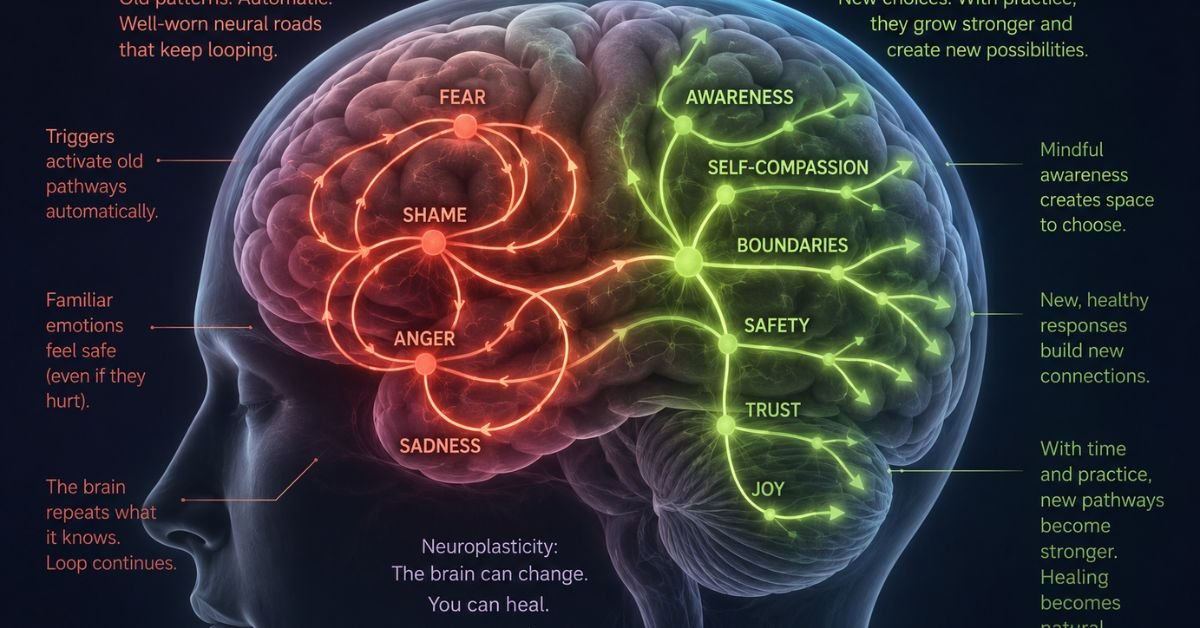
CBT views this through cognitive patterns.
Reiki views this through emotional and energetic imbalance.
Both approaches acknowledge that unresolved emotional pain can affect the entire body.
The Brain: Where CBT and Reiki First Meet
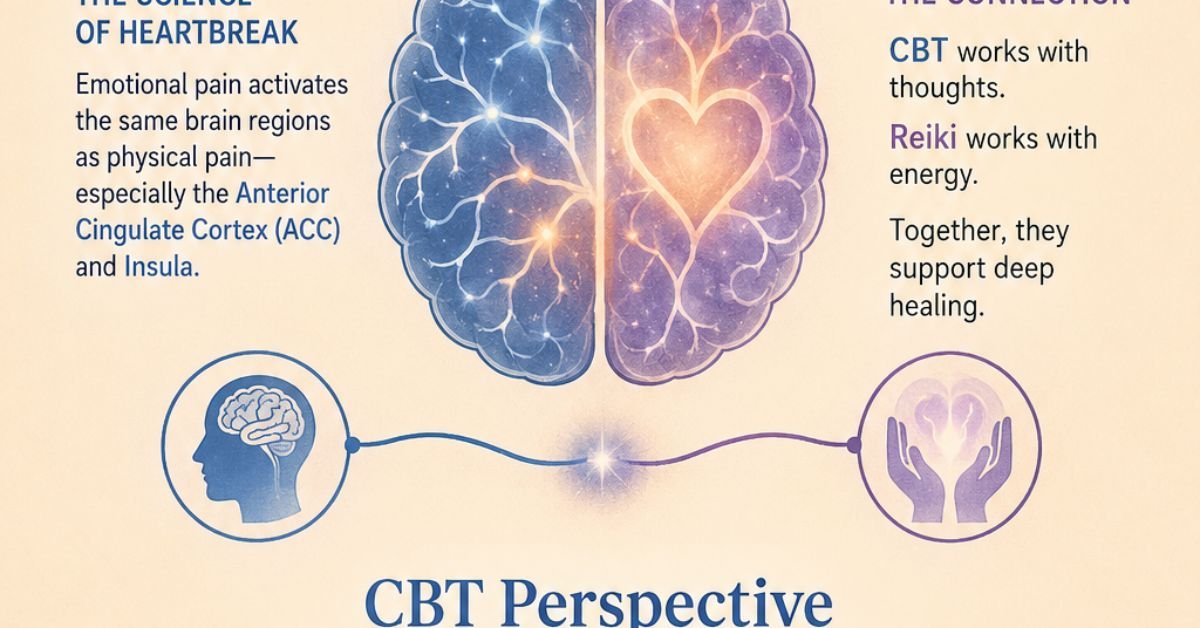
CBT Perspective
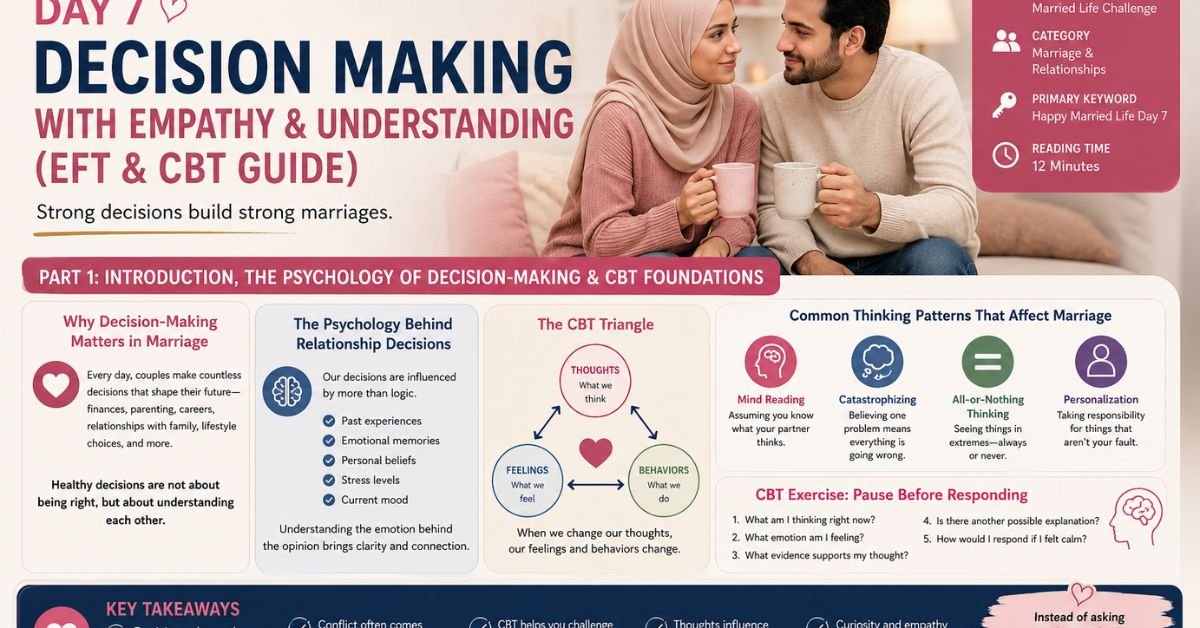
After a breakup, common thought patterns include:
Catastrophic Thinking
- “I’ll never find love again.”
- “My life is ruined.”
Self-Blame
- “Everything was my fault.”
Overgeneralization
- “Every relationship ends badly.”
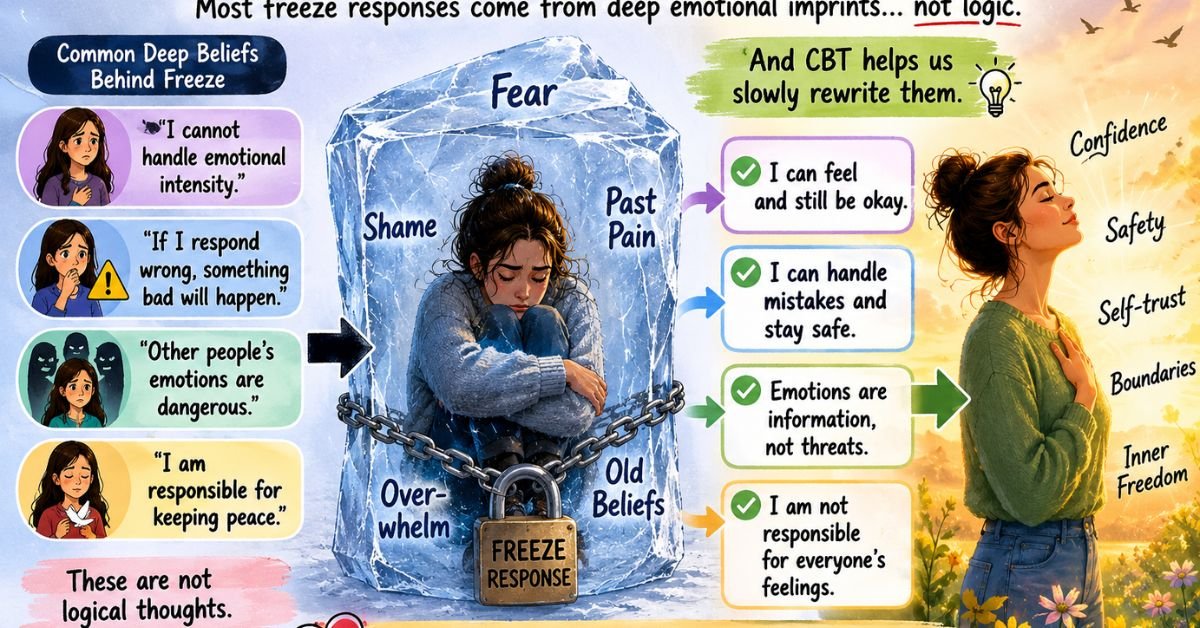
CBT helps identify and challenge these thinking errors.
Internal Link
Read: How CBT Helps Break Negative Thought Loops
Reiki Perspective
Reiki practitioners often view emotional stress as creating an energetic imbalance that contributes to mental overwhelm.
Many individuals report:
- Racing thoughts
- Mental exhaustion
- Lack of clarity
- Emotional confusion
Reiki sessions are commonly used to encourage relaxation and calm mental activity.
Where They Meet
Both approaches aim to reduce mental distress.
CBT changes thought patterns.
Reiki promotes mental calmness.
Together they may help individuals gain both clarity and emotional relief.
The Heart: Emotional Pain and Grief
Why Heartbreak Feels Real
Many people describe:
- Chest tightness
- Emotional heaviness
- Pressure around the heart area
The phrase “broken heart” exists because emotional loss often creates physical sensations.
CBT and the Heart
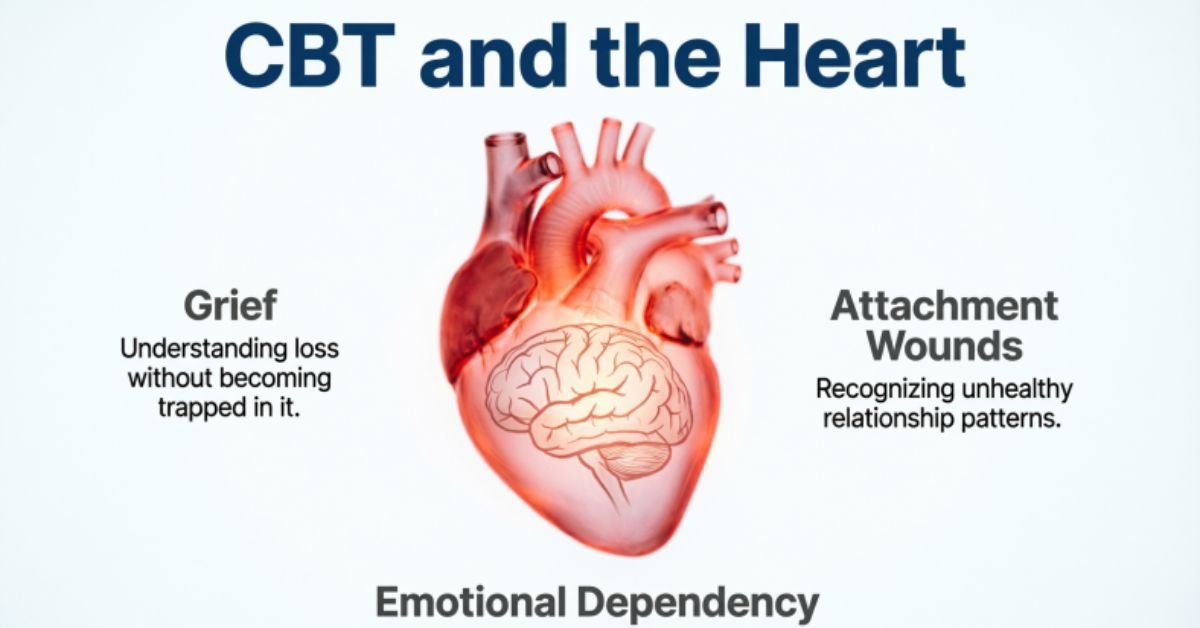
CBT helps process:
Grief
Understanding loss without becoming trapped in it.
Attachment Wounds
Recognizing unhealthy relationship patterns.
Emotional Dependency
Learning self-worth independent of another person.Why Breakups Feel Physical
Reiki and the Heart
In Reiki traditions, the heart is often associated with:
- Compassion
- Love
- Forgiveness
- Emotional connection
Practitioners aim to support emotional balance and self-love.Why Breakups Feel Physical
Where They Meet
CBT helps people understand emotional pain.
Reiki helps many people feel emotionally supported while processing that pain.
The Gut: Where Anxiety Lives
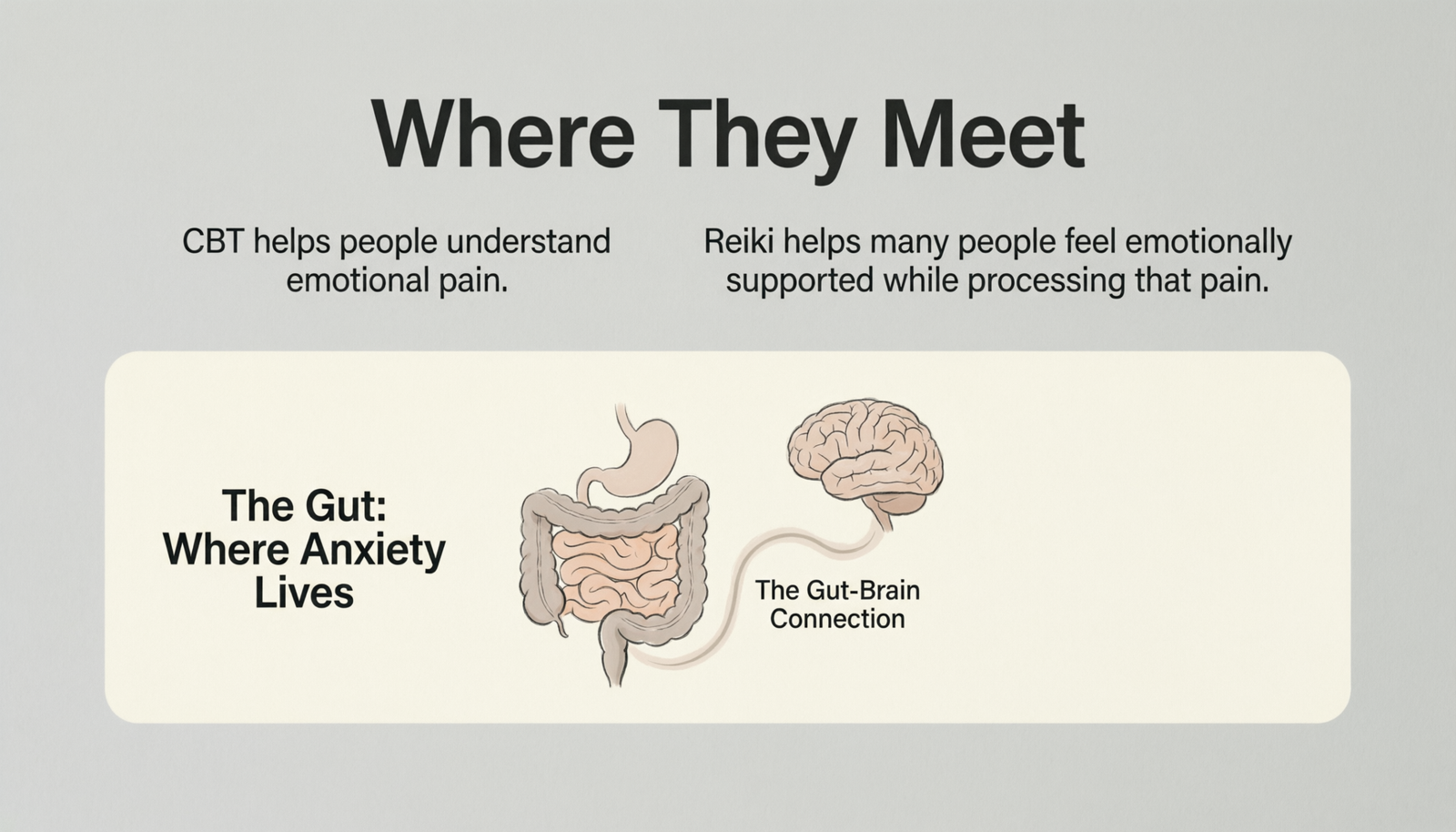
The Gut-Brain Connection
Many people experience digestive symptoms after a breakup.
Examples include:
- Nausea
- Appetite changes
- Bloating
- Stomach discomfort
The digestive system contains millions of neurons that communicate with the brain.Why Breakups Feel Physical
CBT and Digestive Stress
CBT teaches:
Anxiety Management
Reducing excessive worry.
Stress Reduction
Learning healthier responses to emotional triggers.
Emotional Regulation
Preventing chronic stress cycles.
Reiki and Digestive Balance
Many Reiki clients seek sessions to promote:
- Relaxation
- Stress relief
- Emotional calm
Reduced stress may indirectly support digestive comfort.
Where They Meet
Both approaches attempt to reduce the stress response that often contributes to digestive discomfort.
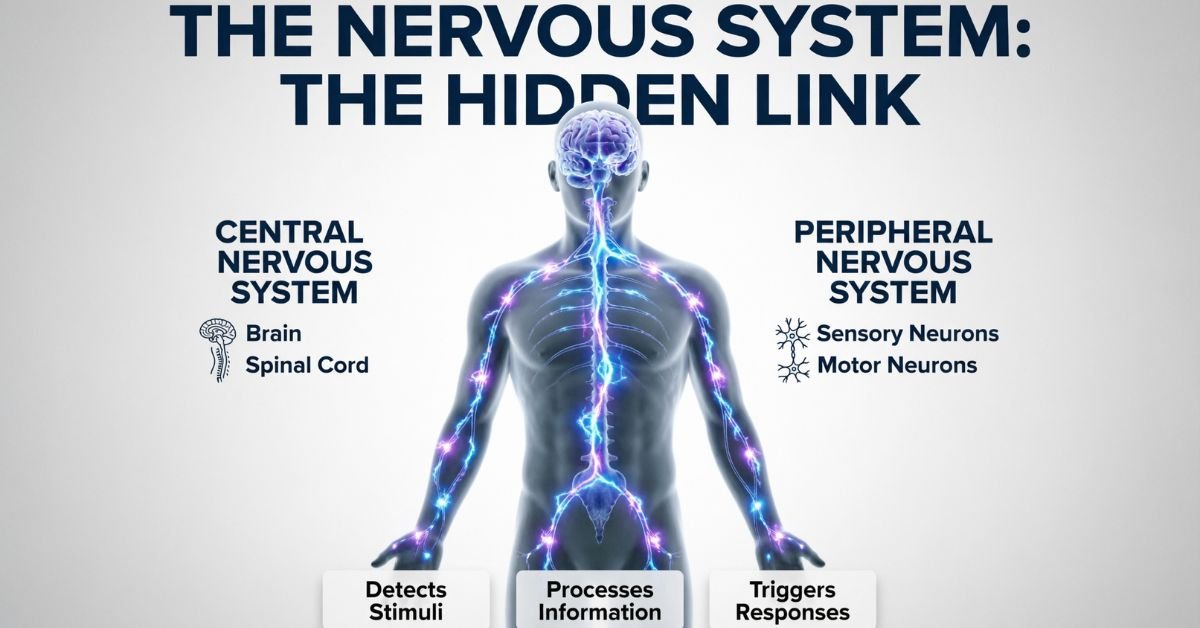
The Nervous System: The Hidden Link
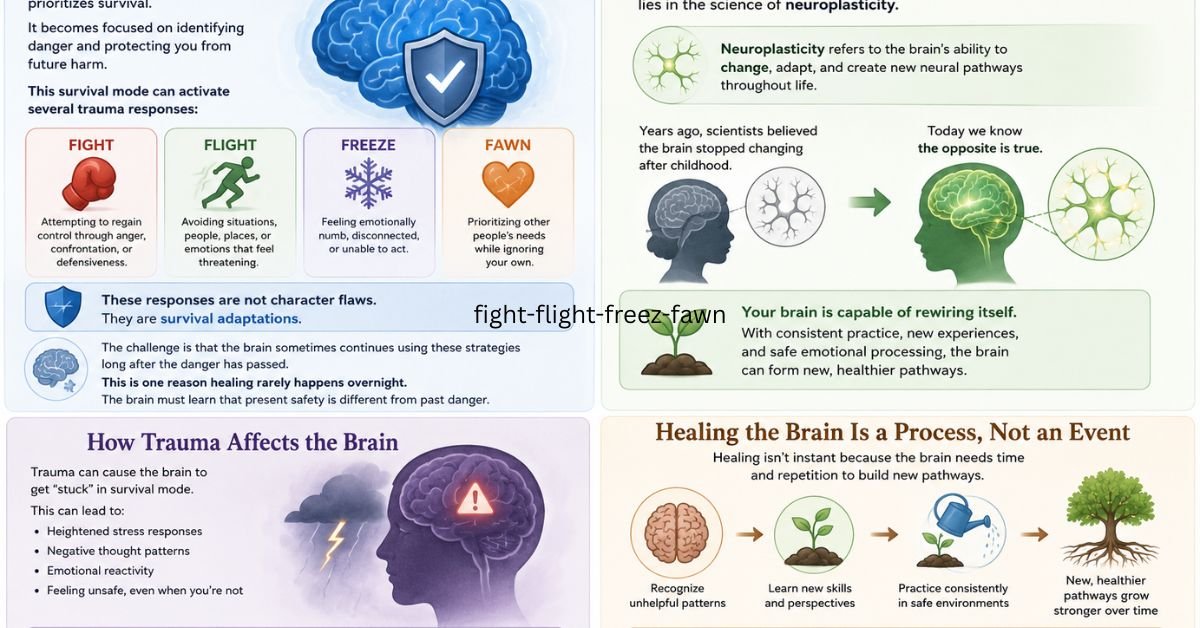
Breakups Activate Survival Mode
After emotional loss, the nervous system may remain in a state of hypervigilance.
Symptoms include:
- Restlessness
- Panic
- Difficulty sleeping
- Irritability
- Emotional sensitivity
CBT and Nervous System Recovery
CBT helps individuals recognize:
- Trigger patterns
- Anxiety loops
- Fear-based thinking
This creates a sense of emotional safety.
Reiki and Nervous System Relaxation
Many people report feeling:
- Calm
- Grounded
- Relaxed
after Reiki sessions
Where They Meet
Both approaches aim to move individuals from emotional survival mode toward emotional stability.
The Body Stores Emotional Habits

Emotional Memory
The body remembers experiences through patterns.
Examples include:
- Muscle tension
- Poor posture
- Shallow breathing
- Sleep disruption
CBT Approach
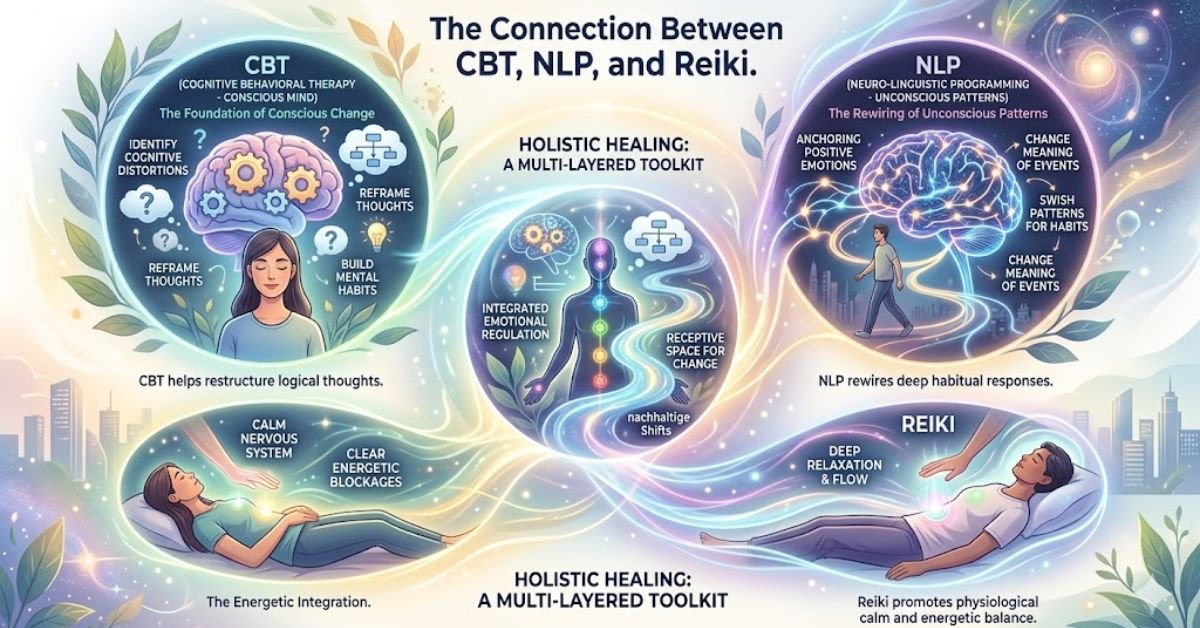
CBT asks:
“What thoughts are maintaining these reactions?”
Reiki Approach
Reiki asks:
“Where is the body holding stress?”
Shared Goal
Helping individuals release patterns that no longer serve them.
Can Emotions Really Affect Organs?
The Scientific View
Emotions do not become physically trapped inside specific organs in a literal medical sense.
However, emotional stress can influence bodily systems including:
Cardiovascular System
Heart rate and blood pressure.
Digestive System
Gut function and appetite.
Immune System
Stress-related immune changes.
Nervous System
Anxiety and stress responses.
The Reiki View
Many Reiki practitioners use organs symbolically to represent emotional experiences.
Examples include:
- Heart = Love
- Gut = Intuition
- Brain = Thoughts
These interpretations are spiritual rather than medical.
Combining CBT and Reiki for Breakup Recovery
Step 1: Understand Your Thoughts
Use CBT journaling:
- What happened?
- What am I thinking?
- Is this thought completely true?
Step 2: Calm the Body
Use Reiki-inspired relaxation practices:
- Breath awareness
- Mindful stillness
- Self-compassion
Step 3: Build Emotional Resilience
Focus on:
- Healthy boundaries
- Self-worth
- Future goals
Step 4: Create New Emotional Associations
Replace:
- Fear with confidence
- Loss with growth
- Attachment with self-love
Why HealOraCBT Integrates Multiple Healing Perspectives
At HealOraCBT, emotional healing is viewed through a holistic lens.
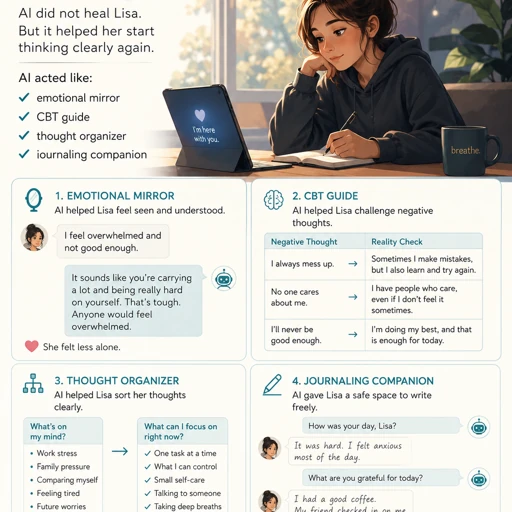
Our content explores:
- Cognitive Behavioral Therapy (CBT)
- NLP techniques
- Stress management
- Emotional awareness
- Reiki-informed wellness concepts
The goal is not simply to feel better temporarily.
The goal is to develop lasting emotional resilience.
Internal Links
- Why We Return to Emotional Pain
- Breaking Free from Familiar Pain and Fear of the Unknown
- Healing Doesn’t Happen When Life Becomes Certain
- How Childhood Trauma Shapes Adult Relationships
- Understanding Emotional Validation and Dependency
Frequently Asked Questions
Does CBT believe emotions are stored in organs?
No. CBT focuses on thoughts, emotions, and behaviors rather than energy centers or organs.
Does Reiki claim to cure emotional trauma?
Reiki is generally used as a complementary wellness practice and should not replace professional medical or mental health care.
Why does heartbreak affect the stomach?
Stress hormones and the gut-brain connection can influence digestion and appetite.
Can CBT and Reiki be used together?
Many people use CBT alongside relaxation and complementary wellness practices. Always consult qualified professionals for your individual needs.
Why does emotional pain feel physical?
The brain processes emotional and physical pain through overlapping neural systems, which can create genuine physical sensations.
Conclusion
A breakup affects much more than emotions.
It influences thoughts, sleep, digestion, energy, motivation, and overall well-being.
CBT and Reiki approach healing from different perspectives, yet both recognize an important truth:
Human beings are interconnected systems.
The mind affects the body.
The body influences emotions.
Awareness creates healing.
Whether recovery begins through CBT, Reiki, mindfulness, journaling, or self-reflection, the path forward involves understanding your experience rather than fighting it.
Healing is not forgetting.
Healing is learning how to carry your story without allowing it to control your future.
Final Thoughts
The question is not whether your emotions are stored in a specific organ.
The deeper question is:
What is your body trying to tell you through those emotions?
When you listen with awareness, challenge harmful thought patterns through CBT, and create space for emotional restoration, healing becomes possible.
One thought at a time.
One breath at a time.
One day at a time.







Leave a Reply