

HealOraCBT Workshop Testimonials
Real Experiences. Practical Learning. Meaningful Growth.
Discover reflections from participants who explored practical CBT tools, emotional awareness, communication skills, self-reflection, and inner resilience through HealOraCBT emotional wellness workshops.
What Participants Say
Every participant brings a different experience and perspective. These reflections highlight what participants found meaningful during their workshop learning experience.
The workshop helped me look at my thoughts and emotional responses from a different perspective. The practical exercises made the learning easier to understand and apply.
Dr. S. A.
Emotional Awareness & Self-Reflection
I found the CBT exercises practical and easy to relate to everyday situations. The session helped me understand the connection between thoughts, emotions, and behaviour.
F.
CBT Tools for Overthinking
The session encouraged me to pause before reacting and become more aware of how emotions can influence communication. I found the practical examples particularly useful.
Z.
Emotional Intelligence & Healthy Communication
The workshop provided practical strategies for dealing with everyday emotional challenges. I appreciated the focus on small, realistic steps rather than simply discussing theory.
Workshop Participant
Building Inner Resilience
Learning Beyond the Workshop
HealOraCBT workshops are designed to connect knowledge with everyday application.
CBT Tools
Understanding the relationship between thoughts, emotions, and behaviours.
Emotional Awareness
Recognising emotional patterns and developing greater self-awareness.
Healthy Communication
Exploring thoughtful and constructive ways of communicating and responding.
Inner Resilience
Learning practical strategies for navigating everyday emotional challenges.
Privacy & Participant Consent
Your privacy matters.
Testimonials are published with appropriate participant permission. Where appropriate, participant names may be shortened to initials or replaced with “Workshop Participant” to protect privacy.
We do not publish private phone numbers, WhatsApp conversations, personal contact information, or other confidential participant details on this page.
Testimonials represent individual workshop experiences and are not a guarantee of specific therapeutic outcomes.
A Learning Space for Emotional Growth
Explore practical emotional wellness resources, CBT-based tools, and strategies for building greater inner resilience.
Explore Inner ResilienceThree-Seat Screening Exercise
From Automatic Reaction → Awareness → New Response
Sometimes an emotional reaction happens so quickly that we do not notice the pattern between the trigger and our behaviour.
The Three-Seat exercise creates a pause.
Imagine three different seats in front of you.
🪑 Seat 1 — Emotional Self
Sit with the emotional experience without judging it.
Ask:
- What am I feeling?
- What thought appeared first?
- What am I afraid might happen?
- What do I need?
- What am I tempted to do?
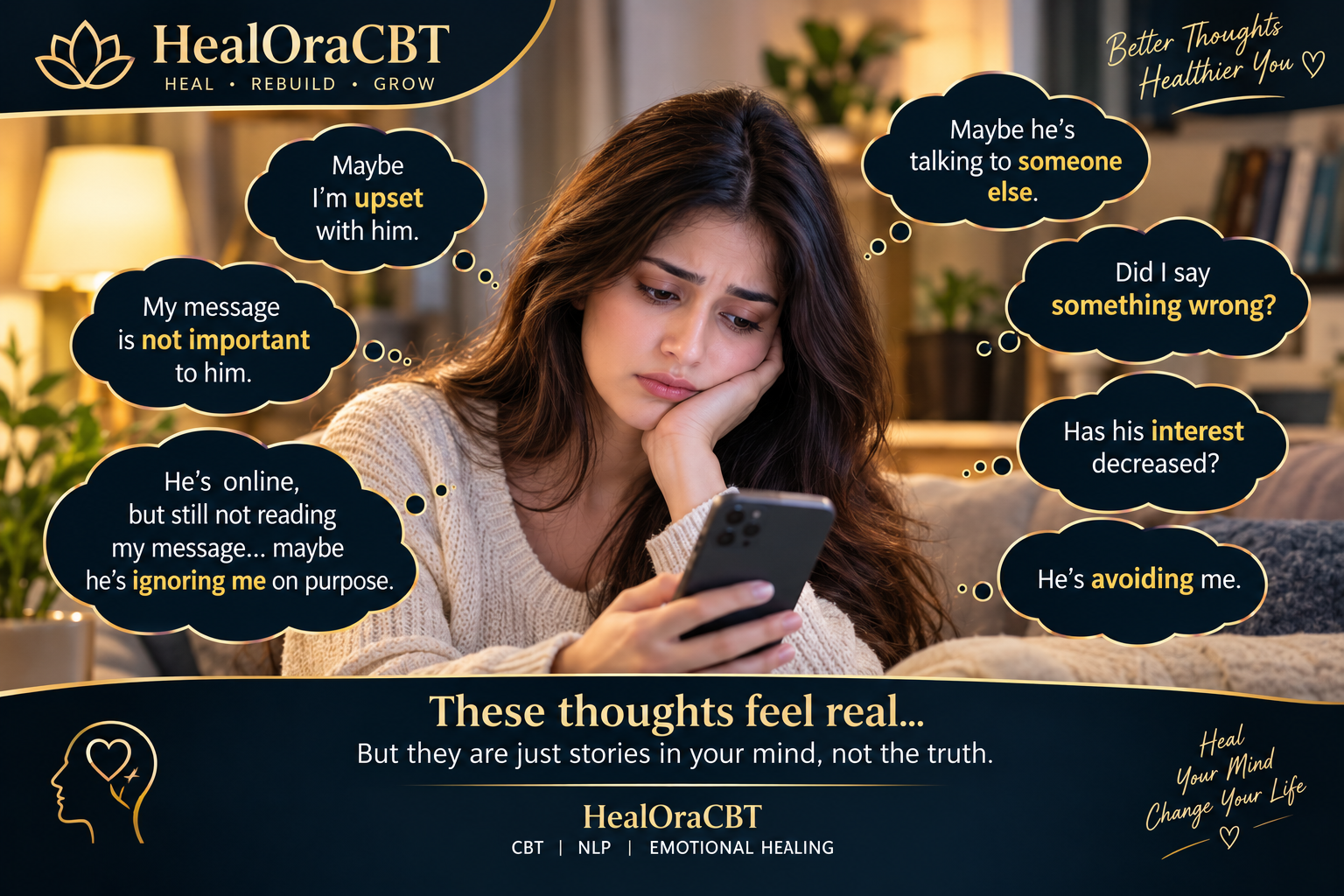
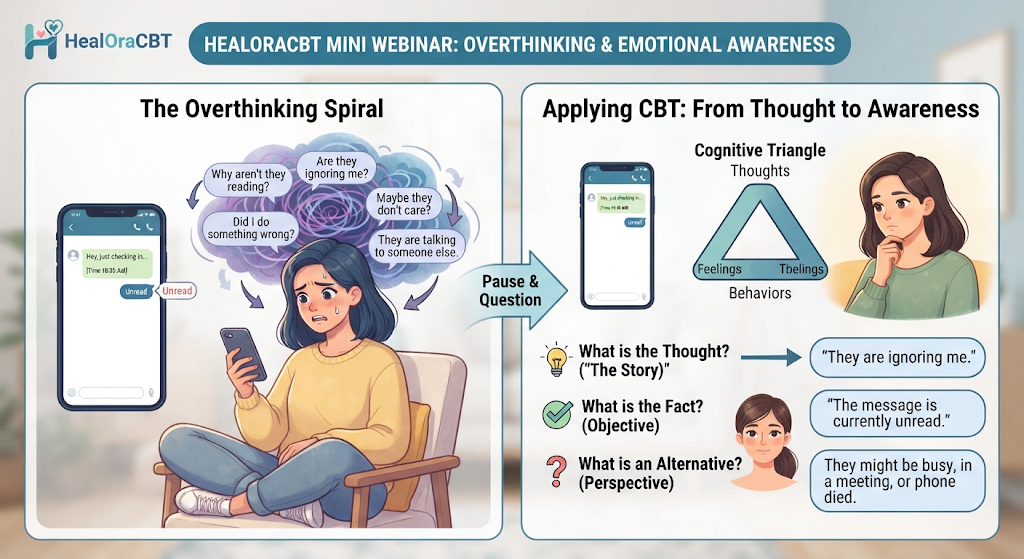
Example:When Someone Is Online But Doesn’t Read Your Message
Situation:
Someone has seen my message but has not replied.
Automatic thought:
“They are ignoring me.”
Emotion:
Anxiety.
Urge:
Check the phone repeatedly or send another message.
🪑 Seat 2 — Other Perspective
Move mentally into the second seat.
Now look at the same situation from another perspective.
Ask:
- What else could explain this situation?
- What information do I actually have?
- What information am I assuming?
- Could there be something I do not know?
Possible explanations might include:
- They are busy.
- They saw the message but cannot respond yet.
- They need time.
- They are dealing with something unrelated to me.
- I simply do not have enough information yet.
The goal is not to replace a negative assumption with a positive assumption.
The goal is to recognise:
“I do not know the complete story yet.”
🪑 Seat 3 — Calm Observer
Now imagine sitting outside the situation as a calm observer.
Ask:
- What do I notice about my reaction?
- Is this an old learned pattern?
- What behaviour usually follows this feeling?
- Does that behaviour help me?
- What would an emotionally intelligent response look like
- What response protects my peace and boundaries?
A new response might be:
“I can feel anxious without acting on the anxiety. I do not need to create a story from incomplete information.”HealOraCBT ke article “Healora CBT – Day 3: Every Behavior Has a Purpose” ke liye yeh internal link, external reference aur CTA use karein.
Internal link
External reference
NHS – Cognitive behavioural therapy (CBT)
Centre for Clinical Interventions (C — CBT-based self-help workbooks aur mental health educational resources.
✦ Learned → Screened → Unlearned → Relearned
The purpose of the exercise is not to erase an old pattern instantly
FAQs
1. Why are they online but not reading my message?
They may be busy, distracted, or simply not ready to respond.
2. Does an unread message mean they are ignoring me?
Not necessarily. An unread message is a fact; “they are ignoring me” is an interpretation.
3. Why does it make me anxious?
Uncertainty can make the mind create stories without enough information.
4. How can CBT help?
CBT helps you separate facts from assumptions and respond more calmly.
5. Should I keep checking?
Try to pause, breathe, and redirect your attention instead of repeatedly checking.
Conclusion
An unread message is a fact, not a complete story.
Pause before assuming, and remember:
Notice → Pause → Understand → Choose.