

School to College Anxiety in Teens
TEEN MENTAL WELLNESS | CBT-INFORMED SELF-HELP
Teen College Anxiety: A Practical CBT Guide for Starting College With More Confidence
Starting college can feel like opening a new chapter. There may be new subjects, unfamiliar teachers, different classmates and greater independence. For some teenagers, this change feels exciting. For others, it brings worries about fitting in, getting good grades, making mistakes or managing unfamiliar responsibilities.
If you are feeling nervous about college, you are not automatically unprepared or incapable. Adjusting to a major change takes time. Understanding your worries and taking manageable steps can help you approach the transition more thoughtfully.

What Is Teen College Anxiety?
Teen college anxiety describes worry, nervousness or distress connected with entering college or adjusting to a new academic environment. Students may worry about unfamiliar expectations, examinations, friendships, independence, commuting or whether they will be able to keep up with their studies.
Some nervousness during a major life transition is common. However, ordinary adjustment stress is not the same as an anxiety disorder. The intensity of symptoms, how long they continue and their impact on daily life all matter.
A student can feel excited about college and anxious about it at the same time. The aim is not to force yourself to feel positive every minute. It is to learn how to respond to uncertainty in a realistic, supportive way.
The NHS explains that anxiety can be a normal response to change, but it may need further attention when it regularly interferes with a young person’s home, school or social life. Read the NHS guidance on anxiety in children and young people.
Common Signs of College Anxiety in Teenagers
Anxiety can affect thoughts, emotions, physical sensations and behaviour. Every teenager is different, but possible signs include:
- Repeatedly worrying about grades, exams or disappointing family members.
- Feeling nervous about meeting classmates or speaking in class.
- Imagining the worst possible outcome before an event happens.
- Difficulty sleeping because of college-related worries.
- Muscle tension, stomach discomfort, headaches or a racing heartbeat during stressful situations.
- Repeatedly seeking reassurance about whether everything will go well.
- Avoiding college visits, conversations, assignments or other anxiety-provoking tasks.
- Feeling overwhelmed by a new timetable, workload or daily routine.
These signs do not establish a diagnosis on their own. Physical symptoms can also have medical causes, so persistent or concerning symptoms should be discussed with an appropriate healthcare professional.
Why Can Starting College Feel Overwhelming?
1. Fear of the unknown
A new environment creates unanswered questions. Where will I sit? Will I understand the lessons? Who can I ask for help? When the answers are unclear, the mind may try to predict what could go wrong.
2. Academic pressure and perfectionism
Students who believe they must always achieve the highest marks may interpret an ordinary mistake as a major failure. A more flexible goal is to focus on learning, preparation and improvement rather than expecting perfect performance every time.
3. Worry about friendships and belonging
Teenagers may assume that everyone else will make friends quickly or feel confident from the first day. This assumption can increase pressure to appear comfortable even when they feel nervous inside.
4. Changes in independence
College may require students to organise their own time, travel, assignments and study habits. These are skills that can be learned gradually; they do not need to be mastered in a single day.
5. Family expectations and comparison
Expectations about grades, future careers or family responsibilities can make the transition more stressful. Comparing yourself with classmates or people on social media may also create an unrealistic picture of how well everyone else is coping.
How CBT Can Help With Teen College Anxiety
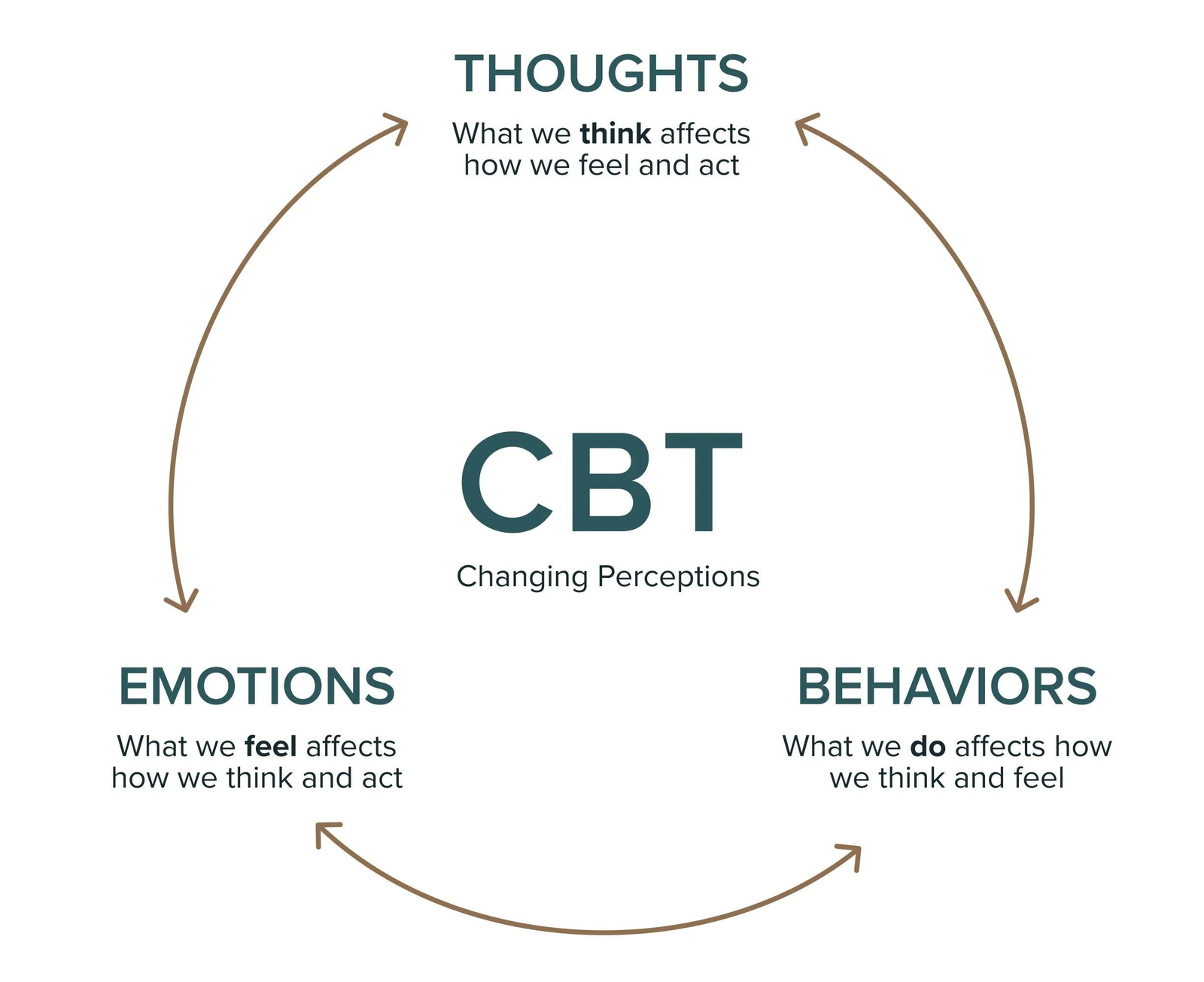
Cognitive Behavioural Therapy (CBT) is an evidence-based psychological approach used for several mental health difficulties, including anxiety disorders. CBT helps people explore connections between situations, thoughts, feelings, physical sensations and behaviour.
For example, a student may think, “If I ask a question, everyone will think I am stupid.” The thought can increase anxiety, leading the student to remain silent. Avoiding questions may prevent the student from discovering that asking for clarification is a normal part of learning.
CBT-informed practice can help a student examine the prediction, consider other explanations and choose a manageable action. Professional CBT is tailored to the person’s needs; a short self-help exercise is not equivalent to a full assessment or course of treatment.
The NHS describes CBT as a talking therapy that can help people understand and change unhelpful patterns of thinking and acting. Learn more about CBT from the NHS.
A Simple Reflection Sequence
Notice: What thought or feeling is showing up?
Pause: Give yourself a moment before reacting.
Understand: What triggered the worry? What evidence do I have?
Choose: What is one realistic next step?
Explore the related HealOraCBT article: 5 Powerful CBT Techniques for Teens With Anxiety .
A Practical CBT Thought Record for College Worries
A thought record can help you slow down an anxious prediction and examine it more fairly. Try the following example, then adapt it to your own experience.
| Step | Example |
|---|---|
| Situation | I am going to my first college class tomorrow. |
| Automatic thought | Everyone will already have friends, and I will be left out. |
| Emotion | Anxiety, rated 8 out of 10. |
| Evidence supporting the worry | I do not know many students yet. |
| Evidence to consider | I cannot know how other students will respond. Some may also be new and nervous. |
| Balanced thought | I may feel awkward at first, but I can take my time and try speaking to one person. |
| Small action | Prepare my bag and greet a classmate if an opportunity feels manageable. |
A balanced thought does not guarantee that everything will go as planned. It simply makes room for more than one possible outcome. If the exercise increases your distress, take a break and consider working through it with a trusted adult or qualified professional.
A Step-by-Step College Preparation Plan
Before the first day
- Confirm your timetable, campus location and travel arrangements.
- Prepare your books, stationery, identification and other required items.
- Ask the college about orientation and student support services.
- Set a realistic sleep and wake-up routine before classes begin.
- Write down your main concerns and identify which ones you can address practically.
During the first week
- Focus on learning the routine rather than being perfect immediately.
- Break assignments into smaller tasks and schedule realistic study periods.
- Choose one small social goal, such as greeting a classmate.
- Ask a teacher or student support service for clarification when needed.
- Make time for meals, rest, movement and activities you enjoy.
When anxiety rises
- Name the feeling without judging yourself for having it.
- Notice your feet on the floor and the objects around you.
- Try slow, comfortable breathing if it feels helpful; do not force deep breaths.
- Ask yourself, “What is one thing I can do in the next five minutes?”
- Take that small step and reassess what you need afterwards.
Can Visualization Help With Overthinking?
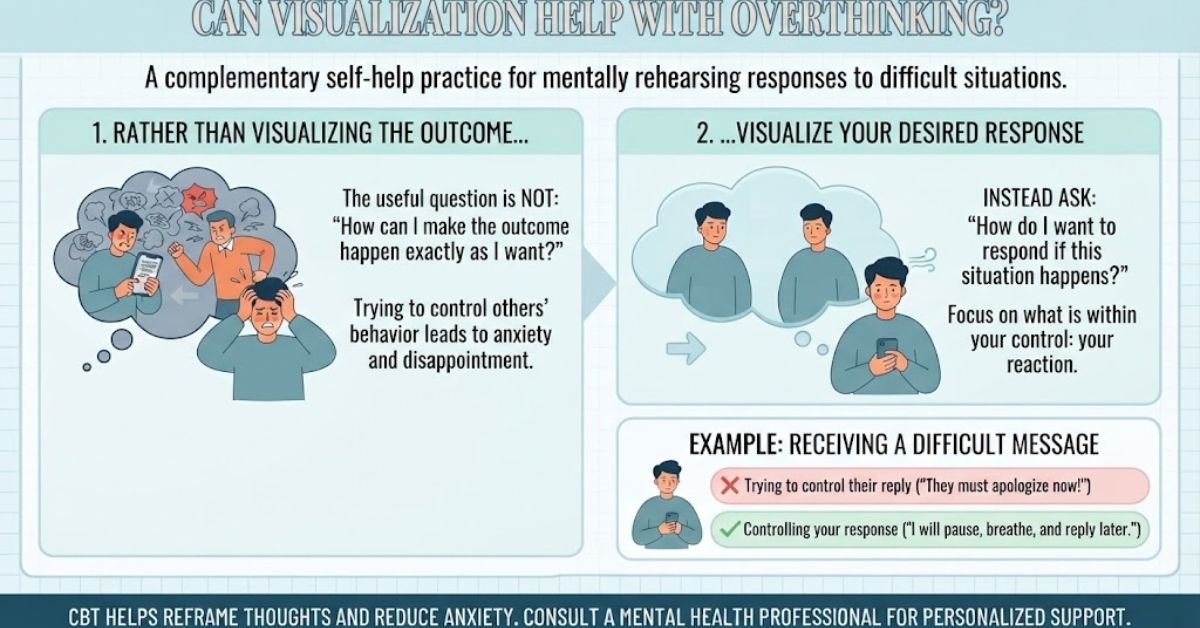
Some students find it useful to mentally rehearse a practical situation, such as checking a timetable, entering a classroom or asking a teacher a question. They may picture the steps they intend to take and identify anything they need to prepare.
Visualization should not be presented as a cure for anxiety or as a substitute for evidence-based treatment. If imagining a situation increases your distress, stop and try a grounding activity or seek support.
HealOraCBT also shares educational reflection and relaxation tools. These should be understood as optional self-help activities, not as replacements for professional mental health care. You can explore the HealOra Day-by-Day Healing Tools for additional reflection ideas.
How Parents Can Support a Teenager Starting College
Parents and caregivers can help by creating space for honest conversations while encouraging age-appropriate independence. A teenager may need someone to listen before they are ready to discuss solutions.
- Listen calmly: Ask what feels difficult without interrupting or minimising the worry.
- Validate the emotion: Try, “It makes sense to feel nervous about a big change.”
- Avoid comparisons: Another student’s confidence or grades are not a measure of your teenager’s worth.
- Plan together: Help with practical preparation while allowing the teenager to practise managing tasks independently.
- Notice changes: Pay attention to ongoing sleep difficulties, withdrawal or trouble attending college.
- Ask for support: Contact the college support team or a qualified professional when distress persists or worsens.
Support does not mean removing every challenge. It means helping a young person feel heard while learning to manage appropriate responsibilities at a realistic pace.
When Should a Teen Seek Professional Help?
Consider speaking with a qualified mental health professional if anxiety is intense, persistent, worsening or interfering with college attendance, sleep, relationships or everyday activities. A professional can assess the situation and discuss suitable support options.
If physical symptoms are new, severe or worrying, consult a healthcare professional rather than assuming anxiety is the cause.
If a teenager talks about suicide or self-harm, or may be unable to stay safe, tell a trusted adult and seek urgent help through local emergency services or the nearest emergency department.
For further information, see the National Institute of Mental Health guidance on anxiety disorders and the NHS information on mental health support for children and young people .
Frequently Asked Questions About Teen College Anxiety
1. Is it normal to feel anxious before starting college?
Some nervousness before a major change is common. If anxiety becomes persistent, intense or disruptive, consider seeking professional guidance.
2. How can I reduce teen college anxiety before the first day?
Prepare your timetable, travel route and belongings, establish a realistic sleep routine, and identify one manageable goal for the first day. Focus on practical steps rather than trying to predict every possible outcome.
3. Can CBT help teenagers with college anxiety?
CBT is an evidence-based treatment for several anxiety difficulties. It can help people examine unhelpful thinking patterns and practise different behaviours. The right approach depends on the individual’s needs and may require professional assessment.
4. What should parents say to an anxious teenager?
Parents can listen without judgement and acknowledge that a major change may feel difficult. For example: “You do not have to figure everything out today. What is one thing we can prepare together?”
5. Can visualization cure college anxiety?
No. Visualization is not a guaranteed cure or a replacement for professional care. Some people use mental rehearsal as an optional way to prepare for a situation, but its usefulness varies.
6. What if I cannot make friends in the first week?
Friendships often develop over time. Try small interactions and activities that interest you rather than judging your entire college experience by the first few days.
7. When should I contact a counsellor?
Consider contacting a qualified counsellor or mental health professional when anxiety is difficult to manage, continues over time or interferes with daily activities, attendance, sleep or relationships.
Conclusion: You Can Take College One Step at a Time
Teen college anxiety can make a new beginning feel uncertain. Preparation, supportive relationships, realistic routines and CBT-informed reflection can help students approach everyday challenges more thoughtfully.
You do not have to become confident overnight. Start with one manageable action, notice what you learn and adjust your plan as you gain experience. If anxiety continues to interfere with your life, asking for professional help is a constructive next step.
Explore more practical resources in the HealOraCBT blog or read 5 Powerful CBT Techniques for Teens With Anxiety .
References and Further Reading
Educational Disclaimer
This article is for general educational and self-help purposes only. It does not provide a diagnosis, medical advice or an individualised treatment plan. It is not a substitute for assessment or care from a qualified healthcare or mental health professional. Individual needs and outcomes vary. Seek appropriate professional support if symptoms are persistent, severe or interfere with daily life.
Read the HealOraCBT Disclaimer for further information.

How to Handle Social Worries in College
Making friends can feel difficult when you believe you must impress everyone. Instead of setting a goal to become popular immediately, try focusing on small, realistic interactions.
If you tend to avoid situations because of fear, a qualified professional can help you consider safe, gradual ways to approach them. Do not force yourself into situations that are unsafe or overwhelming.