



The Unanswered Message: When Your Mind Creates a Story
Decoding the emotional and somatic reactions that can appear when a message is seen but a reply does not come.
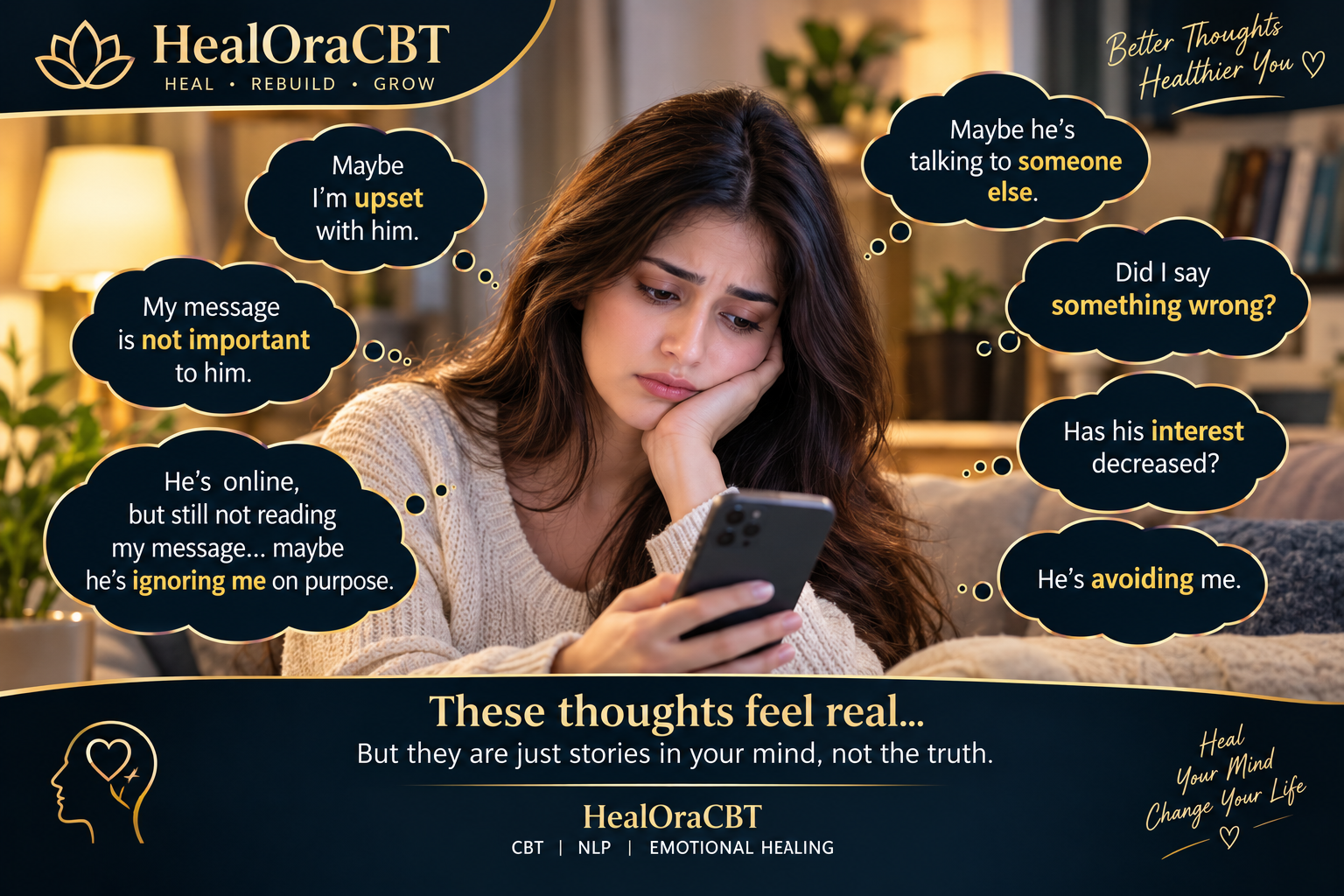
You see the double checkmark turn blue. You see the message has been read. And then… nothing.
Minutes turn into hours. Before you realise what is happening, your body may react with tension, anxiety or restlessness—and your mind may begin filling the unanswered space with its own explanation.
The Anatomy of a Read-Receipt Reaction
When someone sees your message and does not reply, the experience can trigger a strong emotional response. The physical sensations are real, even though the meaning we attach to them may not yet be confirmed.
- The Throat — The Unspoken Word You may notice tightness or a lump in your throat, especially when you want to ask for an explanation but decide to hold back.
- The Chest / Solar Plexus — The Drop A hollow or sinking sensation may appear when uncertainty suddenly feels emotionally significant.
- The Shoulders / Neck — The Armor You may unconsciously tense your shoulders or neck while preparing yourself for an explanation you have not actually received.
The Four Default Stories Your Mind May Write
1. The Catastrophic Story
Possible body cue: shallow breathing or upper-body tension
“Something terrible happened, or they are suddenly
furious with me.”
Uncertainty can make the mind search for the most serious
explanation.
2. The Diminishment Story
Possible body cue: heaviness or stomach drop
“If I mattered, they would reply. I am always the one
who cares more.”
The situation may connect with an older belief about
being overlooked or unimportant.
3. The Retaliation Story
Possible body cue: clenched jaw or muscle tension
“Fine. If they can ignore me, I am never texting them
again.”
Anger or withdrawal may become a way of protecting
yourself from feeling vulnerable.
4. The Detective Story
Possible body cue: tension around the forehead or temples
“Let me scroll back and read every word again.”
Checking and analysing can feel like a way to regain
control when the actual information is incomplete.
Somatic Reframing Sequence
When you notice yourself becoming emotionally stuck around an unanswered message, try this four-step pause:
- Locate the Story: Ask yourself, “What exact sentence is my mind saying right now?”
- Find the Physical Anchor: Notice where the emotion appears in your body. You might place a hand gently on that area and take a slow breath.
-
Separate Fact from Story:
The physical sensation is real, but the interpretation
may still be uncertain.
Fact: They read the message at 3:15 PM.
Story: They are rejecting me. - Return to Choice: Remind yourself that another person’s response time does not automatically determine your worth.
Three-Seat Perspective Exercise
From Automatic Reaction → Awareness → New Response
Sometimes an emotional reaction happens so quickly that we do not notice the pattern between the trigger and our behaviour. This exercise creates a pause and encourages perspective-taking.
Emotional Self
Sit with the emotional experience without judging it.
- What am I feeling?
- What thought appeared first?
- What am I afraid might happen?
- What do I need right now?
- What am I tempted to do?
Other Perspective
Look at the same situation from another perspective.
- What else could explain this?
- What information do I actually have?
- What am I assuming?
- What information might be missing?
- Could there be another explanation?
Calm Observer
Step back and observe the pattern before choosing your response.
- What do I notice about my reaction?
- Is this an old learned pattern?
- What behaviour usually follows?
- Does that behaviour help me?
- What protects my peace and boundaries?
Example:
Situation: Someone has seen my message but has not replied.
Automatic thought: “They are ignoring me.”
Emotion: Anxiety.
Urge: Check the phone repeatedly or send another message.
The second seat allows you to consider possibilities such as being busy, needing time, or simply not having enough information yet.
Learned Patterns: From Automatic Reaction to Conscious Choice
Some emotional responses can become familiar through repeated experiences, habits, relationships, or previous situations. Over time, a response may feel automatic.
“Unlearning” does not mean erasing memories or forcing yourself to forget. In emotional wellness, it can mean recognising an old response and gradually practising a more helpful alternative.
Frequently Asked Questions
1. What are HealOraCBT workshops about?
HealOraCBT workshops introduce practical concepts and exercises related to CBT, emotional awareness, communication, self-reflection and inner resilience.
2. What does “learned pattern” mean?
A learned pattern is a response that can develop through repeated experiences, habits, relationships or past situations. Some responses may eventually become automatic.
3. Can learned emotional patterns be changed?
Many learned patterns can be modified through awareness, reflection, repeated practice and healthier alternative responses.
4. What does “unlearning” mean in emotional wellness?
Unlearning does not mean erasing memories. It can mean recognising an old response, understanding the pattern and practising a more helpful response.
5. What is the Three-Seat Perspective Exercise?
It is a reflective CBT-based activity that encourages participants to examine an emotional situation through three perspectives: Emotional Self, Other Perspective and Calm Observer.
6. Is this exercise hypnosis or subconscious reprogramming?
The exercise can help participants notice automatic or learned patterns and practise a different response. It should not be presented as a guaranteed method of subconscious reprogramming or as a replacement for professional mental-health treatment.
Conclusion
Emotional growth often begins with a small pause between what happens and how we respond.
Some reactions may become automatic through repeated experiences. Awareness gives us an opportunity to examine those patterns rather than responding to them automatically.
HealOraCBT workshops encourage participants to develop this kind of awareness while learning practical CBT and emotional-wellness tools for everyday life.
FAQs
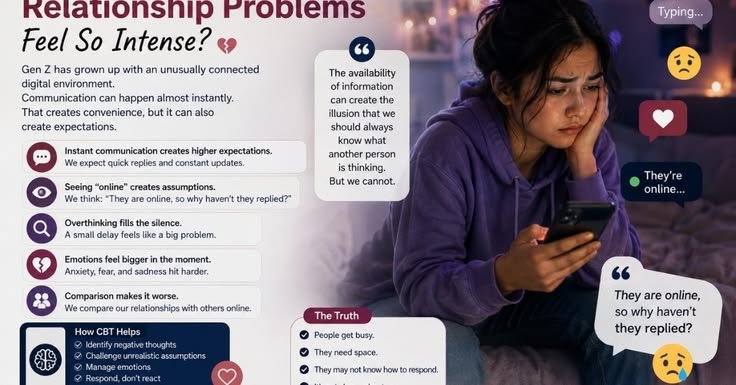
1. Why are they online but not reading my message?
They may be busy, distracted, or not ready to respond.
2. Does an unread message mean they are ignoring me?
Not necessarily. An unread message is a fact, not a complete story.
3. Why do I feel anxious?
Uncertainty can trigger overthinking and automatic assumptions.
4. Can CBT help?
Yes. CBT helps separate facts from assumptions and manage anxious thoughts.
Conclusion
When someone is online but doesn’t read your message, pause before creating a story.