Table of Contents
- Introduction
- What is Cognitive Behavioral Therapy CBT
- What is Anxiety and What is Depression
- How CBT Helps
- Technique One Thought Records
- Technique Two Mindfulness Meditation
- Technique Three Positive Self-Talk
- Technique Four Behavioral Activation
- Technique Five Relaxation Exercises
- Technique Six Problem Solving Skills
- Technique Seven Journaling for Emotional Healing
- Anxiety and Depression Self Check
- Tips for Practicing CBT Daily
- Conclusion
Cognitive Behavioral Therapy (CBT) offers powerful tools for managing stress and achieving emotional healing. Here are 7 master skills to help you navigate life’s challenges: 1. **Cognitive Restructuring**: Identifying and challenging irrational or unhelpful thoughts. 2. **Behavioral Activation**: Engaging in activities that improve mood and energy levels. 3. **Mindfulness and Grounding**: Staying present to reduce anxiety about the past or future. 4. **Exposure Therapy**: Gradually facing fears to reduce avoidance behaviors. 5. **Problem-Solving Skills**: Breaking down overwhelming problems into manageable steps. 6. **Relaxation Techniques**: Using deep breathing or progressive muscle relaxation to calm the nervous system. 7. **Self-Monitoring**: Keeping a thought record to track triggers and emotional responses. By practicing these skills, you can build resilience and take control of your emotional well-being.
Life moves very fast and almost everyone experiences stress, anxiety, or negative thoughts at some point. Cognitive Behavioral Therapy CBT is a simple and practical approach that helps manage stress, heal emotions, and regain control of the mind. This article explains seven easy CBT techniques and a self-check quiz so you can understand your mental state better and apply these strategies in daily life.
What is Cognitive Behavioral Therapy CBT
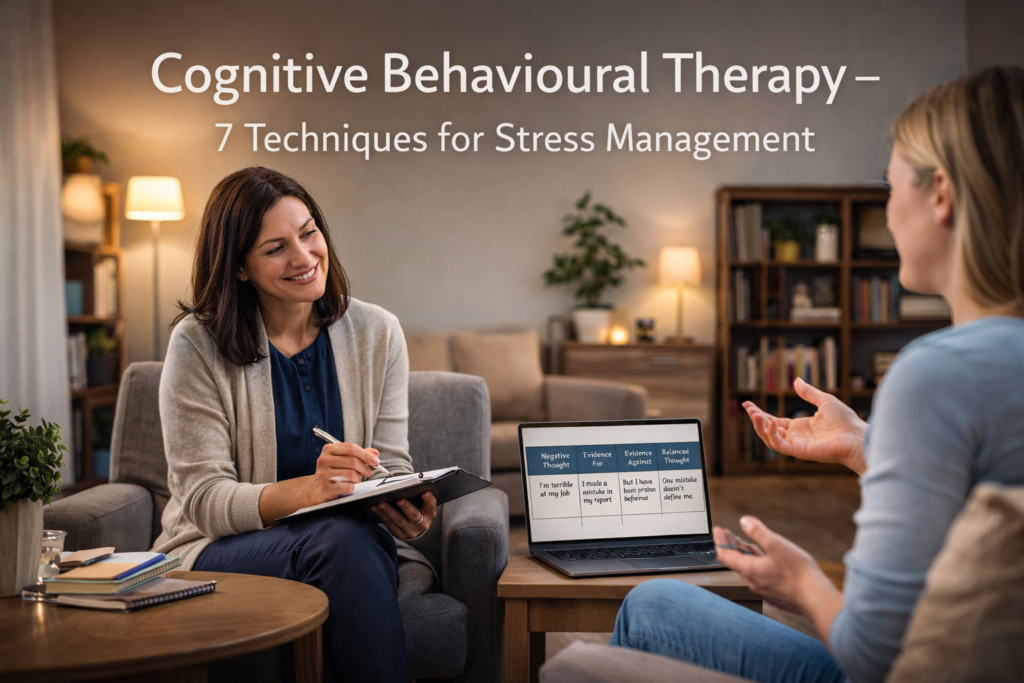
Introduction to Cognitive Behavioral Therapy
Cognitive Behavioral Therapy (CBT) is a structured, goal-oriented form of psychotherapy that has gained prominence for its effectiveness in treating various emotional challenges. It focuses on identifying and reformulating negative thought patterns, helping individuals develop healthier coping mechanisms.
The Healing Journey Through CBT

CBT helps create a profound image of emotional healing. Through guided sessions, a therapist collaborates with clients to unravel their thoughts and behaviors, leading to a clearer understanding of their emotions. This therapeutic approach empowers individuals to confront their dilemmas, fostering a sense of control over their feelings. As clients work through their issues, they often experience a significant reduction in anxiety and depression, paving the way for a more balanced life.
Icons of Recovery and Resilience
Those who undergo CBT often emerge as symbols of resilience and emotional strength. They cultivate the ability to engage with their thoughts proactively. The transformation witnessed during CBT is not just about alleviating symptoms; it is about enhancing self-awareness and establishing a healthier emotional landscape. Imagining a person healed emotionally reveals a profound sense of peace, empowerment, and readiness to embrace life’s challenges anew.
CBT is a type of therapy that focuses on the connection between thoughts, feelings, and actions. By recognizing and changing unhelpful thoughts, it is possible to improve mood, reduce stress, and handle challenges more effectively. CBT is not just for therapy sessions. Anyone can practice these techniques at home to manage daily stress and emotions.
What is Anxiety and What is Depression
Anxiety is the body and mind’s reaction to stress or worry. Feeling anxious occasionally is normal, but excessive anxiety can interfere with daily life. Common signs include racing thoughts, restlessness, rapid heartbeat, and feeling constantly on edge.
Depression is more than just sadness. It involves a persistent low mood, loss of interest in activities, low energy, fatigue, and difficulty concentrating. Depression affects emotions, thinking, and physical health. Recognizing these feelings early and practicing CBT techniques can help manage them.
How CBT Helps
CBT helps by identifying negative thoughts and replacing them with realistic and positive thinking. It encourages taking small actions to improve mood and practicing mindfulness to increase awareness. These steps reduce anxiety, support emotional healing, and provide a sense of control over life.
Technique One Thought Records
Thought Records help track stressful thoughts and recognize patterns. Writing down a stressful situation, noting your thoughts and feelings, and questioning whether the thoughts are true or assumptions allows you to replace negative thinking with balanced or positive thoughts. This method trains your mind to respond calmly rather than reacting emotionally.
Technique Two Mindfulness Meditation
Mindfulness meditation helps you stay present instead of worrying about the past or future. Sit quietly and focus on your breathing. Notice your thoughts without judging them and gently bring your attention back to your breath when your mind wanders. Even a few minutes daily can reduce stress and improve emotional clarity.
Technique Three Positive Self-Talk
The way you speak to yourself affects your emotions. Replacing negative self-talk with supportive and encouraging statements can build confidence and reduce anxiety. For example, instead of thinking “I always fail,” try thinking “I am learning and improving every day.” Practicing positive self-talk daily creates a more optimistic mindset.
Technique Four Behavioral Activation
Stress often makes people avoid tasks, which increases anxiety. Behavioral Activation encourages taking small positive actions. Start by making a simple to-do list and completing one task at a time. Reward yourself after finishing a task. This creates momentum, improves mood, and reduces stress.
Technique Five Relaxation Exercises
Relaxation exercises calm the body and mind. Examples include deep breathing, progressive muscle relaxation, and guided imagery. Even a few minutes each day can lower stress levels and create a sense of calm and peace.
Technique Six Problem Solving Skills
CBT teaches practical problem-solving. Instead of feeling overwhelmed, identify the problem clearly, list possible solutions, evaluate the pros and cons, and then take action. This reduces anxiety and creates a feeling of control.
Technique Seven Journaling for Emotional Healing
Journaling helps release emotions and increases self-awareness. Writing about your day, your stress, or emotional experiences allows you to reflect on patterns, recognize lessons learned, and note moments of gratitude or positive experiences. Practicing journaling regularly strengthens emotional resilience.
Anxiety and Depression Self Check
Answer the following questions honestly:
Do you feel anxious most of the day? No, Sometimes, Often, Almost always
Do you feel sad or lose interest in activities you enjoy? No, Sometimes, Often, Almost always
Do you struggle with sleep, concentration, or low energy? No, Sometimes, Often, Almost always
If most answers are No your stress and anxiety level is low. Keep practicing CBT techniques regularly.
If most answers are Sometimes or Often your stress level is moderate. Use CBT techniques daily and monitor your thoughts and feelings.
If most answers are Often or Almost always your stress level is high. Professional support combined with consistent CBT practice is recommended.
Suggested CBT techniques based on your score:
If you feel anxious, try Mindfulness Meditation or Thought Records.
If you feel sad or low, try Journaling or Behavioral Activation.
If you have trouble sleeping or focusing, try Relaxation Exercises or Positive Self-Talk.
Tips for Practicing CBT Daily
Start with one technique at a time to avoid overwhelm.
Be consistent, as progress happens gradually.
Practice patience because change takes time.
Combine different techniques for the best results.
Conclusion
The seven CBT techniques explained in this article are simple, effective, and easy to practice at home. They help manage stress, improve emotional health, and provide a sense of control over your mind. Start with one technique today, try the self-check quiz, and gradually include all techniques to create a calmer, happier, and healthier mind.
Call to Action
Start practicing these CBT techniques today and feel the difference. Subscribe for more tips on stress relief, emotional healing, and mental wellness.
SEO Meta Info
Meta Title: Seven Simple CBT Techniques for Stress and Emotional Healing
Meta Description: Learn seven easy CBT techniques to manage stress, improve emotional health, and calm your mind. Includes a simple self-check quiz for readers.
?
cognitve Table of Contents
- Introduction
- What is Cognitive Behavioral Therapy CBT
- What is Anxiety and What is Depression
- How CBT Helps
- Technique One Thought Records
- Technique Two Mindfulness Meditation
- Technique Three Positive Self-Talk
- Technique Four Behavioral Activation
- Technique Five Relaxation Exercises
- Technique Six Problem Solving Skills
- Technique Seven Journaling for Emotional Healing
- Anxiety and Depression Self Check
- Tips for Practicing CBT Daily
- Conc
Life moves very fast and almost everyone experiences stress, anxiety, or negative thoughts at some point. Cognitive Behavioral Therapy CBT is a simple and practical approach that helps manage stress, heal emotions, and regain control of the mind. This article explains seven easy CBT techniques and a self-check quiz so you can understand your mental state better and apply these strategies in daily life.
What is Cognitive Behavioral Therapy CBT
CBT is a type of therapy that focuses on the connection between thoughts, feelings, and actions. By recognizing and changing unhelpful thoughts, it is possible to improve mood, reduce stress, and handle challenges more effectively. CBT is not just for therapy sessions. Anyone can practice these techniques at home to manage daily stress and emotions.
What is Anxiety and What is Depression
Anxiety is the body and mind’s reaction to stress or worry. Feeling anxious occasionally is normal, but excessive anxiety can interfere with daily life. Common signs include racing thoughts, restlessness, rapid heartbeat, and feeling constantly on edge.
Depression is more than just sadness. It involves a persistent low mood, loss of interest in activities, low energy, fatigue, and difficulty concentrating. Depression affects emotions, thinking, and physical health. Recognizing these feelings early and practicing CBT techniques can help manage them.
How CBT Helps
CBT helps by identifying negative thoughts and replacing them with realistic and positive thinking. It encourages taking small actions to improve mood and practicing mindfulness to increase awareness. These steps reduce anxiety, support emotional healing, and provide a sense of control over life.
Technique One Thought Records
Thought Records help track stressful thoughts and recognize patterns. Writing down a stressful situation, noting your thoughts and feelings, and questioning whether the thoughts are true or assumptions allows you to replace negative thinking with balanced or positive thoughts. This method trains your mind to respond calmly rather than reacting emotionally.
Technique Two Mindfulness Meditation
Mindfulness meditation helps you stay present instead of worrying about the past or future. Sit quietly and focus on your breathing. Notice your thoughts without judging them and gently bring your attention back to your breath when your mind wanders. Even a few minutes daily can reduce stress and improve emotional clarity.
Technique Three Positive Self-Talk
The way you speak to yourself affects your emotions. Replacing negative self-talk with supportive and encouraging statements can build confidence and reduce anxiety. For example, instead of thinking “I always fail,” try thinking “I am learning and improving every day.” Practicing positive self-talk daily creates a more optimistic mindset.
Technique Four Behavioral Activation
Stress often makes people avoid tasks, which increases anxiety. Behavioral Activation encourages taking small positive actions. Start by making a simple to-do list and completing one task at a time. Reward yourself after finishing a task. This creates momentum, improves mood, and reduces stress.
Technique Five Relaxation Exercises
Relaxation exercises calm the body and mind. Examples include deep breathing, progressive muscle relaxation, and guided imagery. Even a few minutes each day can lower stress levels and create a sense of calm and peace.
Technique Six Problem Solving Skills
CBT teaches practical problem-solving. Instead of feeling overwhelmed, identify the problem clearly, list possible solutions, evaluate the pros and cons, and then take action. This reduces anxiety and creates a feeling of control.
Technique Seven Journaling for Emotional Healing
Journaling helps release emotions and increases self-awareness. Writing about your day, your stress, or emotional experiences allows you to reflect on patterns, recognize lessons learned, and note moments of gratitude or positive experiences. Practicing journaling regularly strengthens emotional resilience.
Anxiety and Depression Self Check
Answer the following questions honestly:
Do you feel anxious most of the day? No, Sometimes, Often, Almost always
Do you feel sad or lose interest in activities you enjoy? No, Sometimes, Often, Almost always
Do you struggle with sleep, concentration, or low energy? No, Sometimes, Often, Almost always
If most answers are No your stress and anxiety level is low. Keep practicing CBT techniques regularly.
If most answers are Sometimes or Often your stress level is moderate. Use CBT techniques daily and monitor your thoughts and feelings.
If most answers are Often or Almost always your stress level is high. Professional support combined with consistent CBT practice is recommended.
Suggested CBT techniques based on your score:
If you feel anxious, try Mindfulness Meditation or Thought Records.
If you feel sad or low, try Journaling or Behavioral Activation.
If you have trouble sleeping or focusing, try Relaxation Exercises or Positive Self-Talk.
Tips for Practicing CBT Daily
Start with one technique at a time to avoid overwhelm.
Be consistent, as progress happens gradually.
Practice patience because change takes time.
Combine different techniques for the best results.
Conclusion
The seven CBT techniques explained in this article are simple, effective, and easy to practice at home. They help manage stress, improve emotional health, and provide a sense of control over your mind. Start with one technique today, try the self-check quiz, and gradually include all techniques to create a calmer, happier, and healthier mind.
Call to Action
Start practicing these CBT techniques today and feel the difference. Subscribe for more tips on stress relief, emotional healing, and mental wellness.
SEO Meta Info
Meta Title: Seven Simple CBT Techniques for Stress and Emotional Healing
Meta Description: Learn seven easy CBT techniques to manage stress, improve emotional health, and calm your mind. Includes a simple self-check quiz for readers.
?WordPress. This is your first post. Edit or delete it, then start writing!
Hi, this is a comment.
To get started with moderating, editing, and deleting comments, please visit the Comments screen in the dashboard.
Commenter avatars come from Gravatar.